



7 Benefits of Adding Superfood Greens to Protein Shakes
Quick Summary
Adding superfood greens to protein shakes fills in vegetable nutrients that protein powder usually lacks, including vitamins, minerals, fiber and antioxidants. A level scoop of greens powder takes seconds to mix in, which makes the daily habit easier to keep. It works best as a top-up alongside whole vegetables, not as a replacement for them.
- Protein powder typically carries less vitamins, minerals and fiber than whole vegetables.
- One level greens powder scoop is usually 5 to 10 grams, depending on the brand.
- Pre-blend greens with liquid for 15 seconds before adding protein powder.
- Greens powder supplies only a few grams of plant material, less than a half-cup of cooked vegetables.
- Talk with a doctor before use if you are pregnant, breastfeeding or take medication.
Table of Contents
- Why Protein Shakes Alone Fall Short on Micronutrients
- The Benefits of Greens Powder for Daily Nutrition
- Greens Powder and Protein Powder: How They Work Together
- Whole Leafy Greens vs. Greens Powder: Which Works Better?
- The Best Greens to Add to Smoothies and Shakes
- How to Add Greens to a Protein Shake, Step by Step
- Adding Greens to a Protein Shake for Weight Loss
- Realistic Expectations, Label Checks and Safety Considerations
- Putting Your Greens Shake Into Your Daily Routine
- Frequently Asked Questions
Why Protein Shakes Alone Fall Short on Micronutrients
Last Updated: November 21, 2026
Protein shakes deliver protein quickly, which is why many athletes reach for them after training. But a shake built only on protein powder and milk leaves gaps. Many plant-based athletes assume that a protein scoop covers their nutrition needs, and that assumption is where the trouble starts.
Protein powder typically carries less of the vitamins, minerals and fiber found in whole vegetables, and many people do not eat enough vegetables. That is where adding superfood greens to protein shakes can help fill the space, since a daily scoop of superfood greens brings back the vegetable nutrients a shake often misses.
The Benefits of Greens Powder for Daily Nutrition
A greens powder is a concentrated mix of dried leafy greens, vegetables and sometimes fruit. Many people use it as a simple way to add nutrients they might otherwise miss.
Here are the most common benefits people look for:
- More micronutrients: Greens powders can contain vitamins and minerals from vegetables that protein powder lacks.
- Extra fiber: Fiber supports digestive health and can help you feel full longer.
- Antioxidants: Plant compounds called phytonutrients are found in many vegetables.
- Easy daily habit: One scoop takes seconds to add to a shake, which makes consistency easier.
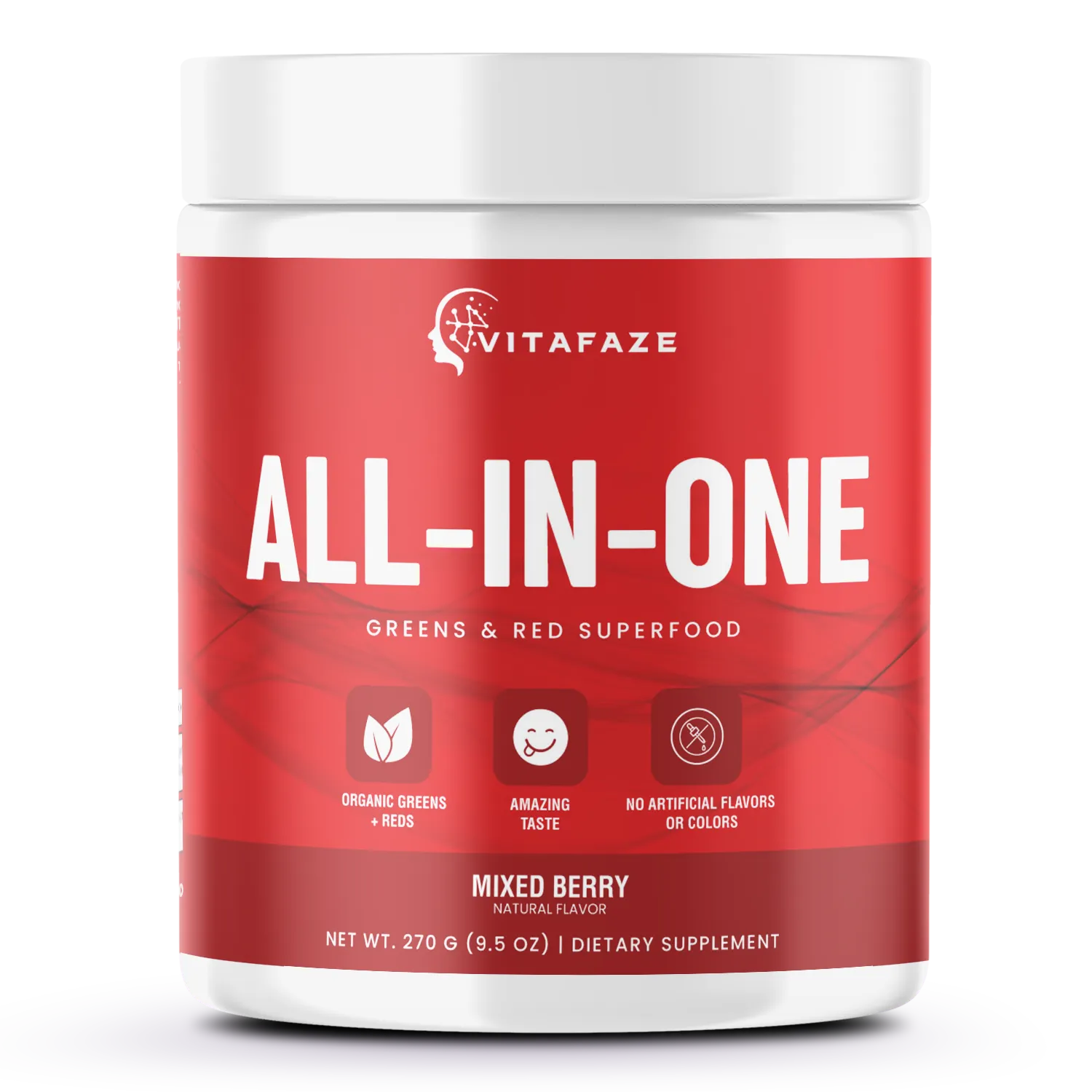
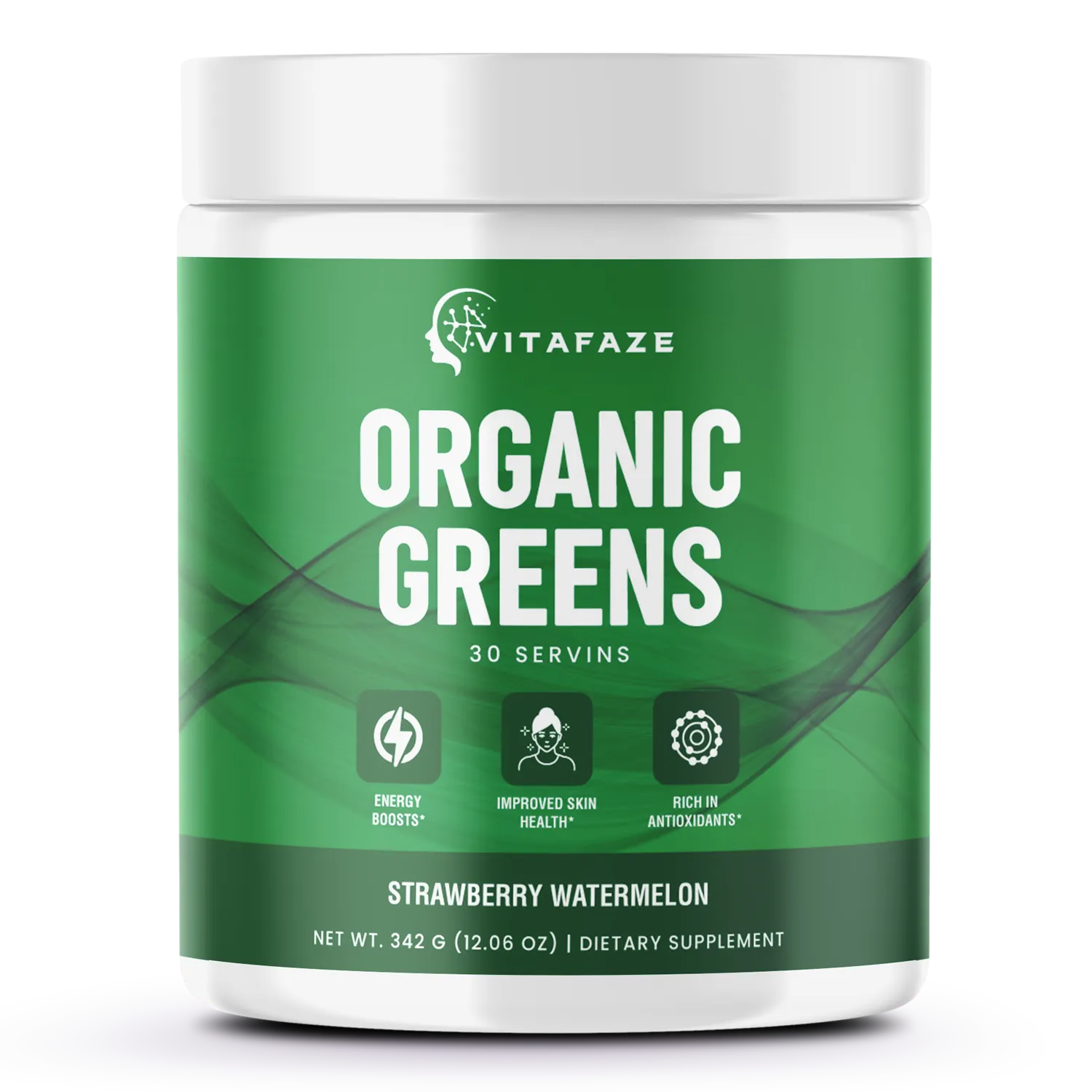
The Organic Super Greens - Watermelon powder is one option that fits this routine. It is a blend of over 25 organic ingredients that can be mixed into a smoothie, shake, or glass of water. A greens powder should add to a balanced diet, not replace whole foods. Browse the All-In/One Greens & Red SuperFood + Immune Mixed Berry powder to see one ready-to-mix option.
Greens Powder and Protein Powder: How They Work Together
Greens powder and protein powder do different jobs. Protein powder supplies the building blocks for muscle repair. Greens powder supplies the plant nutrients that protein powder usually leaves out.
Used together, they can make one shake that covers more ground. Think of the protein as the base and the greens as an add-in.
Whole Leafy Greens vs. Greens Powder: Which Works Better?
Whole leafy greens and greens powders are not interchangeable, and the right choice depends on what you are trying to fix in your diet.
Nutrition and fiber. Whole greens such as spinach and kale are single-ingredient foods with a clear nutrient profile. A greens powder scoop typically lists a proprietary blend weight, not the gram weight of each vegetable, so you cannot assume one scoop equals one cup of spinach. Many powders add fiber from chicory root or inulin, which is a different fiber source than the cellulose in whole leaves.
Cost per serving. Whole greens are usually cheaper per serving than greens powder, but powders are more convenient to store and carry.
Convenience and waste. Whole greens require washing and destemming, while powder does not, which can make powder easier to use when you travel or blend at a gym.
Taste and texture. Mild greens such as spinach blend into a shake with little flavor change, while kale adds a stronger grassy note. Read the ingredient list of any greens powder before you buy.
Ingredient transparency. Whole greens are single-ingredient foods. Some powders use proprietary blends that list ingredients by weight without disclosing individual amounts. If a label says "greens blend 3,000 mg" and lists 20 ingredients, you cannot tell whether spinach is 2,000 mg or 50 mg. Look for products that disclose the gram weight of each ingredient or at least the total whole-food powder weight.
Which works better? It depends on your habits. If you already eat vegetables regularly, a greens powder can serve as a convenient top-up. If your vegetable intake is low, whole greens in a shake are a practical way to add them. Many people use both, depending on their schedule.
Watch out: Do not assume a greens powder replaces a serving of vegetables. Most products supply a few grams of dried plant material per scoop, which is far less than a half-cup of cooked vegetables.
The Best Greens to Add to Smoothies and Shakes
Mild greens blend most easily into shakes. Spinach is the easiest starting point because its flavor is faint. Kale is more fibrous and tastes stronger, so start with a small handful. Romaine works well for a light texture.
Fruit helps mask the flavor of any green. Banana, berries and pineapple are popular choices. For a ready-made option, the All-In/One Greens & Red SuperFood + Immune Mixed Berry powder is designed to mix into water, juice or a smoothie.
How to Add Greens to a Protein Shake, Step by Step
Most shake guides stop at "blend and enjoy." For the full mixing method, see how to mix plant protein powder for smooth shakes. The details below are the ones that separate a smooth shake from a gritty, grassy one. Use this as a repeatable method rather than a one-time recipe.
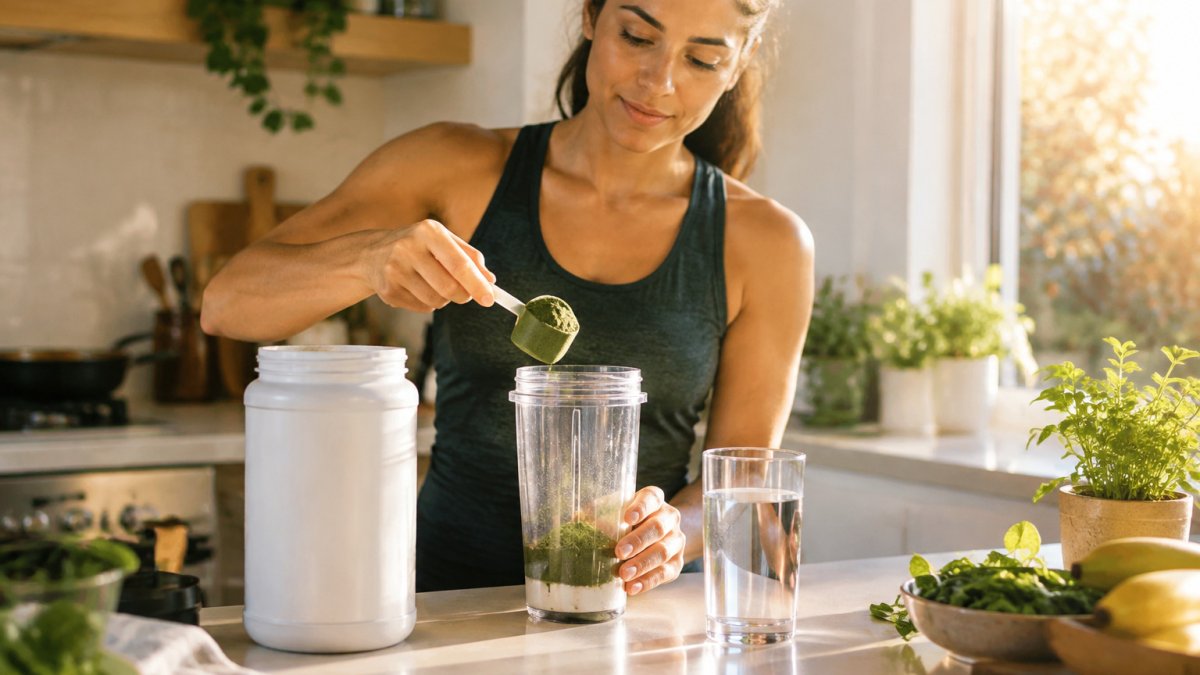
1. Measure the greens first. For whole greens, start with one packed cup of spinach or a half-cup of chopped kale per 8 to 12 ounces of liquid. For greens powder, use one level scoop, which is usually 5 to 10 grams depending on the brand. A level scoop matters: a heaped scoop can double the grassy flavor and the fiber load, which some people feel as bloating.
2. Add liquid before anything else. Pour 8 to 12 ounces of water, milk, or unsweetened plant milk into the blender jar first. Liquid at the bottom keeps the powders from caking against the blades and reduces clumping. If you use juice, choose a low-sugar option; fruit juice adds calories quickly.
3. Blend the greens with the liquid alone for 15 seconds. This pre-blend step breaks down leafy fiber and hydrates powder particles before protein powder enters the jar. Protein powder can foam when over-blended, and foaming traps green flecks that later read as grit.
4. Add protein powder second. Use one standard scoop, typically 20 to 30 grams of protein powder. Add it after the greens pre-blend so the protein does not sit in a dry pocket at the bottom of the jar.
5. Add fruit, ice, and any thickeners last. Half a frozen banana, a half-cup of frozen berries, or a quarter-cup of pineapple adds sweetness that masks grassy notes. Ice should go in last so it does not freeze the powders into clumps before the blades reach them.
6. Blend on high for 30 to 45 seconds. Stop when no green flecks are visible against the jar wall. If the shake still looks speckled, blend another 10 seconds rather than adding more liquid, which thins the texture.
7. Taste before you pour. Adjust with a squeeze of lemon, a pinch of salt, or a few more berries. Lemon juice cuts bitterness without adding sugar, and a small pinch of salt rounds out the flavor of kale and spinach.
Fixing Taste and Texture Problems
Most greens shakes go wrong in one of four ways. Match the fix to the problem:
- Too grassy or bitter: Add half a frozen banana, a quarter-cup of berries, or a tablespoon of lemon juice. Kale and mature spinach carry more bitterness than baby spinach, so switch greens before adding sugar.
- Too thin: Add a quarter-cup of frozen fruit, two to three ice cubes, or a tablespoon of nut butter. For more options, see healthy ingredients that thicken protein shakes. Nut butter adds about 90 to 100 calories per tablespoon, so measure it if you are tracking intake.
- Gritty: Pre-blend the greens with liquid for 15 seconds before adding protein, then blend the full shake for at least 45 seconds. A high-powered blender handles leafy fiber better than a personal bullet blender; if you use a bullet, blend in two shorter pulses rather than one long run.
- Clumpy: Add powders to liquid, not liquid to powders, and scrape the sides of the jar once midway through blending.
Portion and calorie math. One packed cup of spinach adds about 7 calories and 0.7 grams of fiber. One level scoop of a typical greens powder adds roughly 20 to 40 calories and 1 to 3 grams of fiber, depending on the blend. A standard scoop of whey or plant protein adds 100 to 130 calories. A shake with 12 ounces of unsweetened almond milk, one scoop of protein, one cup of spinach, and half a frozen banana lands around 250 to 300 calories, which fits most snack budgets but not a strict meal-replacement target.
Label checks before you buy. Look at the serving size, the total grams of greens per serving, added sugars, and the allergen statement. Some powders include milk, soy, or gluten-derived ingredients as carriers or flavorings. If a label lists a proprietary blend, check whether the total blend weight is disclosed; a 3,000 mg blend across 20 ingredients may supply very little of any single vegetable.
Safety and personalization. Talk with a doctor or registered dietitian before adding greens powder if you are pregnant or breastfeeding, take blood thinners such as warfarin, have kidney disease, or manage a thyroid condition. These products have not been evaluated by the Food and Drug Administration and are not intended to diagnose, treat, cure, or prevent any disease.
The steps below summarise the method for blending greens into a protein shake, with the timing and amounts the article gives.
| Step | What to do | Time or amount |
|---|---|---|
| 1. Measure greens | One level scoop of powder, or one packed cup of spinach | Scoop: 5-10 g; spinach: 1 cup |
| 2. Add liquid first | Pour liquid into the blender jar | 8-12 oz |
| 3. Pre-blend greens | Blend greens with liquid only | 15 seconds |
| 4. Add protein | Add one standard scoop after the greens | 20-30 g protein |
| 5. Add fruit and ice | Add fruit, then ice last | Half a banana or 1/2 cup berries |
| 6. Blend fully | Blend on high until no green flecks show | 30-45 seconds |
| 7. Taste and adjust | Add lemon, salt or more berries before pouring | To taste |
Adding Greens to a Protein Shake for Weight Loss
Greens powder is low in calories, so it can add nutrients without adding much to your daily intake. A protein shake can also help you feel full between meals, especially when it includes fiber.
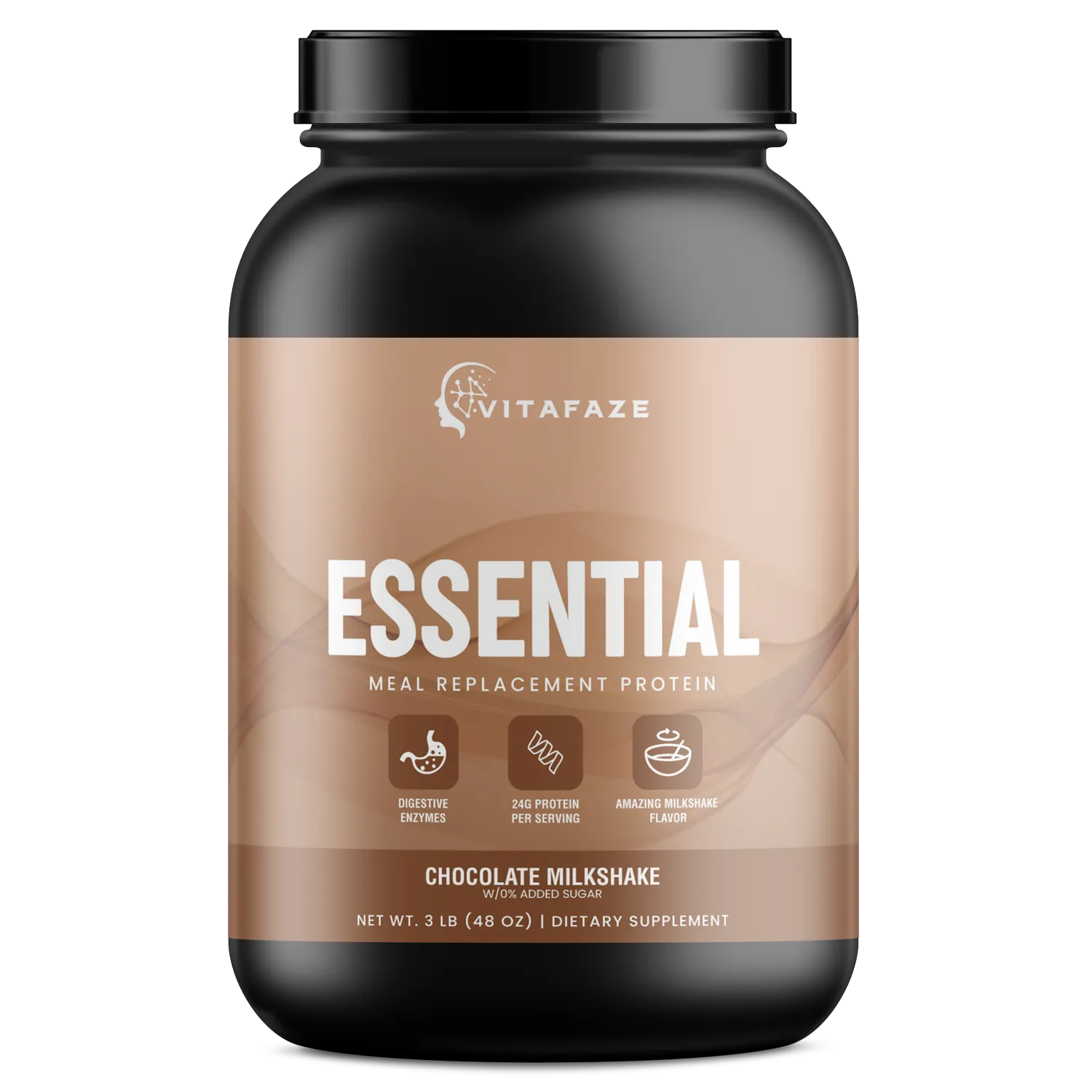
The 2.9lb Essential Meal Replacement Protein Chocolate Milkshake is one protein shake base some people use for their daily routine. Track your total calories, because a shake still counts toward your daily intake.
Realistic Expectations, Label Checks and Safety Considerations
Greens powders are not a cure-all. Set realistic expectations and treat the powder as a supplement to whole foods.
Check labels before you buy. Look for the serving size, the amount of greens or super reds per serving, added sugar and any allergens. Some products list ingredients by weight, and a long list of "proprietary blends" can hide exact amounts.
Talk with a doctor before adding any supplement if you have a health condition, are pregnant or breastfeeding, or take medication. Products like these have not been evaluated by the Food and Drug Administration, and they are not intended to diagnose, treat, cure or prevent any disease.
Putting Your Greens Shake Into Your Daily Routine
Start small. Add one scoop of greens to your shake once a day for two weeks, then adjust the flavor and texture to your taste. Keep the powder next to your protein tub so the habit is easy to follow.
Track how you feel and how your meals change over time. A greens shake works best as one part of a routine that includes whole vegetables, enough protein and regular training.
Ready to build a shake that covers more of your plant-based nutrition needs? Shop All Products at VitaFaze and find a greens or protein option that fits your routine.
Frequently Asked Questions
How often should you drink super greens?
Most greens powders list one scoop per day, usually mixed into a shake, smoothie or water. Taking more than the label directs is not recommended. Follow the serving size on the label, check the directions for your specific product, and talk to a doctor first if you take medication, are pregnant or are breastfeeding. Many people start with a half scoop to see how their stomach responds.
Can you mix greens powder with protein powder?
Yes. Greens powder and protein powder can be mixed in a shake. Add the greens powder to liquid first, then the protein, and blend for about 20 to 30 seconds. Adding a fruit such as banana or berries can mask the earthy flavor of greens.
What are the healthiest greens to add to a protein shake?
Spinach and kale are common additions to shakes. Frozen spinach adds volume without much flavor, while kale is more fibrous and benefits from a sweet base such as banana or pineapple. A greens powder with a base of several vegetables can be an easy alternative when you do not want to chop or store fresh produce. Choose the option you will actually use every day.
Is there a downside to drinking protein shakes every day?
Consider how daily protein shakes fit within your overall diet. Talk with a doctor or registered dietitian if you have questions about your nutrition. Check the label for added sugar and calories, and keep track of your total daily protein intake so you do not overshoot your needs without realizing it.
