



Why Athletes Need Fermented B Complex Supplements
Last Updated: November 20, 2026
Quick Summary
Athletes need a fermented b complex because B vitamins act as cofactors that help convert food into usable energy, supporting ATP production, muscle function, and recovery. Fermentation can pre-digest nutrients and may improve absorption, though direct head-to-head evidence in athletes is scarce, so dose and a full eight-vitamin spectrum matter most.
- B vitamins do not supply energy themselves; they help release it from food.
- Fermentation can break nutrients into simpler, easier-to-absorb forms.
- Direct trials comparing fermented and synthetic B vitamins in athletes are scarce.
- Choose a complex listing all eight B vitamins with clear amounts per serving.
- Take your B complex with a morning meal and give it several weeks.
Table of Contents
- What B-Complex Vitamins Do for Athletic Performance
- Do Athletes Need More B Vitamins Than Non-Athletes?
- Fermented B-Complex Benefits for Athletes
- Fermented vs. Synthetic B Vitamins: What the Evidence Shows
- Vitamin B12 for Vegan Athletes: Closing the Gap
- The Best Vitamin B Complex for Athletes: A Selection Guide
- Timing, Duration, and Use Around Training
- Safety, Interactions, and Upper Limits
- Choosing Your Fermented B Complex with VitaFaze
- Frequently Asked Questions
What B-Complex Vitamins Do for Athletic Performance
B-complex vitamins are a group of eight water-soluble vitamins that act as cofactors in the chemical reactions your body uses to turn food into usable energy. For athletes, that makes them central to how well you perform, recover, and fight off fatigue. This guide explains why athletes may benefit from fermented B-complex supplements, and where the real evidence sits.
Here's the key point most guides bury: B vitamins don't supply energy themselves. They help release it. That distinction matters when you're deciding what to take and when.
The Eight B Vitamins and Their Roles in Energy Metabolism
Each B vitamin has a specific job in energy metabolism. Here is how they break down:
- Vitamin B1 (thiamin) helps convert carbohydrates into energy and supports nerve transmission.
- Vitamin B2 (riboflavin) plays a role in fat metabolism and the electron transport chain.
- Vitamin B3 (niacin) supports cellular energy production and cell repair.
- Vitamin B5 (pantothenic acid) is needed to break down fats and carbohydrates.
- Vitamin B6 (pyridoxine) supports protein metabolism and red blood cell formation.
- Vitamin B7 (biotin) helps metabolize fats and amino acids.
- Vitamin B9 (folate) supports cell division and red blood cell formation.
- Vitamin B12 (cobalamin) supports nerve function and healthy red blood cells.
Together, these cofactors keep carbohydrate metabolism, fat metabolism, and protein metabolism running. Take one out of the chain and the whole system slows.
How B Vitamins Support ATP Production and Muscle Function
ATP synthesis is the process your cells use to make adenosine triphosphate, the molecule that powers muscle contractions. B vitamins are required cofactors at several points in that process. Without them, your body cannot fully convert macronutrients into ATP.
That connects directly to muscle function and fatigue. When B-vitamin status is low, energy production drops and fatigue sets in faster. For a broader look at how plant-based eaters can support cellular energy, see our guide to vegan supplements for cellular energy support.
Do Athletes Need More B Vitamins Than Non-Athletes?
Athletes may need more B vitamins than non-athletes, but the answer depends on the vitamin and the athlete.
What most guides miss is the nuance. A well-fed athlete eating a varied diet often meets needs without extra. A plant-based athlete, a heavy sweater, or someone training at high volume has a real gap to close.
A common approach is to check your diet first, then supplement to fill what's missing. The best vitamin B complex for athletes is the one that matches your actual shortfall, not the highest dose on the shelf.
Fermented B-Complex Benefits for Athletes
Fermented B-complex benefits center on absorption. Fermentation can pre-digest nutrients using beneficial microbes, which may make vitamins easier to take up. Whether that matters for you depends on your diet and training load.

How Fermentation Improves Bioavailability
Bioavailability is the share of a nutrient your body actually absorbs and uses. Fermentation can improve it in a few ways:
- It breaks down nutrients into simpler forms that are easier to absorb.
- It can reduce compounds that block absorption.
- It supports a healthier gut environment, where many vitamins are taken up.
Treat absorption claims with care. Look for a brand that explains its process rather than just printing "fermented" on the front.
Fermented vs. Synthetic B Vitamins: What the Evidence Shows
Most ranking pages on B-complex supplements for athletes never separate fermented from synthetic forms at all, and the ones that do usually repeat a marketing line. This section takes the opposite approach: it explains what fermentation actually changes, what the direct comparative evidence does and does not show, and how to read a label without being misled.
What Fermentation Actually Changes
Fermentation is a controlled microbial process. Beneficial bacteria or yeast are grown on a nutrient medium, and during that growth they convert or bind the B vitamins in the medium into new forms. The result is not a single standardized ingredient. Depending on the process, fermentation can:
What fermentation does not do is create B vitamins from nothing. The vitamins still have to be present in the fermentation medium, and the final dose on the label is what matters most. A fermented B complex with a low dose is still a low-dose product.
What the Comparative Evidence Shows
Direct head-to-head trials of fermented versus synthetic B vitamins in athletes are scarce. Most published research on B vitamins tests the vitamins themselves, thiamin, riboflavin, B6, folate, B12, against deficiency or performance outcomes, not the fermentation method. That is a real gap in the literature, and any brand that claims otherwise is overstating the science.
What the evidence does support:
- Both fermented and synthetic B vitamins can correct a deficiency when the dose is adequate. Correction of deficiency is the outcome with the strongest support, and it does not depend on the delivery form.
- Some studies on fermented ingredients suggest improved absorption or retention of certain nutrients compared with isolated forms, but the findings are ingredient-specific and do not generalize to every fermented B complex on the market.
- Synthetic forms are usually cheaper, more precisely dosed, and more consistently standardized, which matters when you need a reliable daily amount.
How to Read a Fermented Label Without Being Misled
Watch out: the word "fermented" on a front label is not regulated as a standardized claim, so it can describe anything from a fully fermented food matrix to a small amount of fermented medium added to synthetic vitamins. Check the supplement facts panel for the form of each vitamin, the amount per serving, and whether the label explains the fermentation process and the starting culture. A brand that explains its process is more credible than one that prints "fermented" and stops there.
For the deeper safety picture on synthetic vitamins in plant-based products, our breakdown of synthetic vitamins in vegan supplements covers what to check before you buy.
Vitamin B12 for Vegan Athletes: Closing the Gap
Vitamin B12 is a nutrient that plant-based athletes commonly need to supplement. B12 occurs naturally almost entirely in animal foods, so plant-based athletes are at real risk of deficiency without a reliable source.
For vegan athletes, the practical move is a consistent daily source, not an occasional top-up. If recovery is your focus, our look at whether vegan athletes recover faster digs into the science.
The Best Vitamin B Complex for Athletes: A Selection Guide
The best vitamin B complex for athletes is one that covers all eight B vitamins, uses a form your body absorbs well, and fits your diet and budget. Everything else is detail.
Use this checklist before you buy:
- Lists all eight B vitamins with amounts per serving
- States the form of each vitamin clearly
- Explains the delivery method, such as fermentation
- Made in an FDA-registered facility following GMP standards
- Third-party tested for purity and potency
- Fits your diet, with no animal-derived ingredients if you're plant-based
- Dose is practical for daily use around training
Key Criteria for Choosing a B-Complex Supplement
Here is how the main criteria stack up:
| Criterion | What to Look For | Why It Matters |
|---|---|---|
| Full spectrum | All eight B vitamins listed | Gaps leave energy pathways short |
| Form | Fermented or active forms | Better absorption for some |
| Testing | Third-party purity checks | Confirms what's on the label |
| Diet fit | Plant-based, no animal inputs | Matches vegan values |
| Dose | Practical daily serving | Consistency beats big doses |
A supplement that ticks most of these boxes beats a flashy one that ticks two.
Timing, Duration, and Use Around Training
Timing is simpler than most people expect. B vitamins are water-soluble, so many athletes take them with a meal in the morning to support energy through the day. Taking them with food can also ease stomach upset.
A few practical rules:
- Take your B complex at the same time daily for consistency.
- Pair it with a meal that contains some fat for better uptake.
- Start well before a key training block, not the week of competition.
- Give it several weeks to judge any effect on energy or fatigue.
There's no need to time a dose minutes before a workout. Steady intake matters far more than precise timing.
Safety, Interactions, and Upper Limits
B vitamins are water-soluble, so your body flushes what it does not use. That makes them generally safe at typical doses, but "water-soluble" does not mean "no limits." Several B vitamins have established upper limits, known interactions, and condition-specific risks that athletes should understand before adding a complex to their routine.
Upper Limits and What They Mean
Thiamin, riboflavin, B12, pantothenic acid, and biotin do not have established upper limits because no adverse effects have been consistently reported at high intakes. That does not make megadoses useful; it just means the risk profile is different.
Medication Interactions to Know
B vitamins can interact with some prescription medications. Check with your doctor before adding a B complex if you take medication.
If you take prescription drugs or have a health condition, check with your doctor before adding a B complex. Bring the actual label so the dose and form are clear.
Who Should Be More Cautious
Some athletes should treat a B complex as a clinician-guided decision rather than a routine purchase:
- Anyone with kidney or liver conditions, because some B vitamins are cleared or metabolized there.
- Athletes taking multiple supplements that overlap on B vitamins, since stacking is the most common route to excessive intake.
- People with a history of nerve symptoms, who should avoid high-dose B6 without medical supervision.
- Athletes preparing for competition in a tested program, who should confirm the product carries a banned-substance certification.
Watch out: "water-soluble" is often read as "take as much as you want." Add up every product you take before assuming you are within a safe range.
A few safety points to keep in mind:
- Stick to the labeled serving rather than stacking multiple B products.
- Tell your doctor about any supplement you take.
- Watch for interactions if you take medication for blood sugar or blood pressure.
- Stop and seek advice if you notice unusual tingling or skin reactions.
Choosing Your Fermented B Complex with VitaFaze
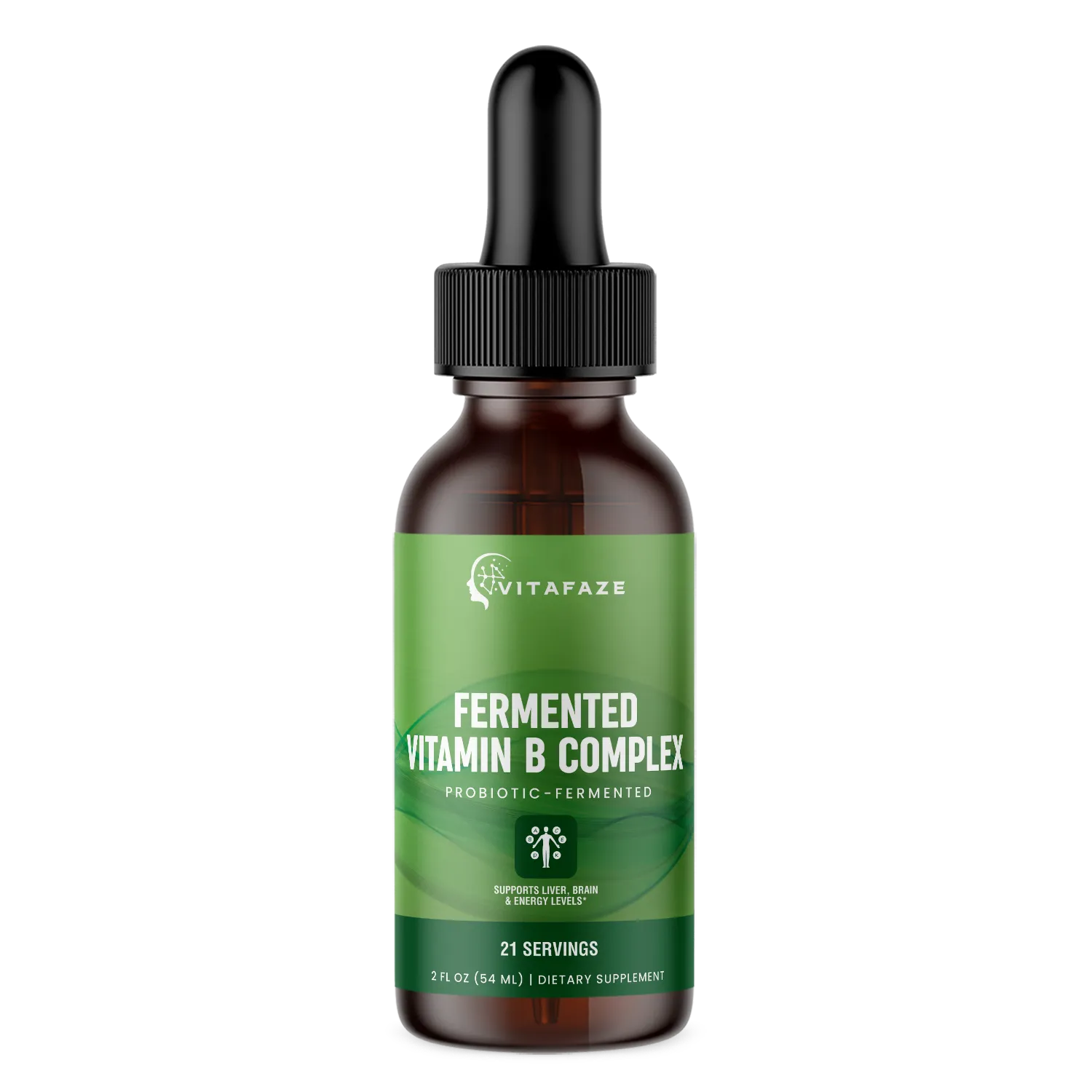
At VitaFaze, we built our fermented B complex for plant-based athletes who want clean, bioavailable nutrition without compromise. Our formula uses probiotic-fermented B vitamins and ND Technology™ (Novel Micro-cultured Delivery), and it's made in an FDA-registered facility following GMP standards.
You can choose the size that fits your routine: the Fermented Vitamin B Complex 2 fl oz for a first run, or the Fermented Vitamin B Complex 8 fl oz for a longer supply.
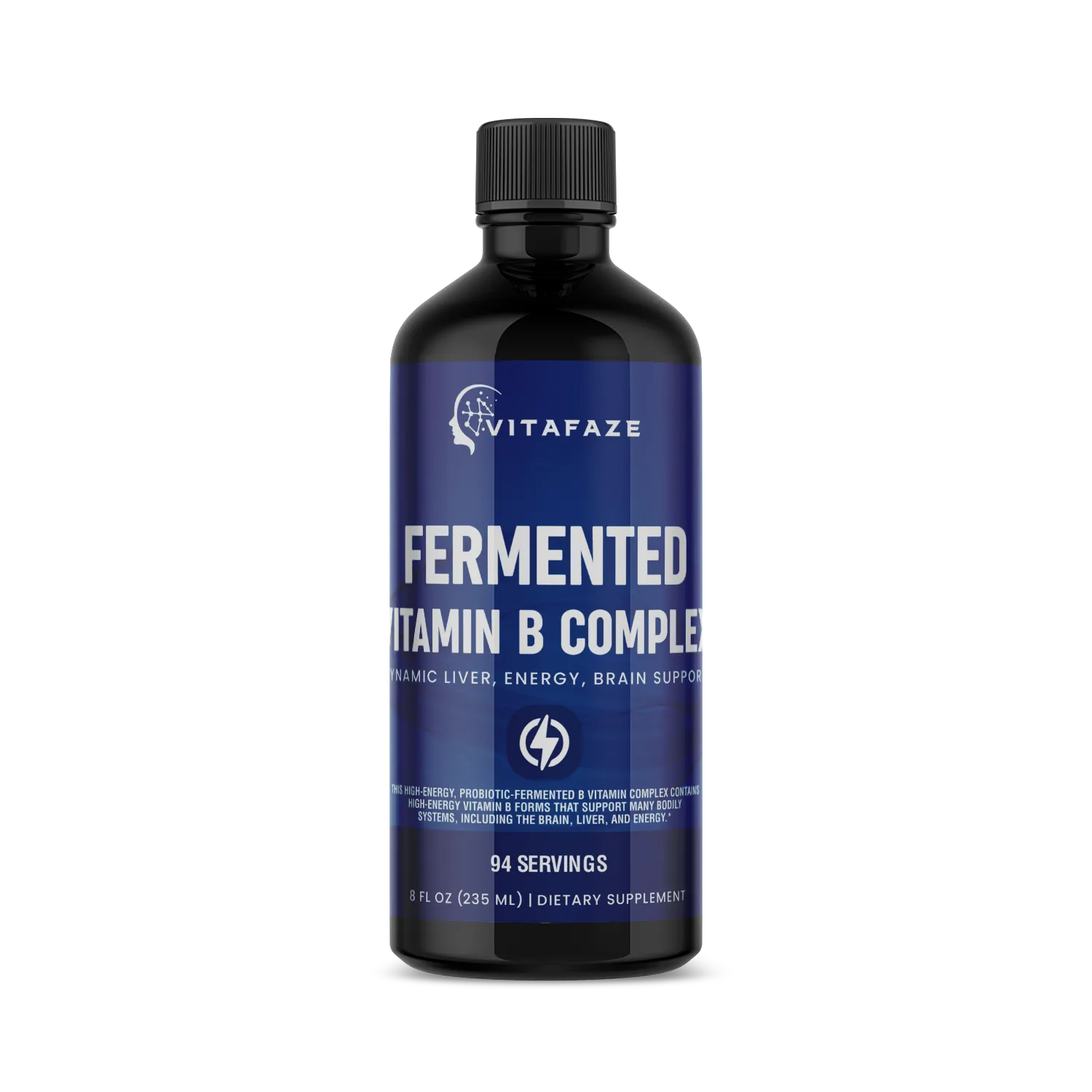
The gap most athletes face isn't effort. It's getting reliable nutrients into a hard-training body. A fermented B complex helps close that gap so your energy, endurance, and recovery can keep pace with your training.
Your training already asks a lot of your body. Give it the B-vitamin support to keep up. VitaFaze offers plant-powered, bioavailable formulas with probiotic-fermented B vitamins, ND Technology™ for absorption, and manufacturing in an FDA-registered, GMP-compliant facility. Get started with VitaFaze and fuel your recovery and cellular energy with nutrition built for plant-based athletes.
Frequently Asked Questions
Do athletes need more B vitamins than non-athletes?
Athletes may have higher B-vitamin needs because intense training increases energy metabolism and turnover of these water-soluble vitamins. Needs vary based on training volume, diet, and individual metabolism. A fermented B complex can help fill gaps, especially for plant-based athletes whose diets may be lower in certain B vitamins like B12.
Are fermented vitamins better absorbed than synthetic ones?
The evidence comparing fermented and non-fermented B vitamins is still limited. Synthetic B vitamins are effective for correcting deficiencies.
How can vegan athletes get enough vitamin B12?
B12 occurs naturally almost exclusively in animal products, so plant-based athletes should use fortified foods or a reliable B12 supplement. Regular testing and consistent supplementation are smart strategies for vegan athletes.
What should athletes look for in a B-complex supplement?
When choosing the best vitamin B complex for athletes, look for fermented formulas with all eight B vitamins, especially B12, B6, and folate. Check for transparent labeling and a manufacturer that follows GMP standards. VitaFaze's Fermented Vitamin B Complex uses probiotic-fermented B vitamins and ND Technology, and is made in an FDA-registered facility.
