



Vegan Supplements for Cellular Energy Support: 2026 Guide
Table of Contents
- Why Plant-Based Athletes Hit an Energy Wall
- How Vegan Supplements for Cellular Energy Support Work
- How to Get Enough B12 on a Vegan Diet
- Mitochondrial Support Supplements Vegan Athletes Rely On
- Vegan Iron Supplements for Fatigue and Recovery
- Nutrient Synergy: Pairing Supplements for Better Absorption
- Third-Party Testing and What Certifications Actually Prove
- Age-Specific Energy Needs on a Plant-Based Diet
- Choosing the Right Vegan Cellular Energy Supplement Stack
- Frequently Asked Questions
Last Updated: September 16, 2026
Why Plant-Based Athletes Hit an Energy Wall
Ask a plant-based runner why mile eight feels heavier than it should, and you'll usually hear the same answer: not enough protein. That's rarely the full story. Cellular energy support depends on a chain of nutrients, and B12, iron, and CoQ10 are three links in that chain that plant-based diets often undersupply. This guide from VitaFaze breaks down how vegan supplements for cellular energy support actually work, which nutrients matter most, and how to stack them so your body can use them. The strategies below focus on the mitochondria, the structures inside your cells that convert food into usable energy.
How Vegan Supplements for Cellular Energy Support Work
Vegan supplements for cellular energy support work by supplying the cofactors your mitochondria need to convert food into ATP, the molecule cells use for fuel. Miss one cofactor and the whole chain slows down.
Mitochondrial Function and ATP Production
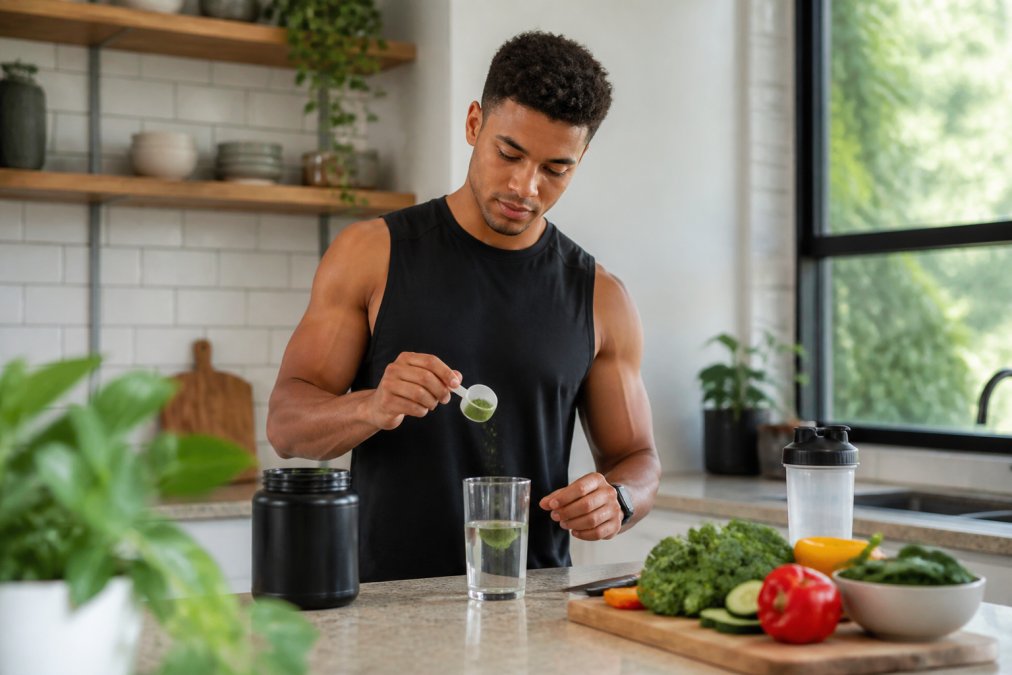
Mitochondrial function is the process by which your cells turn carbohydrates and fats into ATP. B vitamins act as coenzymes in that conversion, while CoQ10 helps move electrons through the chain. When any of these run low, fatigue shows up long before any lab value flags a deficiency.
Bioavailability of Plant-Sourced Nutrients
Bioavailability is the proportion of a nutrient your body actually absorbs and uses. Plant-sourced nutrients often need a delivery format that survives digestion, which is why fermented and micro-cultured forms are worth the extra cost. A common mistake is buying the cheapest capsule and assuming the label dose equals what reaches your cells.
How to Get Enough B12 on a Vegan Diet
Learning how to get enough B12 on a vegan diet starts with accepting that no unfortified plant food supplies it reliably. B12 comes from microbial fermentation, not plants, so vegans need fortified foods or a supplement. The NIH Office of Dietary Supplements B12 fact sheet outlines the daily targets clinicians use. A fermented B complex is one practical way to close that gap without juggling three separate bottles.

Cobalamin Forms and Daily Recommended Intake
Cobalamin is the family of compounds that make up vitamin B12, and methylcobalamin and cyanocobalamin are the two forms most supplements use. Adults generally need a small daily amount, and absorption drops with age. Check the NIH guidance for your specific intake target rather than guessing.
Mitochondrial Support Supplements Vegan Athletes Rely On
Most vegan energy guides stop at B12 and iron. That leaves the actual engine room, the mitochondria, underexplained. Mitochondrial support supplements vegan athletes reach for most often cluster into four jobs: shuttling electrons (CoQ10), building new mitochondria (PQQ), feeding the NAD+ pool that fuels repair (niacin and nicotinamide riboside precursors), and running the conversion steps (B vitamins).
CoQ10: Ubiquinone vs. Ubiquinol, and Why the Form Matters
CoQ10 sits inside the inner mitochondrial membrane and carries electrons between complexes I/II and complex III of the electron transport chain. Without it, the chain stalls and ATP output drops. Two forms dominate the market:
- Ubiquinone, the oxidized form. It is the form used in most clinical research, is cheaper, and is well absorbed when taken with a fat-containing meal.
- Ubiquinol, the reduced, antioxidant form. Some manufacturers market it as better absorbed, particularly for older adults, but the evidence is mixed and the price is typically higher.
A practical rule: if you are under 40 and eating fat with your dose, ubiquinone is usually sufficient. If you are over 50 or taking a statin, which depletes endogenous CoQ10, ubiquinol is worth discussing with a clinician. Typical studied doses range from 100 mg to 200 mg daily; higher is not automatically better, and CoQ10 is fat-soluble, so take it with a meal that contains olive oil, nuts, or avocado.
VitaFaze's CoQ10 (Ubiquinone) is third-party tested for heavy metals, which matters when you're taking it daily for years rather than weeks.
PQQ and NAD+ Precursors: The Next Layer
PQQ (pyrroloquinoline quinone) is a quinone that supports mitochondrial biogenesis, the process by which cells build new mitochondria. It is found in small amounts in parsley, green peppers, kiwi, and fermented soy, but food levels are low enough that supplement doses (typically 10-20 mg) are the practical route. PQQ also has antioxidant activity and is often stacked with CoQ10 because the two work on complementary sides of mitochondrial function: PQQ on creation, CoQ10 on electron flow.
NAD+ precursors are the other emerging category. NAD+ is a coenzyme that declines with age and is required for sirtuin activity and DNA repair. Two precursors dominate:
- Nicotinamide riboside (NR), a form of vitamin B3 that raises NAD+ levels in human trials.
- Nicotinamide mononucleotide (NMN), another B3-derived precursor; regulatory status in the U.S. has shifted in recent years, so check current FDA guidance before purchasing.
Neither NR nor NMN is a stimulant. Users typically describe a gradual change in recovery and afternoon energy rather than a jolt. Because these are newer ingredients, buy only from manufacturers who publish a certificate of analysis.
The Vegan Advantage and the Vegan Gap
Plant-based diets tend to be rich in the cofactors that support mitochondrial function, magnesium from leafy greens, folate from legumes, polyphenols from berries and tea. The gaps are the ones this article has already flagged: B12, iron, and CoQ10. CoQ10 is found in meat and organ meats; plant sources like spinach, broccoli, and peanuts contain small amounts, but not enough to move tissue levels meaningfully. That is why CoQ10 is one of the few nutrients where a vegan diet is at a structural disadvantage rather than just a logistical one.
CoQ10 and the Aging Energy Decline
CoQ10 decline is gradual, which is why the drop in energy feels like a slow leak rather than a switch. Pairing CoQ10 with a B complex supports the same pathway from two directions: B vitamins run the conversion steps, CoQ10 carries the electrons. Adding PQQ covers a third angle, building new mitochondria rather than just feeding existing ones. Most people notice the difference in sustained output across a training week, not in a single session.
Vegan Iron Supplements for Fatigue and Recovery
Vegan iron supplements for fatigue address the most common nutrient gap in plant-based athletes. Plant iron is non-heme, which absorbs less efficiently than the heme iron in meat, so timing and pairing matter. Take iron away from coffee and tea, and pair it with vitamin C to improve uptake. If fatigue persists despite supplementation, a clinician can check iron status with a blood panel before you assume the dose is wrong.
Nutrient Synergy: Pairing Supplements for Better Absorption
Nutrient synergy means some nutrients absorb and function better together than alone. Vitamin D helps calcium uptake; vitamin C improves non-heme iron absorption; B vitamins work as a team rather than individually. The table below shows the pairings worth building into a daily stack.
| Primary Nutrient | Pairs With | Why It Helps |
|---|---|---|
| Non-heme iron | Vitamin C | Improves absorption |
| CoQ10 | B complex | Supports the same energy pathway |
| Vitamin D3 | Vitamin K2 | Supports calcium use |
| Magnesium | B6 | Supports energy metabolism |
Third-Party Testing and What Certifications Actually Prove
Every vegan supplement brand claims to be "third-party tested." Very few explain what that phrase actually means, and fewer still show you how to verify it. This section is the label-literacy guide the rest of the category skips.
What Third-Party Testing Actually Verifies
Third-party testing means an independent lab, not the manufacturer, analyzes a finished product or its raw ingredients. A meaningful test panel covers four things:
- Identity, is the ingredient what the label says it is?
- Potency, does the dose match the label claim, within an acceptable margin?
- Purity, are heavy metals (lead, cadmium, arsenic, mercury), residual solvents, and microbes below established limits?
- Contamination, are there undeclared pharmaceuticals or fillers?
What it does not verify: that the product works, that the dose is clinically effective, or that the ingredients are absorbed. A clean COA is a floor, not a ceiling.
Certifications Worth Knowing
- NSF Certified for Sport, the most rigorous for athletes. Screens for substances banned by major sports organizations in addition to standard purity testing.
- Informed Sport, similar scope, widely recognized by athletic governing bodies.
- USP Verified, confirms the product meets United States Pharmacopeia standards for identity, strength, purity, and dissolution.
- ConsumerLab, an independent reviewer that publishes test results; useful for cross-checking a brand's claims.
- GMP compliance, a manufacturing standard, not a product certification. It says the facility follows good manufacturing practices; it does not say the finished bottle was tested.
A product can be GMP-compliant and still fail a purity test. That distinction is the single most misunderstood point in supplement marketing.
How to Read a Certificate of Analysis
A real COA includes:
- The lot number matching the bottle in your hand
- The testing laboratory's name and accreditation
- Test methods (HPLC, ICP-MS, and similar)
- Results with pass/fail against a stated specification
- A date and a signature or seal
Red flags: a COA with no lot number, a COA that lists only "purity: passed" without numbers, or a brand that will not share a COA on request. If a company cannot produce a lot-specific COA within a business day, treat the "third-party tested" claim as marketing.
What to Look For on the Bottle
- FDA-registered facility, the FDA registers facilities but does not approve supplements before sale. Registration is a baseline, not an endorsement.
- A stated dose per serving, vague "proprietary blends" hide underdosed ingredients.
- Allergen and vegan statements, "vegan" is not a regulated term on supplements; look for a certified vegan mark if that matters to you.
- Expiration date, B vitamins and CoQ10 lose potency over time.
VitaFaze's Fermented Vitamin B Complex is made in an FDA-registered facility and tested for purity, which is the baseline any serious athlete should expect before committing to a daily regimen.
Age-Specific Energy Needs on a Plant-Based Diet
Energy needs shift with age, and plant-based athletes are no exception. In your twenties, recovery is forgiving and deficiencies hide behind youth. By your forties, CoQ10 production has dropped, B12 absorption has slowed, and the same training load demands more recovery. Adjusting your stack to match your decade beats copying a twenty-year-old's routine.
Choosing the Right Vegan Cellular Energy Supplement Stack
The right stack covers three jobs: energy conversion, oxygen delivery, and stress resilience. Build it in that order rather than buying whatever is on sale.
- B vitamins: fermented B complex for energy metabolism
- CoQ10: for mitochondrial support and antioxidant defense
- Iron: only if a blood panel shows you need it
- Adaptogens: ashwagandha and shilajit for stress-related fatigue
VitaFaze's Premium Shilajit Gummies with Ashwagandha covers the adaptogen layer in one chewable, which helps if you already take enough capsules. For a complete stack, the Fermented Vitamin B Complex 8 fl oz pairs with CoQ10 to cover both the conversion and electron-transport sides of the energy pathway.

Frequently Asked Questions
What is the best supplement for cellular energy support on a vegan diet?
There is no single best option because cellular energy depends on several nutrients working together. B12 supports energy metabolism and red blood cell formation, CoQ10 aids mitochondrial ATP production, and iron carries oxygen to working muscles. A fermented B complex plus CoQ10 covers the core gaps most plant-based athletes face. Look for third-party tested products formulated in FDA-registered facilities so you know the label matches what is in the bottle.
How do vegan supplements support mitochondrial function?
Mitochondria convert nutrients into ATP, the energy currency your muscles burn during training. Vegan mitochondrial support supplements typically supply CoQ10, B vitamins, and minerals that feed the electron transport chain and protect mitochondria from oxidative stress. CoQ10 levels decline with age, so athletes over 30 often notice the biggest difference. Pairing CoQ10 with a fermented B complex addresses both the energy conversion step and the nutrient cofactors it depends on.
Can vegan iron supplements for fatigue actually make a difference?
Yes, if your fatigue traces back to low iron status, which is common on plant-based diets because plant iron (non-heme) absorbs less efficiently than animal sources. Pairing iron with vitamin C boosts absorption, while coffee, tea, and calcium block it. Get ferritin levels tested before supplementing, since too much iron causes its own problems. A clinician can confirm whether iron is your bottleneck or whether B12, CoQ10, or another nutrient is the real issue.
How do I know a vegan supplement is actually bioavailable and not just marketing hype?
Check for third-party testing certificates, an FDA-registered manufacturing facility, and delivery technologies that improve absorption, such as probiotic fermentation. Fermented B vitamins, for example, arrive in forms your body recognizes and uses more readily than standard crystalline isolates. Heavy-metal testing matters too, especially for plant-sourced ingredients that can pull minerals from soil. If a brand will not publish its test results, treat the bioavailability claims as unproven.
Fatigue on a plant-based diet usually traces back to a gap you can name, not a mystery. VitaFaze builds plant-powered nutrition around clean, bioavailable ingredients and targeted performance support, so you can close those gaps without animal-derived products. Start with the CoQ10 and fermented B complex, add adaptogens for stress-related fatigue, and get your iron status checked before adding more. Shop All Products at VitaFaze and give your cells the fuel they've been missing.