



Bioavailable Plant Based Iron Supplements: 2026 Guide
Table of Contents
- Why Plant Based Iron Supplements Absorb Differently
- Non-Heme Iron Absorption Tips That Actually Move Ferritin
- Vitamin C and Iron Absorption Synergy: Pairing Rules That Work
- The Anti-Nutrients That Block Your Dose
- Iron Deficiency Symptoms in Runners and Endurance Athletes
- Comparing Bioavailable Plant Based Iron Supplements: Forms, Pros and Cons
- Dosage by Life Stage, Testing, and Mineral Interactions
-
Iron-Rich Recipes and Absorption-Enhancing Pairings
- The Three-Part Meal Formula
- Recipe 1: Lentil and Spinach Bowl with Citrus Dressing
- Recipe 2: Black Bean Tacos with Salsa and Lime
- Recipe 3: Chickpea Curry with Tomato and Lemon
- Recipe 4: Fortified Oatmeal with Strawberries and Pumpkin Seeds
- Pairings to Avoid at the Same Meal
- Prep Habits That Cut Phytates Before You Cook
- Frequently Asked Questions
Last Updated: September 15, 2026
Why Plant Based Iron Supplements Absorb Differently
Bioavailable plant based iron supplements are formulated to deliver iron in a form your body can actually absorb and use, which matters because plant-based iron behaves nothing like the iron in a steak. VitaFaze builds its formulas around that difference rather than ignoring it. The iron in plants arrives as non-heme iron, and your gut treats it with far more suspicion than the heme iron found in animal tissue. Absorption rates for non-heme iron typically land in the single digits, while heme iron can clear double digits under the same conditions (ods.od.nih.gov).
That gap is not a flaw in plant-based nutrition. It is a design constraint, and once you understand it, you can work with it. Below, we break down the chemistry, the pairing rules, and the supplement forms that close the gap.
Non-Heme Iron and the Chemistry That Slows It Down
Non-heme iron is the only form of iron found in plants, and it must be chemically reduced from ferric to ferrous iron before your intestinal cells can take it up. That reduction step is the bottleneck.
Your body handles this conversion with help from stomach acid and vitamin C, but the process is inefficient compared to heme iron, which enters through a dedicated pathway. Several factors slow it further:
- Phytates in grains, legumes, and seeds bind iron and carry it out of the body
- Polyphenols in coffee, tea, and cocoa form complexes that resist breakdown
- Calcium competes for the same transport channels
- Low stomach acid reduces the initial reduction step
The practical takeaway: timing and pairing matter more for plant-based iron than for any other nutrient in your stack.
Non-Heme Iron Absorption Tips That Actually Move Ferritin
Ferritin is the storage protein that tells you what your iron reserves actually look like, and moving it takes consistency rather than heroics. The tips below focus on habits that shift ferritin over weeks, not single meals.
- Take iron on an empty stomach when you can. Food proteins and minerals compete for uptake; a 30-minute buffer before eating improves absorption for most people.
- Split your dose. Your gut saturates quickly. Two smaller doses absorb better than one large one.
- Avoid coffee and tea within an hour of your dose. The polyphenols in both bind iron directly.
- Pair with vitamin C at a 2:1 ratio. More on this below.
- Take consistently. Ferritin responds to daily exposure, not occasional large doses.
A common mistake is doubling the dose after a low ferritin reading. That usually produces stomach upset and no meaningful gain. Smaller, frequent, well-paired doses win every time.
Vitamin C and Iron Absorption Synergy: Pairing Rules That Work
Vitamin C and iron absorption synergy is one of the few nutritional interactions with genuinely strong evidence behind it. Ascorbic acid reduces ferric iron to its absorbable ferrous form and keeps it soluble through the stomach.
The rules that matter in practice:
| Pairing | Effect on Absorption | Best Practice |
|---|---|---|
| Iron + vitamin C | Enhances uptake | 2:1 ratio, same meal |
| Iron + coffee or tea | Blocks uptake | Separate by 1 hour |
| Iron + calcium | Competes | Split across meals |
| Iron + phytates | Reduces uptake | Soak or ferment grains |
| Iron + heme source | Enhances uptake | Not applicable for vegans |
A glass of orange juice with a lentil bowl does more for your iron status than any single supplement tweak. The NIH Office of Dietary Supplements iron fact sheet outlines how ascorbic acid enhances non-heme iron absorption and is worth reading alongside any supplement label.
The Anti-Nutrients That Block Your Dose
Phytates and polyphenols are the two anti-nutrients that most reliably interfere with plant-based iron, and understanding them changes how you build meals. Phytates appear in whole grains, legumes, nuts, and seeds. Polyphenols concentrate in coffee, black tea, red wine, and cocoa.
You do not need to eliminate either. You need to manage the timing.
- Soaking, sprouting, and fermenting grains and legumes reduces phytate content substantially
- Pairing iron-rich foods with vitamin C counteracts much of the phytate effect
- Moving your coffee to a different hour is easier than removing it
- Calcium supplements taken at the same time as iron reduce uptake measurably
What most guides miss is that anti-nutrients are dose-dependent. A small amount of phytate in a meal is not the same as a phytate-heavy bowl of unsoaked bran.
Iron Deficiency Symptoms in Runners and Endurance Athletes
Iron deficiency symptoms in runners show up before a blood test does, and endurance athletes sit in a higher-risk group than the general population. The mechanical stress of running, foot-strike hemolysis, sweat losses, and higher turnover all drain iron faster than most people replace it.
Watch for:
- Persistent fatigue that does not improve with rest
- Reduced pace at the same perceived effort
- Shortness of breath on familiar routes
- Cold hands and feet
- Pale skin, especially around the gums
- Brittle nails or unusual cravings for ice
The tricky part is that these symptoms overlap with ordinary overtraining. If your recovery has stalled for more than two weeks, a ferritin panel is the fastest way to rule iron out. The CDC information on iron deficiency notes that iron deficiency remains one of the most common nutritional shortfalls, and athletes are not exempt.
Comparing Bioavailable Plant Based Iron Supplements: Forms, Pros and Cons
Bioavailable plant based iron supplements vary widely in form, tolerance, and how well they hold up against the anti-nutrients in your diet. The table below compares the main options you will see on a label.
| Form | Absorption Profile | Pros | Cons |
|---|---|---|---|
| Ferrous bisglycinate | Chelated, high tolerance | Gentle on stomach, fewer interactions | Higher cost per dose |
| Ferrous fumarate | High elemental iron | Effective, widely available | GI upset for some users |
| Ferrous sulfate | Standard reference form | Well studied, inexpensive | Most GI side effects |
| Iron bisglycinate + vitamin C | Chelated with enhancer | Best overall absorption | Requires consistent timing |
| Food-based iron blends | Whole-food matrix | Easy on digestion | Lower elemental iron per dose |
Chelated iron is a form many plant-based athletes consider. The glycine molecule shields the iron from phytates and polyphenols, which can mean fewer absorption losses from the rest of your plate.
Chelated Iron: Ferrous Bisglycinate and Ferrous Fumarate
Chelated iron is iron bound to an amino acid, usually glycine, which protects it from binding to anti-nutrients in the gut. Ferrous bisglycinate is the more tolerated of the two chelated forms; ferrous fumarate delivers more elemental iron per milligram but is harder on the stomach.
For plant-based athletes, ferrous bisglycinate is often favored for tolerance. The trade-off can be cost and the fact that it may require a slightly higher milligram dose to match fumarate's elemental iron content. If you have a sensitive gut, bisglycinate may be a suitable starting point. If you tolerate iron well and want a higher elemental iron per capsule, fumarate can be a practical pick.
Dosage by Life Stage, Testing, and Mineral Interactions
Dosage is where most self-directed iron plans go wrong. The daily recommended allowance shifts with age, menstrual status, pregnancy, and training load, and guessing leads to either no progress or GI misery. The section below gives you concrete ranges to discuss with your clinician, plus the testing protocol that tells you whether your plan is actually working.
Recommended Daily Iron Intake by Life Stage
The Institute of Medicine sets the Recommended Dietary Allowance (RDA) for iron in milligrams per day. For people eating a plant-based diet, the RDA is multiplied by 1.8 because non-heme iron absorbs less efficiently, a factor the NIH Office of Dietary Supplements explicitly applies to vegetarians.
| Life Stage | Standard RDA | Plant-Based Adjusted (×1.8) |
|---|---|---|
| Men, 19-50 | 8 mg | ~14 mg |
| Women, 19-50 (menstruating) | 18 mg | ~32 mg |
| Women, 51+ (postmenopausal) | 8 mg | ~14 mg |
| Pregnancy | 27 mg | ~48 mg |
| Lactation | 9 mg | ~16 mg |
| Endurance athletes (either sex) | Not separately set | Often 1.3-1.7× the standard RDA |
The 1.8× multiplier is a population-level adjustment, not a personal prescription. A woman with heavy periods and a ferritin of 12 needs a different plan than a woman with a ferritin of 60, even though both fall under the same RDA row.
Supplement Dosing: Elemental Iron vs. Compound Weight
The single most common dosing mistake is confusing elemental iron with the total weight of the iron compound. A 325 mg capsule of ferrous sulfate contains only about 65 mg of elemental iron, the rest is the sulfate carrier. Ferrous fumarate runs about 33% elemental iron, and ferrous bisglycinate runs about 20%. Always read the elemental iron number on the Supplement Facts panel, not the compound weight on the front label.
Typical clinical dosing ranges for treating iron deficiency, per most practitioners:
- Mild deficiency (ferritin 15-30 ng/mL): 30-65 mg elemental iron every other day
- Moderate deficiency (ferritin under 15 ng/mL): 60-120 mg elemental iron, often split across two doses
- Athletes in heavy training: 30-60 mg elemental iron daily or every other day, adjusted by ferritin trend
Every-other-day dosing is increasingly favored over daily dosing because a single dose raises hepcidin, the hormone that blocks iron absorption, for roughly 24 hours. Taking iron daily means you spend part of each day in a low-absorption state. Spacing doses 48 hours apart sidesteps much of that effect.
Testing: What Each Marker Actually Tells You
A ferritin number alone does not tell the whole story. Ask for the full iron panel:
- Ferritin, your storage pool. Under 30 ng/mL suggests depleted stores even if hemoglobin is normal. Under 15 ng/mL is frank deficiency for most labs.
- Serum iron, iron circulating in your blood right now. Highly variable day to day; useful mainly alongside other markers.
- Transferrin saturation (TSAT), the percentage of transferrin proteins carrying iron. Below 20% suggests insufficient supply to the bone marrow.
- Hemoglobin and hematocrit, these fall only after stores are exhausted. A normal hemoglobin does not rule out deficiency.
- CBC with MCV, mean corpuscular volume drops in later-stage deficiency, so it lags ferritin by weeks.
Ferritin is also an acute-phase reactant, meaning it rises with inflammation, infection, or intense training. A runner with a ferritin of 40 during a heavy training block may still have functional deficiency. If ferritin and symptoms disagree, ask about CRP or a soluble transferrin receptor test.
Retest eight to twelve weeks after starting a supplement. Ferritin moves slowly, expect a rise of roughly 5-15 ng/mL per month on a well-absorbed protocol, not overnight.
Mineral Interactions: The Spacing Rules
Iron shares transport pathways with several other minerals, and stacking them at the same meal means one of them loses.
- Calcium, the strongest competitor. A 300 mg calcium dose can cut iron absorption by roughly half. Separate by at least two hours, and do not take iron with milk, yogurt, or a calcium supplement.
- Zinc, competes for the DMT1 transporter. If you supplement both, take them at different meals. Zinc and iron together at high doses can blunt uptake of both.
- Copper, needed for iron metabolism, but high-dose zinc depletes copper, which then impairs iron utilization. If you take zinc long-term, ask about copper status.
- Magnesium, less direct competition, but a large magnesium dose at the same time can slow gastric emptying and reduce iron uptake. Space it out.
The USDA dietary guidance framework recommends spacing mineral supplements across meals rather than stacking them, and this is one of the few cases where the general advice is genuinely worth following.
Iron-Rich Recipes and Absorption-Enhancing Pairings
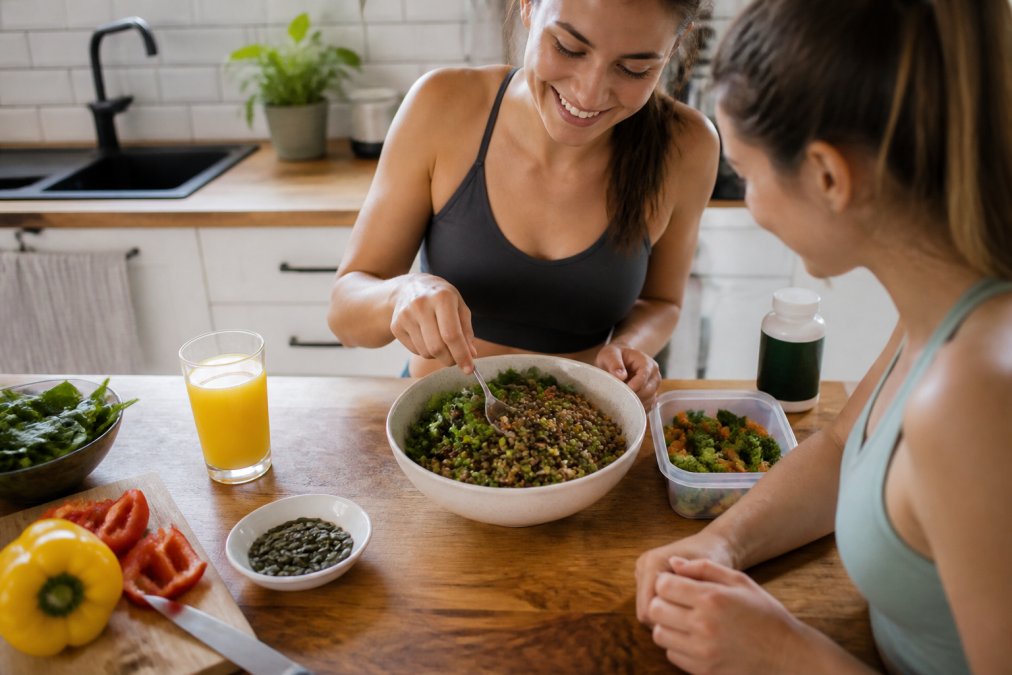
The best plant-based iron meal combines three things: a high-iron base, a vitamin C source at the same meal, and a low-phytate preparation. Most guides list iron-rich foods and stop there. The templates below show you how to build meals that actually move ferritin, with the pairing logic spelled out so you can improvise.
The Three-Part Meal Formula
Every absorption-optimized meal follows the same structure:
- Iron base, lentils, chickpeas, black beans, tofu, tempeh, spinach, or fortified grains
- Vitamin C partner, bell peppers, citrus, tomatoes, broccoli, or strawberries, at roughly a 2:1 vitamin C to iron ratio by weight
- Phytate management, soak, sprout, ferment, or pair with enough vitamin C to counteract the phytate load
Get those three right and you do not need to count milligrams at every meal. Miss the vitamin C partner and you can lose half your absorption to phytates before the food even leaves your stomach.
Recipe 1: Lentil and Spinach Bowl with Citrus Dressing
- 1 cup cooked lentils (soaked overnight before cooking to reduce phytates)
- 2 cups fresh spinach, wilted
- 1 red bell pepper, sliced
- 2 tbsp pumpkin seeds
- Dressing: 3 tbsp orange juice, 1 tbsp lemon juice, olive oil, salt
Why it works: Lentils and spinach are both high in non-heme iron. The orange and lemon juice supply ascorbic acid at the same meal, which reduces ferric iron to its absorbable ferrous form. The overnight soak cuts phytate content substantially. The pumpkin seeds add zinc and magnesium without blocking uptake. Skip the coffee until an hour after eating.
Recipe 2: Black Bean Tacos with Salsa and Lime
- 1 cup black beans, rinsed
- 2 corn tortillas (or sourdough, which is fermented and lower in phytates than unfermented wheat)
- 1/2 cup fresh salsa
- Lime wedge, squeezed over the top
- Optional: 1/2 cup sautéed bell peppers
Why it works: Black beans deliver iron and folate. The lime and salsa provide ascorbic acid. Corn tortillas are traditionally nixtamalized, treated with limewater, which reduces phytate content compared to untreated corn. Sourdough fermentation does the same for wheat.
Recipe 3: Chickpea Curry with Tomato and Lemon
- 1 cup chickpeas, cooked
- 1 cup crushed tomatoes
- 1/2 cup coconut milk
- 1 tbsp lemon juice, added off the heat
- Spinach, stirred in at the end
Why it works: Tomatoes and lemon juice both supply vitamin C, and adding the lemon off the heat preserves more ascorbic acid than cooking it in. Spinach adds a second iron source. Serve over soaked and cooked rice rather than unsoaked rice to cut phytate load.
Recipe 4: Fortified Oatmeal with Strawberries and Pumpkin Seeds
- 1 cup fortified oatmeal (check the label, fortification levels vary widely)
- 1 cup sliced strawberries
- 2 tbsp pumpkin seeds
- 1 tbsp blackstrap molasses (optional, adds iron and calcium, skip if you take a calcium supplement at the same time)
Why it works: Fortified oats are one of the few breakfast grains with meaningful iron. Strawberries supply vitamin C. Pumpkin seeds add zinc and magnesium. Note the molasses caveat: blackstrap molasses is high in both iron and calcium, and the calcium competes with the iron. If you are supplementing calcium, keep it out of this meal.
Pairings to Avoid at the Same Meal
Prep Habits That Cut Phytates Before You Cook
Frequently Asked Questions
Why is plant based iron harder to absorb than iron from animal sources?
Plant foods carry non-heme iron, while meat contains heme iron. Heme iron is absorbed at a higher rate because it enters the bloodstream through a dedicated pathway. Non-heme iron has to be converted and transported through a different route, and it competes with compounds in the same meal. That said, non-heme iron absorption rises sharply when your body is low on iron, so a plant based iron supplement still works when ferritin levels drop and you pair the dose with vitamin C.
How can I increase the bioavailability of my plant based iron supplement?
Take it with 50 to 100 mg of ascorbic acid, which is vitamin C, either as a supplement or from citrus, bell peppers, or strawberries. Avoid coffee, tea, and calcium-rich foods within an hour of your dose, since polyphenols and calcium reduce uptake. Choose a chelated form such as ferrous bisglycinate if standard ferrous sulfate upsets your stomach. Splitting the dose across two sittings also helps, because the body absorbs a smaller amount more efficiently than one large dose.
Do vegan athletes need more iron than non-vegans?
The daily recommended allowance for iron is 8 mg for adult men and 18 mg for women aged 19 to 50, and vegetarians and vegans are often advised to aim about 1.8 times higher because non-heme iron absorbs less efficiently. Endurance athletes add another layer: repetitive foot strike can break down red blood cells, and sweat losses add up. Runners should track ferritin levels with a blood test rather than guessing, since symptoms like fatigue and slow recovery overlap with overtraining.
Should I take vitamin C with my iron supplement?
Yes. Ascorbic acid is one of the few compounds that reliably increases non-heme iron absorption, and the effect shows up even at modest doses. Pairing your plant based iron supplement with orange juice, a bell pepper, or a vitamin C tablet at the same sitting can meaningfully raise how much iron reaches your bloodstream. Keep the pairing consistent, because the benefit depends on both being present in the gut at the same time, not hours apart.