



Fermented Plant Protein vs Collagen for Skin Health
Last Updated: November 9, 2026
Quick Summary
Fermented plant protein feeds your body the full spectrum of amino acids it needs to build its own structural proteins, including the collagen precursors glycine and proline, while collagen peptides supply skin-specific building blocks like glycine directly but are not a complete protein. Collagen gives you skin-specific building blocks; fermented plant protein gives you everything else.
- Collagen is roughly one-third glycine, while plant proteins are lower in glycine and lack hydroxyproline entirely.
- Fermentation shortens peptide chains, reduces antinutrients like phytates, and supports a healthier gut microbiome for better absorption.
- A realistic booster stack pairs a complete plant protein with vitamin C, copper, and zinc to support collagen synthesis.
- Choose collagen as an add-on if you eat animal products and already hit your daily protein target from food.
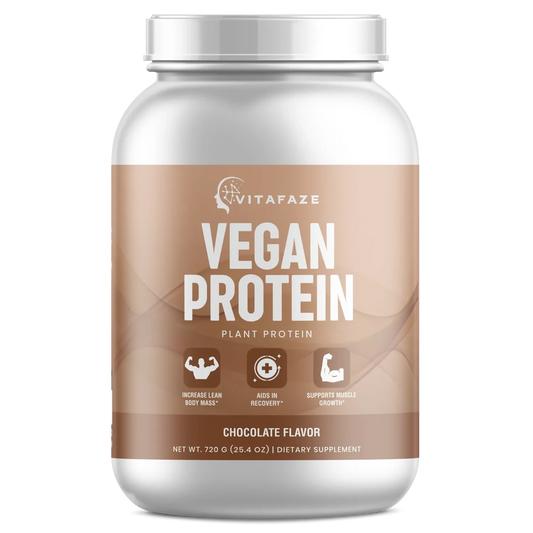
- Our Vegan Protein Chocolate Shake delivers 22 grams of complete plant protein per scoop for $32.97.
Table of Contents
- Fermented Plant Protein vs Collagen for Skin Health: The Core Difference
- What Collagen Supplements Actually Deliver
- How Fermented Plant Protein Works Differently
- The Amino Acid Profile of Collagen vs Plant Protein
- Bioavailability of Fermented Plant Protein and Absorption Rates
- Plant-Based Collagen Boosters: What They Are and How to Stack Them
- Fermentation Process Specifics: How Bio-Fermentation Changes the Game
- Vitamin C, Collagen Synthesis, and Micronutrient Support
- Digestive Health and Gut Impact: Fermented Protein vs Collagen
- Environmental Impact Comparison: Plant Protein vs Animal-Derived Collagen
- Side Effects, Risks, and Who Should Choose Which
- Building Your Skin Health Stack with VitaFaze
- Frequently Asked Questions
Fermented Plant Protein vs Collagen for Skin Health: The Core Difference
Fermented plant protein is plant-based protein broken down by beneficial microbes before it reaches your gut, which changes how your body absorbs the amino acids inside it. Collagen is a structural protein extracted from animal connective tissue. Both get marketed for skin, and they work through completely different mechanisms.
Here's the uncomfortable truth most supplement aisles skip: you may be buying collagen for skin while your actual bottleneck is protein absorption.
Below, we'll break down what each option actually delivers, where the science is solid, and where it's mostly hope.
What Collagen Supplements Actually Deliver
Collagen supplements deliver collagen peptides: short chains of amino acids, mainly glycine, proline, and hydroxyproline, that your body breaks down before rebuilding. Hydrolyzed collagen is the standard form because smaller peptide chains absorb more readily than intact protein.
The honest limitation? Your body doesn't send collagen peptides straight to your face. It dismantles them and redistributes the amino acids wherever they're needed. Skin elasticity and dermal density may improve over time, but the mechanism is indirect.
If you want a straight answer on whether the vegan versions of these products are worth buying at all, our breakdown of whether vegan collagen is worth taking covers the evidence honestly.
How Fermented Plant Protein Works Differently
Fermented plant protein supports skin by supplying the full spectrum of amino acids your body needs to build its own structural proteins, including the collagen precursors glycine and proline. The difference is that it feeds the factory rather than shipping in a finished part.
Plant proteins are typically lower in glycine than animal sources.
For the deeper science on what fermentation actually does in the body, read our article on the benefits of fermented plant protein.
The Amino Acid Profile of Collagen vs Plant Protein
Collagen is narrow and deep in its amino acid content. Plant protein is broad and shallow.
| Feature | Collagen Peptides | Fermented Plant Protein |
|---|---|---|
| Glycine | High (roughly one-third of total amino acids) | Low to moderate |
| Proline | High | Low |
| Hydroxyproline | Present | Absent |
| Leucine | Minimal | Moderate |
| Tryptophan | Absent | Present in complete blends |
| Complete protein | No | Yes, when blended |
| Source | Animal connective tissue | Peas, rice, other plants |
The glycine gap deserves a closer look. Glycine is the smallest amino acid and the most abundant in collagen, roughly one in every three residues. Your body can synthesize glycine, but endogenous production may not keep pace with demand during periods of high collagen turnover, such as after exercise or during wound healing. Collagen peptides deliver a direct glycine supply; fermented plant proteins deliver less. That is the real argument for collagen, and it is narrower than most supplement copy suggests.
Proline follows a similar pattern. Plant proteins contain proline, but at lower concentrations than animal connective tissue. Hydroxyproline, the post-translationally modified form found almost exclusively in collagen, is absent from plant sources entirely. Your body can convert proline to hydroxyproline using vitamin C as a cofactor, which is one reason vitamin C status matters so much for plant-based eaters.
That's the trade-off in one sentence: collagen gives you skin-specific building blocks, plant protein gives you everything else. A complete plant protein covers the essential amino acid base, and a modest collagen or glycine supplement fills the skin-specific gap if you eat animal products. If you follow a fully plant-based diet, focus on total protein, vitamin C, and enough glycine-rich foods like legumes and seeds.
Watch out: labels that list "collagen" without specifying peptide size or amino acid breakdown make it impossible to compare glycine content across products. Look for a supplement facts panel that reports glycine and proline separately.
Bioavailability of Fermented Plant Protein and Absorption Rates
Three factors drive the difference:
- Peptide size: fermentation produces shorter chains, which absorb faster
- Antinutrient reduction: phytates and trypsin inhibitors drop during fermentation, freeing up minerals
- Gut environment: a healthier microbiome improves overall nutrient uptake
Our article on bioavailable amino acids for plant-based athletes goes deeper on why this matters for performance.
Plant-Based Collagen Boosters: What They Are and How to Stack Them
Plant-based collagen boosters are ingredients that support your body's own collagen production rather than supplying collagen directly. The main ones are vitamin C, amino acids like glycine and proline, and plant proteins that provide those precursors.
A realistic booster stack looks like this:
- A complete plant protein to supply the amino acid building blocks
- Vitamin C to support collagen synthesis
- Copper and zinc for connective tissue formation
- Adequate total protein across the day, not just one shake
Synergistic Stacking for Better Skin Results
Stacking works because collagen production is a multi-step process. Vitamin C acts as a cofactor in collagen synthesis, meaning the enzymes that build collagen don't function properly without it. Amino acids supply the raw material. Minerals support the enzymes.
Skip one piece and the whole chain slows down. This is why a single mega-dose of collagen often underperforms a modest, well-rounded stack taken consistently.
Fermentation Process Specifics: How Bio-Fermentation Changes the Game

Watch out: not every product labeled fermented has gone through a meaningful fermentation period. Some use the term loosely for a flavoring step. Check whether the label names the culture or process.
Vitamin C, Collagen Synthesis, and Micronutrient Support
Micronutrient support extends beyond vitamin C. Zinc and copper both participate in connective tissue formation, and iron status affects how well oxygen and nutrients reach skin tissue. A plant-based diet can meet these needs, but it takes attention.
Digestive Health and Gut Impact: Fermented Protein vs Collagen
The gut-skin connection matters here. A healthier microbiome supports nutrient absorption, which in turn supports skin. If your digestion is compromised, even a well-formulated supplement underdelivers.
Environmental Impact Comparison: Plant Protein vs Animal-Derived Collagen
For plant-based athletes, this often seals the decision. The supplement that aligns with your values also happens to be the one that supplies a complete amino acid profile.
Side Effects, Risks, and Who Should Choose Which
Neither option is risky for most healthy adults, but they suit different people and carry different watch-outs. Here's how we'd decide, with the specifics most guides leave out.
Collagen side effects and risks. Because most collagen comes from bovine, porcine, or marine sources, people with fish or shellfish allergies should check the source carefully; marine collagen is not appropriate for them. Collagen is also not a complete protein, so it should not replace your primary protein source, and anyone with a history of kidney issues or on a restricted-protein diet should talk to a physician before adding it.
Fermented plant protein side effects and risks. People with legume allergies should avoid pea-based products. Those on thyroid medication should separate plant protein from their dose, since some plant compounds can interfere with absorption. As with any protein supplement, anyone with kidney disease should consult a physician before increasing protein intake.
Who should choose collagen. Choose collagen if you eat animal products and want targeted skin and joint support, if you are specifically concerned with skin elasticity and hydration, and if you already hit your total daily protein target from food. Collagen fits best as an add-on, not a foundation.
Who should choose fermented plant protein. Choose fermented plant protein if you follow a plant-based diet, if you need complete protein for muscle recovery as well as skin, and if you want gut-friendly nutrition from one product. It also suits people who have struggled with bloating from conventional plant powders.
Dosing considerations.
If you decide collagen fits better, our grass-fed collagen powder is a straightforward Type 1 and 3 option.

Building Your Skin Health Stack with VitaFaze
A skin health stack works best when it covers protein, micronutrients, and consistency. Our Vegan Protein Chocolate Shake delivers 22 grams of complete plant protein per scoop from organic pea and brown rice, with 4 grams of fiber and 155 mg of calcium, for $32.97. It mixes into a recovery shake that supports muscle repair and skin nutrition at once.

For collagen-focused routines, our Collagen Type 1 & 3 Grass Fed powder is priced at $37.97, and Collagen Gummies are priced at $23.48.

The choice comes down to your diet, your goals, and what your body actually absorbs. Pick the one you'll take daily.
Your skin and your training both run on consistent protein intake. If you're plant-based, complete amino acids matter more than any single ingredient on a label. VitaFaze builds plant-powered formulas with clean, bioavailable ingredients so you can recover faster, sustain endurance, and support your skin without compromising your values.
Get started with VitaFaze and build a supplement routine that fits how you actually eat and train.
Frequently Asked Questions
Is plant-based collagen as effective as animal-derived collagen for skin?
Plant-based collagen boosters do not contain actual collagen, so they work differently than animal-derived collagen peptides. Animal collagen supplies pre-formed peptide chains your body can use directly. Neither is universally more effective; the right choice depends on your diet, digestion, and whether you already get enough glycine and proline from food. Many people combine both approaches for broader coverage.
How does fermentation improve the bioavailability of fermented plant protein?
Fermentation breaks down antinutrients like phytic acid and enzyme inhibitors that can block mineral absorption and slow protein digestion. The process also pre-digests some protein into smaller peptides, which may be absorbed faster. For skin health, this matters because the amino acids used for collagen synthesis need to reach your bloodstream efficiently. Choosing a fermented plant protein can support better absorption of the amino acids your skin and connective tissue rely on.
Can plant protein provide the same amino acids as collagen for skin elasticity?
Collagen is uniquely rich in glycine, proline, and hydroxyproline, which plant proteins contain in smaller amounts. However, your body can synthesize these amino acids from other dietary protein sources when overall protein intake is adequate.
Does fermented plant protein support collagen production in the body?
Fermented plant protein supports collagen production by supplying the amino acids your body uses as building blocks, along with improved digestibility from the fermentation process. It does not directly stimulate collagen synthesis the way some peptides might, but it provides the raw materials. For best results, pair fermented plant protein with vitamin C-rich foods, adequate hydration, and consistent protein intake throughout the day. VitaFaze's Vegan Protein Chocolate Shake delivers 22 grams of complete plant protein per scoop to support this goal.
VitaFaze supplement prices
