



Vegan Diet for Pro Bodybuilding: Is It Enough?
Last Updated: November 8, 2026
Quick Summary
A vegan diet can support professional bodybuilding, but only when it is built with the same precision as any other competition diet. Enough protein, enough calories, and enough planning are what make a vegan diet work for plant-based athletes who track intake and plan meals carefully.
- Most vegan bodybuilders need 1.8-2.2 g/kg of protein in the off-season and 2.0-2.4 g/kg during contest prep.
- Spread protein across four to five meals at roughly 0.3 to 0.4 grams per kilogram per meal.
- Vitamin B12 is non-negotiable because plant foods do not contain reliable amounts.
- Pair seitan with legumes since seitan is low in lysine.
- Recheck the deficit every two weeks during prep and adjust one variable at a time.
Table of Contents
- Can a Vegan Diet Support Professional Bodybuilding?
- Protein Requirements and Individualized Targets for Vegan Bodybuilders
- High-Protein Vegan Foods for Bodybuilding
- Building a Vegan Bodybuilding Meal Plan
- Vegan Bodybuilder Supplements That Earn Their Place
- Vitamin B12 for Vegan Athletes and Other Micronutrients to Monitor
- Contest Prep on a Vegan Diet: Deficits, Food Volume and Adherence
- Training, Recovery and Tracking Progress
- Stocking Your Vegan Bodybuilding Kitchen with VitaFaze
- Frequently Asked Questions
Can a Vegan Diet Support Professional Bodybuilding?
Yes, a vegan diet can support professional bodybuilding, but only when it is built with the same precision as any other competition diet. The question "is a vegan diet enough for professional bodybuilding" has a practical answer: enough protein, enough calories, and enough planning. Plant-based athletes who track intake and plan meals carefully tend to do well. Those who wing it tend to struggle.
The evidence base here is thinner than the marketing around it suggests. Most sports nutrition guidance on protein and muscle growth does not separate plant-based athletes from omnivores. That gap is exactly where mistakes happen.
Below, we break down protein targets, food choices, meal planning, supplements, and contest prep. For the full evidence-based walkthrough, see our guide to building muscle on a vegan diet. We also cover what most guides skip: food volume, digestibility, and how to track progress when the scale stalls.
What the Evidence and Athlete Profiles Show
The strongest evidence for vegan bodybuilding comes from athletes who have done it, not from controlled trials on stage-ready competitors. Peer-reviewed research on plant-based strength athletes exists, but samples are small. So treat athlete results as proof of concept, not proof of optimality.
What the profiles show matters more than the headlines. Successful vegan bodybuilders share habits:
- They eat on a schedule, not by feel
- They use protein powder to close daily gaps
- They plan around legumes, tofu, tempeh, and seitan at every meal
- They monitor B12, iron, and vitamin D with blood work
- They adjust calories by training phase, not by guesswork
The position stand on protein and exercise from the International Society of Sports Nutrition supports higher protein intakes for resistance-trained athletes, and it does not require animal sources.
One honest caveat: vegan competitors often need to eat more total food to hit the same protein number. That is a planning problem, not a dealbreaker.
Protein Requirements and Individualized Targets for Vegan Bodybuilders
Most vegan bodybuilders need more protein than general guidelines suggest, and the number should change with the training phase. A single target for the whole year is a common mistake.
A common way to set targets is by phase:
| Training Phase | Protein Target | Calorie Strategy | Priority |
|---|---|---|---|
| Off-season mass gain | 1.8-2.2 g/kg | Small surplus | Total calories and training load |
| Maintenance | 1.6-2.0 g/kg | Around maintenance | Consistency and recovery |
| Contest prep | 2.0-2.4 g/kg | Controlled deficit | Protein retention and adherence |
| Peak week | Hold prep levels | Careful manipulation | Avoiding last-minute changes |
Spread protein across four to five meals. Roughly 0.3 to 0.4 grams per kilogram per meal works well for most competitors. Hitting 50 grams at one meal and 20 at the next is not the same as even distribution.
For a deeper look at amino acid targets on plants, see our guide to essential amino acids for vegan athletes.
Setting Protein and Calorie Numbers per Training Phase
Start with body weight, then adjust. Weigh yourself weekly under the same conditions. If weight is not moving in the intended direction for two weeks, change one variable: calories or training volume, not both.
A simple starting point for off-season: maintenance calories plus a modest surplus. For contest prep, a moderate deficit that preserves training performance beats an aggressive cut every time.
Protein targets by training phase for vegan bodybuilders
High-Protein Vegan Foods for Bodybuilding
The best high-protein vegan foods for bodybuilding are soy products, legumes, seitan, and quality plant protein powders. Each brings something different to a plan.
- Tofu and tempeh: complete soy proteins, easy to portion, work in almost any meal
- Seitan: very high protein per serving, but low in lysine, so pair it with legumes
- Lentils and chickpeas: protein plus fiber, useful for volume and satiety
- Edamame: whole soy, high protein, easy to snack on
- Pea protein isolate: strong amino acid profile, mixes well, good for shakes
- Hemp and pumpkin seeds: protein plus omega-3 fats and minerals
- Soy milk and fortified plant milks: easy protein and B12 if fortified
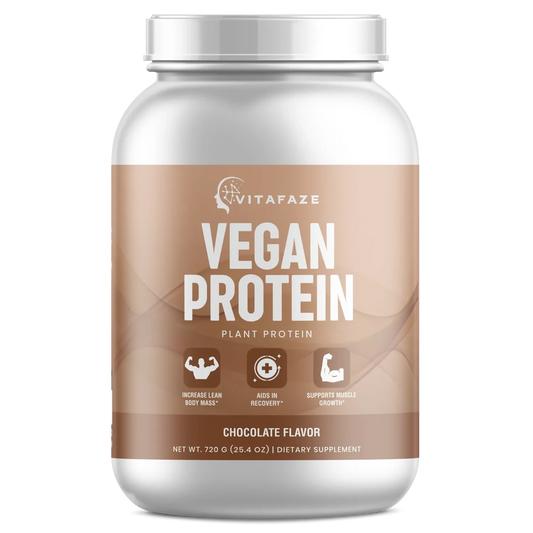
A plant protein shake is the simplest way to close a daily gap. Our Vegan Protein Chocolate Shake delivers 22 grams of complete plant protein per scoop from organic pea and brown rice protein, with 3 grams of sugar and 140 calories. That makes it easy to hit a protein target without adding a full meal.

Protein Quality, Amino Acids and Combining Plant Sources
Plant proteins are not inferior, but they are different. Most are lower in one or more essential amino acids. The fix is variety, not perfection.
You do not need to combine specific foods at the same meal. Eating a range of plant proteins across the day covers the gaps. Still, some pairings are practical:
- Rice and legumes
- Seitan and lentils
- Pea protein and rice protein in the same shake
- Tortillas with beans
Leucine matters for muscle protein synthesis. Soy and pea protein both deliver solid amounts. If your diet leans heavily on one source, rotate it.
What most guides miss: total daily protein and total calories drive muscle growth far more than the amino acid profile of any single meal. Get the totals right first.
Building a Vegan Bodybuilding Meal Plan
A vegan bodybuilding meal plan works when it is built around repeatable meals, not recipes you will abandon by week two. Structure beats creativity here.
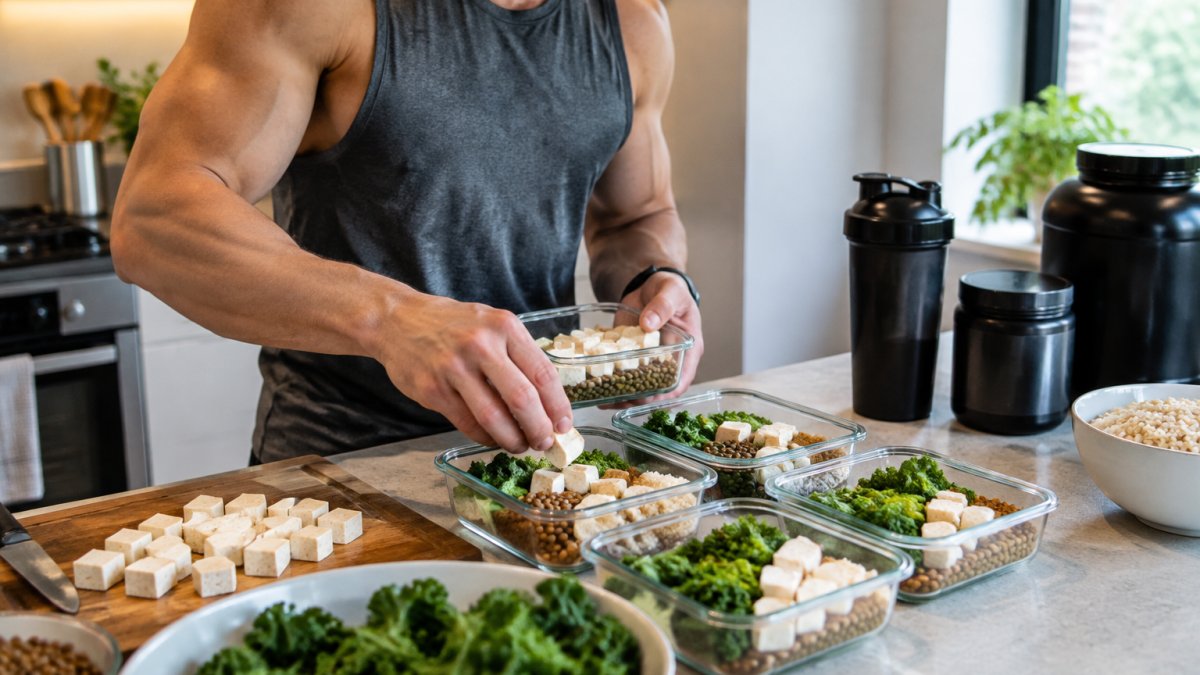
Here is a sample training-day structure for a 90 kg competitor eating around 180 grams of protein:
- Meal 1: Oats with soy milk, hemp seeds, and a protein shake
- Meal 2: Tempeh scramble with potatoes and greens
- Meal 3: Lentil and rice bowl with tofu and mixed vegetables
- Meal 4: Seitan stir-fry with edamame
- Meal 5: Protein shake with fruit before bed
Two practical rules make this work. First, cook in batches twice a week. Second, keep one backup meal ready for days when training runs long.
For execution details, our vegan meal prep tips for high-protein diets cover portioning and storage.
Vegan Bodybuilder Supplements That Earn Their Place
Most supplements are optional. A few are worth the money for vegan bodybuilders, and the rest can stay on the shelf.
Creatine monohydrate is a commonly used supplement for athletes. Our Creatine Powder is 100% pure creatine monohydrate with no fillers.

Protein powder is a tool, not a shortcut. Use it to close gaps, not replace meals.
Vitamin B12 is non-negotiable. See the next section.
Vitamin D and omega-3s are worth checking with blood work before supplementing.
Pre-workout is optional. Our Grape Pre-Workout with Creatine combines creatine monohydrate and beta alanine with L-citrulline and electrolytes.

A common mistake is stacking five supplements before nailing food intake. Fix the diet first.
Vitamin B12 for Vegan Athletes and Other Micronutrients to Monitor
Vitamin B12 for vegan athletes is not optional. Plant foods do not contain reliable amounts, so fortified foods and supplements carry the load. Deficiency develops slowly and can hurt energy and recovery long before obvious symptoms appear.
Beyond B12, these are worth tracking, and each has a vegan-specific reason it matters:
- Iron: plant iron is non-heme and absorbs less efficiently, so pair it with vitamin C and check ferritin, not just serum iron. Ferritin can look normal while stores are falling in a hard-training athlete.
- Calcium: fortified plant milks and calcium-set tofu help; oxalates in spinach and some greens reduce absorption, so do not count them as a primary calcium source.
- Zinc: legumes and seeds supply it, but phytates reduce absorption. Soaking, sprouting, and fermenting beans and grains lowers phytate content and improves uptake.
- Omega-3 fats: algae oil is the direct plant source of EPA and DHA. Flax and chia supply ALA, which converts poorly, so algae oil is the practical choice for a competitor.
- Iodine: depends on salt and seaweed intake. Iodized salt is reliable; seaweed is not, because iodine content varies widely by type and harvest.
- Vitamin D: plant sources are limited, and indoor training plus northern winters make deficiency common. Test before supplementing.
Get baseline blood work before your first prep, then retest on a schedule with your physician, typically every three to six months and more often during a hard deficit. Do not guess at doses. Iron in particular is easy to overshoot, and excess iron is not benign.
Our guide to the best vegan iron and B12 supplements covers product selection.
Contest Prep on a Vegan Diet: Deficits, Food Volume and Adherence
Contest prep is where vegan diets get tested hardest, and where planning separates finishers from dropouts. The demands are specific: strip body fat while holding muscle, keep training performance from collapsing, and stay adherent for 12 to 20 weeks. General "eat clean" advice does not survive that timeline.
Start with the math, not the menu. Set the deficit from carbs and fats first, and hold protein at the prep target of roughly 2.0 to 2.4 g/kg. Cutting protein and calories at the same time is the fastest way to lose muscle.
As body weight drops, the deficit has to be recalculated. A 90 kg competitor eating 2,800 calories to lose 0.7 kg per week will not lose 0.7 kg per week at 84 kg on the same intake. Recheck every two weeks and adjust one variable at a time.
Food volume is the vegan prep problem in both directions. Plant foods are bulky, which helps hunger but makes hitting protein harder as calories fall. Three adjustments make prep workable:
- Lean on protein isolates and seitan to keep protein high as calories drop
- Keep fibrous vegetables high for satiety, but reduce them slightly in peak week
- Fix meal timing so the largest meals land when hunger is worst
Watch out: seitan is low in lysine, so a prep that leans on it heavily needs legumes or a lysine-rich protein powder to keep the amino acid profile complete.
Adherence is the real variable. A plan you follow at 90% beats a perfect plan you abandon. Build in one flexible meal per week during the early deficit, and schedule a diet break of roughly one to two weeks at maintenance calories every 8 to 12 weeks of dieting.
Hunger management on a plant-based prep comes down to a few repeatable tactics: prioritize volume from vegetables and legumes early in the deficit, save protein and fiber for the meals when hunger peaks, drink more water than feels necessary, and keep caffeine timing consistent so it still works when you need it. Sleep is part of the plan, not a bonus.
Peak week is not the time for experiments. Hold prep protein levels, avoid last-minute food changes, and keep sodium and fluid manipulation conservative unless you have practiced it in a prior prep. The competitors who look best on stage are usually the ones who changed the least in the final week.
Training, Recovery and Tracking Progress
Training does not change much on a vegan diet. Recovery does. Plant-based athletes often report slower recovery when protein timing and total intake slip, and that is usually a food problem, not a diet problem.
Track these weekly:
- Body weight, same time and conditions
- Training performance on key lifts
- Sleep hours and quality
- Hunger and energy ratings
- Progress photos every two weeks
If strength drops while weight drops, protein or calories are too low. If weight stalls in the off-season, add calories before adding volume.
Hydration matters more than most people think. Our ION + Select Electrolyte Formula combines electrolytes, beet root, coconut water powder, and pink Himalayan salt to support hydration and exercise performance.
Stocking Your Vegan Bodybuilding Kitchen with VitaFaze
The gap between a vegan diet that works and one that fails is usually a stocking problem. If the protein is in the pantry, you hit your numbers. If it is not, you improvise and fall short.
Here is what we would keep on hand:
- Tofu, tempeh, and seitan in the fridge
- Canned lentils, chickpeas, and black beans
- Rice, oats, and potatoes
- Frozen edamame and mixed vegetables
- Fortified soy milk
- A quality plant protein powder
- Creatine monohydrate
- A B12 supplement
VitaFaze exists to close the gaps that plant-based athletes actually hit. VitaFaze offers plant-powered nutrition built on clean, bioavailable ingredients. The Vegan Protein Chocolate Shake provides 22 grams of plant protein per scoop. Creatine Powder is 100% pure creatine monohydrate with no fillers. ION + Select supports hydration and performance on long training days.
Is a vegan diet enough for professional bodybuilding? With the right plan, yes. With guesswork, no.
Get started with VitaFaze and give your plant-based training the nutrition it needs to hold up under competition-level demands.
The hard part is not deciding whether plants can build muscle. It is building a routine that hits your protein and micronutrient targets every single day, through every training phase. That takes planning, tracking, and the right products in your kitchen. VitaFaze makes the supplement side simple, with plant-powered formulas for recovery, hydration, and strength. Explore the full line and build a kitchen that supports the work you put in.
Frequently Asked Questions
Can professional bodybuilders get enough protein from a vegan diet?
Yes, provided protein is planned rather than estimated. Most bodybuilders do well at roughly 1.6 to 2.2 grams of protein per kilogram of body weight per day, and plant eaters should aim toward the upper half of that range because plant proteins digest slightly less completely. Hitting those numbers takes deliberate portions of tofu, tempeh, seitan, legumes and plant protein powder spread across four to six meals. A vegan diet works when total intake and meal distribution are tracked, not guessed.
What does a vegan bodybuilding meal plan look like on a training day?
A workable template: oats with soy milk and protein powder at breakfast, a tofu and rice bowl at lunch, seitan with potatoes and vegetables pre-workout, a lentil or tempeh dinner, and a plant protein shake with fruit around training. Build the plan around your calorie target first, then fill protein, then adjust fat and fiber so digestion stays comfortable.
Which supplements do vegan bodybuilders actually need?
Three deserve priority. Vitamin B12 is non-negotiable because plant foods do not supply it reliably. A plant protein powder makes hitting daily protein targets far easier. Vitamin D, iron, zinc, calcium and omega-3 fats (often from algae oil) are worth checking with bloodwork rather than guessing. Treat everything else as optional until those basics are covered.
How do vegan bodybuilders handle vitamin B12 and iron?
B12 must come from fortified foods or a supplement, and a healthcare professional can advise on an appropriate amount. Iron needs attention because plant iron (non-heme) absorbs less efficiently; pairing iron-rich foods like lentils and spinach with vitamin C helps, and coffee or tea should be kept away from iron-containing meals. Get ferritin and B12 checked periodically, especially during contest prep when total food intake drops.
