



How to Build Muscle on a Vegan Diet: Complete 2026 Guide
Table of Contents
- Can You Actually Build Muscle on a Vegan Diet?
- Daily Protein Needs for Muscle Growth on a Plant-Based Diet
- How to Get 100g of Protein a Day as a Vegan
- High-Protein Vegan Foods for Muscle Building
- Calorie Surplus and Energy-Dense Foods for Vegan Muscle Gain
- Vegan Muscle-Building Meal Plan with Portions and Nutrition
- Vegan Bulking Diet: Macros, Meal Timing, and Recovery
- Strength Training and Resistance Exercise for Vegan Athletes
- Protein Powders and Supplements for Plant-Based Muscle Recovery
- Micronutrients and Common Vegan Nutrition Considerations
- Tracking Progress and Adjusting Your Vegan Muscle-Building Plan
- Common Mistakes That Slow Muscle Gain on a Vegan Diet
- Conclusion: Your Path to Lean Muscle on a Plant-Based Diet
- Frequently Asked Questions
Last Updated: October 17, 2026
Can You Actually Build Muscle on a Vegan Diet?
Yes, you can absolutely build muscle vegan diet when you approach it strategically.
The misconception that you can't build muscle vegan diet persists because many plant-based athletes don't approach their nutrition strategically.
According to research from the International Society of Sports Nutrition, plant-based athletes who consume adequate total protein and essential amino acids show comparable muscle protein synthesis to non-vegan athletes.
This guide walks you through exactly how to do it.
Daily Protein Needs for Muscle Growth on a Plant-Based Diet
Your daily protein requirement for muscle building on a plant-based diet is approximately 0.7 to 1 gram per pound of body weight.
Why this range? Muscle protein synthesis, the process that builds new muscle tissue, is triggered by resistance training and supported by amino acid availability.
The challenge with plant-based eating is protein density. This is where plant-based protein powders become essential, they're calorie-efficient protein delivery.
Individual variation matters.
How to Get 100g of Protein a Day as a Vegan
Hitting 100 grams of daily protein on a vegan diet is entirely feasible when you combine whole foods with strategic supplementation. Here's a practical approach.
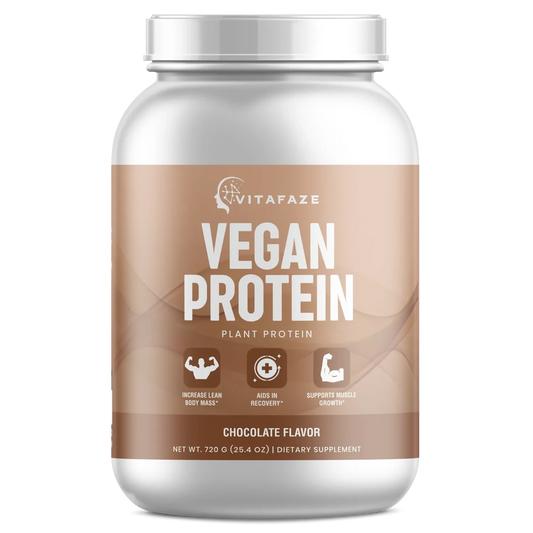
Start with a plant-based protein powder. A single scoop of quality vegan protein delivers 20-25 grams of complete protein in roughly 130-150 calories. VitaFaze's Vegan Protein Chocolate Shake provides 22 grams per scoop with a complete amino acid profile from organic pea and brown rice protein, that's your foundation for two meals right there.

Build the remaining 56 grams from whole foods and additional supplementation. A typical day might look like:
- Breakfast: oatmeal with hemp seeds and nut butter (12g protein)
- Mid-morning: VitaFaze Vegan Protein shake (22g protein)
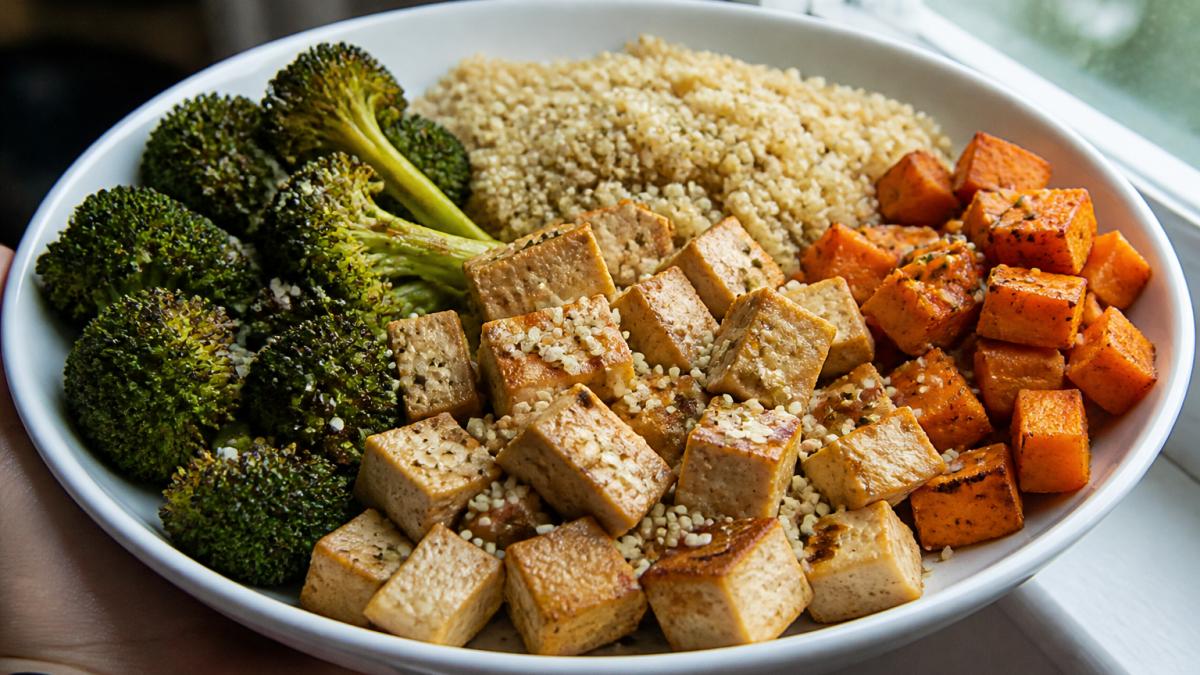
- Lunch: tofu stir-fry with quinoa and vegetables (18g protein)
That totals 100 grams without forcing unpalatable portions or relying on processed foods. The protein powders handle roughly 44 percent of your target, which is realistic and sustainable.
Timing matters less than total intake, but distributing protein across meals, roughly 20-25 grams per eating occasion, optimizes muscle protein synthesis.
| Meal Timing | Protein Target | Example |
|---|---|---|
| Breakfast | 20-25g | Oats + hemp seeds + nut butter |
| Mid-morning | 20-25g | Protein shake (VitaFaze) |
| Lunch | 20-25g | Tofu + quinoa + vegetables |
| Afternoon snack | 10-15g | Hummus + crackers or nuts |
| Post-workout | 20-25g | Protein shake (VitaFaze) |
High-Protein Vegan Foods for Muscle Building
Plant-based protein sources vary dramatically in amino acid completeness and calorie density. Understanding this distinction is essential for efficient meal planning.
Plant-Based Protein Sources: Tofu, Tempeh, Seitan, and Legumes
Tofu is the workhorse of vegan muscle-building diets.
Seitan is the protein-densest plant option: 3 ounces delivers 25 grams of complete protein in just 120 calories.
Legumes, lentils, chickpeas, black beans, and peas, are foundational.
Edamame offers a middle ground: one cup of cooked edamame delivers 18 grams of complete protein in 190 calories, with a favorable amino acid balance.
Grains, Seeds, and Nuts for Complete Amino Acid Profiles
Quinoa stands apart among grains: one cooked cup delivers 8 grams of complete protein in 222 calories.
Hemp seeds are nutritional powerhouses: 3 tablespoons deliver 10 grams of complete protein in 160 calories, plus omega-3 fatty acids.
Buckwheat (despite the name, gluten-free) provides 6 grams of complete protein per cooked cup in 155 calories.
Nuts and nut butters are calorie-dense but protein-modest: 2 tablespoons of peanut butter deliver 8 grams of protein in 190 calories.
Calorie Surplus and Energy-Dense Foods for Vegan Muscle Gain
Building muscle requires a calorie surplus: consuming more energy than you expend. Your body uses this excess to repair muscle damage from training and synthesize new tissue. Without a surplus, protein alone won't drive growth. But "eat more" is not a plan. The useful skill is calculating your own maintenance level, setting a surplus you can sustain, and choosing energy-dense plant foods that don't force uncomfortable food volume.
Calculate Your Own Surplus in Four Steps
Step 1: Estimate maintenance calories. A common starting estimate is body weight in pounds × 15.
Step 2: Set a surplus. Add 250-500 calories above your estimated maintenance. A 180-pound athlete would start at roughly 2,950-3,200 calories daily.
Step 3: Set a rate-of-gain target. Aim for 0.25-0.5% of body weight gained per week.
Step 4: Run a two-week calibration. Eat your calculated target for 14 days, weigh yourself each morning under the same conditions (after using the bathroom, before eating), and average the week's weights. Compare week-one average to week-two average:
- Gaining 0.25-0.5% of body weight weekly: hold the target.
- Gaining less: add 150-200 calories daily and re-check in two weeks.
- Gaining more than 0.75% weekly: reduce 150-200 calories daily.
This calibration loop matters more than any formula.
Energy-Dense Plant Foods That Make the Surplus Practical
The practical challenge on a plant-based diet is volume.
Dried fruit: A quarter-cup of raisins or dates is roughly 110-120 calories and easy to eat between meals without fullness.
Oils: 1 tablespoon of olive or avocado oil is about 120 calories.
Avocado: A medium avocado is roughly 240 calories with healthy fats and potassium.
Smoothies: Blend oats, nut butter, banana, plant milk, and protein powder to condense 400-600 calories into a drinkable meal.
A Worked Example
A 180-pound athlete estimating 2,700 calories maintenance adds 300 calories for a target of 3,000 daily. Over two weeks, the weekly average rises 0.4 pounds per week, which is within the 0.25-0.5% target range. The athlete holds the target and re-checks in two weeks. If the average had risen only 0.1 pound weekly, the athlete would add 150-200 calories daily, most easily from a tablespoon of nut butter at breakfast and a handful of dried fruit as an afternoon snack.
Vegan Muscle-Building Meal Plan with Portions and Nutrition
Sample Daily Meal Structure for Muscle Growth
Here's a practical daily structure for a 180-pound athlete targeting 150 grams of protein and 2,800 calories in a muscle-building surplus.
Vegan Protein Chocolate Shake - 1.5lb Pure Plant-Based Nutrition for Optimal →
Breakfast (7:00 AM): 550 calories, 18g protein
- 1 cup oatmeal (150 calories, 5g protein)
- 2 tablespoons almond butter (190 calories, 7g protein)
- 1 banana (105 calories, 1g protein)
Mid-Morning Snack (10:00 AM): 280 calories, 22g protein
- VitaFaze Vegan Protein Chocolate Shake (140 calories, 22g protein)
- 1 cup oat milk (140 calories, 0g protein)
Lunch (1:00 PM): 620 calories, 28g protein
- 8 oz firm tofu (190 calories, 20g protein)
- 1.5 cups cooked quinoa (330 calories, 12g protein)
- 2 cups mixed vegetables (100 calories, 4g protein)
Pre-Workout Snack (4:00 PM): 240 calories, 8g protein
- 1 apple (95 calories, 0g protein)
- 2 tablespoons peanut butter (190 calories, 8g protein)
Post-Workout (6:30 PM): 280 calories, 22g protein
- VitaFaze Vegan Protein Chocolate Shake (140 calories, 22g protein)
- 1 cup oat milk (140 calories, 0g protein)
Dinner (8:00 PM): 830 calories, 52g protein
- 1.5 cups cooked lentil pasta (420 calories, 28g protein)
- 6 oz tempeh (285 calories, 30g protein)
- 2 cups roasted vegetables (100 calories, 4g protein)
Daily Totals: 2,800 calories, 150g protein
Protein Distribution Throughout the Day
Distributing protein across meals optimizes muscle protein synthesis.
The sample plan above distributes protein as: 18g breakfast, 22g mid-morning, 28g lunch, 8g snack, 22g post-workout, 52g dinner.
Research suggests that muscle protein synthesis is maximized when each meal contains 20-40 grams of complete protein (How much protein can the body use in a single meal for muscle-building? Implications for...).
Post-workout timing is slightly more flexible than once believed. Consuming protein within 2-3 hours after training is beneficial, but total daily intake matters more than the exact minute.
Vegan Bulking Diet: Macros, Meal Timing, and Recovery
A vegan bulking diet prioritizes a calorie surplus, adequate protein, and strategic carbohydrate timing to support training volume and recovery. The difference from a standard bulk is not the macro principles; it is how you source them from plant foods without blowing past your calorie target or falling short on protein.
Set Macros From Calories, Not the Other Way Around
Step 1: Set calories. Use the surplus method above. For a 180-pound athlete, a reasonable starting point is 2,800-3,000 calories daily.
Step 2: Set protein. Aim for 0.8-1 gram per pound of body weight.
Step 3: Set fat. Aim for roughly 0.3-0.4 grams per pound, enough for hormone production and nutrient absorption.
Step 4: Fill the remainder with carbohydrate. Carbohydrate provides 4 calories per gram and fuels training volume.
A Worked Example That Adds Up
A 180-pound athlete targeting 2,800 calories:
- Protein: 160 grams = 640 calories
- Fat: 65 grams = 585 calories
- Remaining calories: 2,800 − 640 − 585 = 1,575 calories
So the daily targets are 160 grams protein, 394 grams carbohydrate, and 65 grams fat. If training volume is high (five or more hard sessions weekly), shift 100-150 calories from fat to carbohydrate to support glycogen. If appetite is the limiting factor, shift some carbohydrate calories to fat, since fat is more calorie-dense per gram and easier to eat.
Carbohydrate Timing Around Training
Carbohydrate timing is a practical tool, not a rigid rule. A common pattern that works well:
- 1-2 hours before training: 30-60 grams of easy-to-digest carbohydrate, such as a banana, oatmeal, or rice.
- Within 1-2 hours after training: 40-80 grams of carbohydrate plus 25-40 grams of protein, such as lentil pasta with tempeh or a smoothie with oats, banana, and protein powder.
- Remaining meals: distribute carbohydrate evenly across the day.
Total daily intake matters more than the exact minute you eat. The pre- and post-workout windows are useful because they make it easier to hit total carbohydrate and protein targets, not because missing them ruins the session.
Recovery Beyond Nutrition
Recovery extends beyond food. Sleep (7-9 hours nightly), stress management, and at least one or two lighter training days per week are non-negotiable. Muscle grows during recovery, not during the workout.
A practical recovery checklist for a bulking phase:
- Sleep 7-9 hours nightly; keep a consistent bedtime.
- Take at least one full rest day weekly and one lighter session.
- Eat a protein-containing meal or shake within a couple of hours of training.
If recovery feels poor (persistent soreness, fatigue, mood changes), the first fixes are more sleep, a small reduction in training volume, and a check that calories and protein are actually hitting target.
Vegan Bulking Without Excessive Volume
The most common bulking mistake on a plant-based diet is eating so much high-fiber food that meals become uncomfortable. Use calorie-dense plant foods (nuts, seeds, nut butters, oils, avocado, dried fruit, tofu, tempeh) as the base of meals and reserve high-volume foods (leafy greens, broccoli, squash) for a smaller portion of the plate. Smoothies are a reliable way to add 400-600 calories without fullness.
Strength Training and Resistance Exercise for Vegan Athletes
Muscle growth is triggered by progressive resistance training. Without consistent, challenging strength work, protein and calories alone won't build muscle.
A muscle-building program typically involves 3-5 resistance training sessions per week, with each session lasting 45-90 minutes. The structure matters less than consistency and progressive overload.
Progressive Overload and Training Programming
Progressive overload is the core principle: gradually increasing the challenge your muscles face over time.
A practical progression for a beginner:
- Week 1-2: 3 sets of 8-10 reps at a weight you can complete with 2-3 reps left in reserve (RPE 7-8 on a 1-10 scale)
- Week 3-4: Same weight, 3 sets of 10-12 reps
- Week 5-6: Increase weight by 5-10%, drop back to 8-10 reps, repeat
This creates a sustainable progression that challenges your muscles while allowing recovery. Jumping too aggressively risks injury; progressing too slowly stalls growth.
A sample weekly structure:
- Monday (Lower Body): Squats 4x6-8, Romanian deadlifts 3x8-10, leg press 3x10-12, calf raises 3x12-15
- Wednesday (Upper Body): Bench press 4x6-8, bent-over rows 3x8-10, overhead press 3x8-10, pull-ups 3x6-10
- Friday (Full Body): Deadlifts 3x5, incline dumbbell press 3x8-10, barbell rows 3x8-10, leg press 3x10-12, face pulls 3x12-15
Rest 2-3 minutes between heavy compound sets (squats, deadlifts, bench press) and 60-90 seconds between isolation exercises.
Vegan athletes have no disadvantage here.
Protein Powders and Supplements for Plant-Based Muscle Recovery
Plant-based protein powders are essential tools for vegan muscle building. They're efficient, convenient, and when chosen carefully, provide complete amino acid profiles.
Choosing Complete Plant-Based Protein Powders
A complete protein contains all nine essential amino acids in meaningful quantities. Most single-source plant proteins (pea, rice, hemp alone) are incomplete.
VitaFaze's Vegan Protein Chocolate Shake uses organic pea protein and organic brown rice protein, a combination that delivers all nine essential amino acids in a 22-gram serving.
Quality indicators to prioritize:
Vegan Protein Chocolate Shake - 1.5lb Pure Plant-Based Nutrition for Optimal →
- Complete amino acid profile: Look for pea + rice blends, or products listing all nine essential amino acids on the label
- Minimal additives: Avoid long ingredient lists with artificial flavors, colors, or sweeteners (though some natural sweeteners like stevia are fine)
- Taste and mixability: A powder you don't enjoy won't be used consistently. VitaFaze's chocolate flavor mixes smoothly in oat milk or water without grittiness
Protein powder isn't a replacement for whole foods, it's a supplement.
Essential Amino Acids, Creatine, and Performance Support
Creatine monohydrate is the most researched supplement in sports nutrition.

The evidence is strong: creatine supplementation consistently improves strength and muscle mass when combined with resistance training.
Pre-workout supplementation (caffeine, beta-alanine, citrulline) can enhance training performance by increasing focus, reducing fatigue perception, and improving blood flow.
These supplements are tools, not magic. They provide marginal performance gains when combined with proper training and nutrition.
Micronutrients and Common Vegan Nutrition Considerations
Beyond protein and calories, certain micronutrients require attention on a vegan diet.
Vitamin B12: Your body cannot synthesize B12; it comes from animal products or fortified foods.
Iron: Plant-based iron (non-heme iron) is less bioavailable than animal-based iron (heme iron).
Zinc: Plant sources are less bioavailable than animal sources.
These aren't vegan-specific problems; they're considerations for any athlete prioritizing performance.
Tracking Progress and Adjusting Your Vegan Muscle-Building Plan
Progress tracking ensures your plan is working and guides adjustments.
Metrics to monitor:
- Body weight (weekly average, not daily fluctuations)
- Strength (track lifts in a notebook or app, aim for 2-5% increase monthly)
- Photos (monthly or quarterly, same lighting and angle)
Weigh yourself weekly at the same time (morning, after bathroom, before eating). Average the week's weights; this smooths water retention and digestion fluctuations.
Strength progression is the most reliable indicator of muscle growth. If your squat increased from 185 to 195 pounds over 8 weeks, you've built muscle.
Adjustments based on progress:
If gaining too slowly (less than 0.25 pounds weekly):
- Add 200-300 calories daily from energy-dense foods or another protein shake
- Verify protein intake (track for 3 days to confirm)
- Ensure training intensity is high enough to trigger growth stimulus
If gaining too quickly (more than 1.5 pounds weekly):
- Reduce calories by 200-300 daily
- Maintain protein; reduce carbs or fats slightly
If strength plateaus for 3+ weeks:
- Increase weight by 5-10%
- Reduce rest periods slightly (move from 3 minutes to 2.5 minutes between heavy sets)
- Add volume: an extra set per exercise
If recovery feels poor (excessive soreness, fatigue, mood changes):
- Increase sleep by 30-60 minutes nightly
- Reduce training volume by 10-15% for 1-2 weeks
- Verify calorie and protein intake isn't too aggressive
VitaFaze's Recovery Carb + Electrolyte and BCAA + EAA products support recovery.
Common Mistakes That Slow Muscle Gain on a Vegan Diet
Insufficient protein intake. The most common error: vegan athletes eat plant-based but don't hit their protein targets.
Inconsistent training. Muscle growth requires progressive resistance training 3-5 times weekly. Sporadic training won't trigger adaptation.
Skipping recovery. Sleeping 5-6 hours nightly, training hard, and eating well is a losing combination.
Ignoring micronutrients. B12 deficiency causes fatigue and impairs recovery. Iron deficiency limits oxygen delivery to muscles.
Conclusion: Your Path to Lean Muscle on a Plant-Based Diet
Building muscle on a vegan diet is entirely achievable when you approach it strategically.
VitaFaze's Vegan Protein Chocolate Shake provides 22 grams of complete plant-based protein per scoop, supporting your daily targets efficiently. Our Creatine Powder enhances strength and recovery, while our Pre-Workout with Creatine (Grape Annihilator) and Recovery Carb + Electrolyte formula support training intensity and post-workout recovery.

The Academy of Nutrition and Dietetics position on vegetarian diets confirms that well-planned plant-based diets support athletic performance and muscle growth. The key word is "well-planned", which is exactly what this guide provides.
Get started with VitaFaze and build the lean muscle you're after without compromising your plant-based values.
Frequently Asked Questions
Can you build muscle on a vegan diet without protein powder?
Yes, you can build muscle on a vegan diet using whole foods alone. Tofu, tempeh, legumes, quinoa, nuts, and seeds provide complete or complementary amino acid profiles. However, hitting high daily protein targets (0.7-1 gram per pound of body weight) becomes challenging without supplementation. Protein powder makes it easier to reach those targets consistently, especially for athletes training intensely. Many vegan athletes use whole foods as their base and add powder strategically post-workout or in smoothies for convenience.
How much protein do you need daily to build muscle on a vegan diet?
Most research suggests 0.7-1 gram of protein per pound of body weight per day for muscle growth. For a 150-pound person, that's 105-150 grams daily. Spread protein intake across 4-5 meals (20-35 grams per meal) to optimize muscle protein synthesis. Individual needs vary based on training intensity, age, and recovery capacity.
What are the best high-protein vegan foods for muscle gain?
Top plant-based protein sources include tofu (19g per 200-calorie serving), tempeh (19g per serving), seitan (25g per 100-calorie serving), lentils (18g per cooked cup), chickpeas (15g per cooked cup), edamame (11g per cup), quinoa (8g per cooked cup), hemp seeds (10g per 3 tablespoons), and nuts. Combine different sources to get all nine essential amino acids. For example, pair rice with beans, or quinoa with legumes. These combinations create complete protein profiles that support muscle repair and growth.
How do you get 100g of protein a day as a vegan?
Distribute protein across meals: breakfast (20-25g from oatmeal with hemp seeds and protein powder), lunch (30-35g from tofu stir-fry with quinoa), snack (10-15g from nuts or a protein shake), and dinner (25-30g from tempeh or lentil-based dish). A single serving of plant-based protein powder provides 20-25g. Aim for 4-5 eating occasions daily. Track intake for 2-3 days to identify gaps, then adjust portions or add snacks. Most vegan athletes find that combining whole foods with one protein powder serving makes hitting 100g realistic and sustainable.
What nutrients should vegan athletes pay special attention to?
Beyond protein, focus on vitamin B12 (supplement or use fortified foods), iron (pair plant sources with vitamin C to boost absorption), omega-3 fatty acids (flaxseeds, chia seeds, walnuts, or algae supplements), calcium (fortified plant milks, leafy greens), and zinc (legumes, seeds, whole grains). Creatine supplementation is also valuable for vegan athletes because it's naturally found in animal products. These micronutrients support energy production, recovery, immune function, and bone health. Consider blood work annually to catch deficiencies early.
Does a vegan diet affect recovery speed after intense training?
Plant-based diets support recovery just as well as omnivorous diets when protein, carbohydrates, and micronutrients are adequate. Recovery depends on total protein intake, calorie surplus, sleep, and stress management, not diet type. Post-workout nutrition matters: consume carbohydrates and protein within 1-2 hours after training to replenish glycogen and support muscle repair. Adequate sleep (7-9 hours) and hydration are equally critical for all athletes.
Is creatine supplementation necessary for vegan muscle builders?
Creatine is not essential but is highly beneficial for vegan athletes. Creatine monohydrate supports muscle energy production, strength gains, and recovery. Vegans have lower natural creatine stores because it's primarily found in animal products. Supplementing with 3-5 grams daily can enhance performance and muscle gains. Research shows creatine is safe and effective for plant-based athletes. VitaFaze's Creatine Powder ($38.50) provides 100% pure creatine monohydrate with no fillers, making it easy to add to your routine.