



Plant-Based Supplements for Distance Runners
Table of Contents
- Do Distance Runners Really Need Supplements on a Plant-Based Diet?
- Assessing Your Nutritional Gaps Before You Supplement
- Vegan Protein Powder for Runners: Complete Amino Acid Profiles for Recovery
- Vitamin B12 for Vegan Athletes: Dosage, Timing, and Food Sources
- Iron for Vegan Runners: Absorption, Testing, and Supplementation Strategy
- Vegan Supplements for Runners: Energy, Recovery, and Endurance Support
- Post-Run Recovery Nutrition and Supplement Timing for Distance Training
- Product Quality and Safety: What to Look for in Plant-Based Performance Supplements
- Frequently Asked Questions
Last Updated: October 17, 2026
Do Distance Runners Really Need Supplements on a Plant-Based Diet?
Plant based supplements for distance runners aren't a luxury, they're often a necessity. When you're training hard on a plant-based diet, meeting your nutritional needs through food alone becomes increasingly difficult, especially when you're logging high mileage and pushing your aerobic capacity.
The challenge isn't whether plant-based eating works for endurance athletes. It does. The real question is whether your food sources deliver everything your body needs to recover, maintain muscle, and sustain performance. Many distance runners on plant-based diets find they're falling short in specific nutrients: complete proteins, vitamin B12, iron, and certain micronutrients that support cellular energy production.
At VitaFaze, we work with plant-based athletes who understand that plant based supplements for distance runners aren't about relying on pills instead of food, they're about filling the gaps that whole foods alone can't cover. A plant-based distance runner might eat plenty of legumes and grains, but still miss the bioavailable forms of certain nutrients their body needs to recover from 10-mile runs or marathon training cycles.
The key distinction: some athletes benefit from targeted supplementation, while others can meet their needs through food. The difference comes down to your individual assessment.
Assessing Your Nutritional Gaps Before You Supplement
Before buying anything, you need to understand where your diet actually falls short. Many plant-based runners supplement things they don't need while missing critical nutrients they do.
Start by tracking your intake for a week. Focus on protein sources, iron-rich foods, B12 sources, and vitamin D exposure. Most plant-based athletes discover gaps in one or more of these categories. The runner eating plenty of tofu and lentils might still be short on bioavailable iron. Another might consume enough calories but lack complete amino acid profiles from their protein sources.
Consider getting baseline bloodwork if you're serious about distance running. A simple panel can reveal your vitamin B12 levels, iron status, and vitamin D concentration. This removes guesswork. Many plant-based distance runners discover they're deficient in B12 or iron before symptoms become obvious, and catching this early prevents the performance decline that follows.
Your supplementation strategy should match your specific gaps, not a generic "vegan athlete" template. A runner with adequate B12 from nutritional yeast doesn't need supplementation there. But if you're not consuming fortified foods or supplements consistently, B12 becomes non-negotiable.
Vegan Protein Powder for Runners: Complete Amino Acid Profiles for Recovery
Complete plant proteins contain all nine essential amino acids your muscles need to repair after distance training. Not all plant-based protein sources are complete on their own, which is why protein powder matters for many vegan athletes.
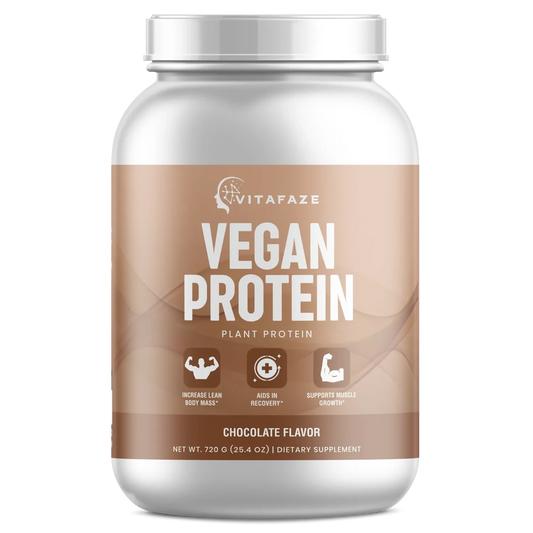
Pea protein and brown rice protein, when combined, create a complete amino acid profile. This is why VitaFaze's Vegan Protein Chocolate Shake uses both. Each serving delivers 22 grams of complete plant-based protein with all essential amino acids, plus 4 grams of dietary fiber for digestive health.

The timing matters. Post-run recovery is when your muscles are primed to absorb amino acids. A shake within 30-60 minutes after a long run accelerates muscle repair and reduces delayed-onset soreness. Distance runners typically need 20-30 grams of protein per recovery meal, which a single scoop of quality powder delivers.
Not all plant protein powders mix well or taste palatable. VitaFaze's formula uses organic pea and brown rice protein with cocoa powder and natural sweeteners, which means it actually tastes like chocolate instead of chalky plant matter. Mixability matters because a protein shake you avoid drinking is useless.
Vitamin B12 for Vegan Athletes: Dosage, Timing, and Food Sources
Vitamin B12 is the supplement most plant-based distance runners cannot avoid. Your body uses B12 for energy metabolism, red blood cell formation, and nervous system function, all critical for endurance performance. Plant foods don't naturally contain B12; it comes from bacteria in soil, which modern agriculture removes.
Many plant-based athletes rely on fortified foods like nutritional yeast, plant-based milk, or cereals. If you consume these consistently, you might meet your B12 needs. But many runners don't eat fortified foods reliably, which is why supplementation becomes practical.
B12 supplementation comes in several forms, and a typical dose ranges from 25-100 micrograms daily, or 2,000 micrograms weekly, depending on your form and absorption.
Vegan Protein Chocolate Shake - 1.5lb Pure Plant-Based Nutrition for Optimal →
Timing doesn't matter much with B12, it's not like protein where post-workout timing drives results. Take it daily or weekly consistently. Some runners prefer a daily supplement because consistency is easier to maintain than remembering a weekly dose.
The real issue with B12 isn't whether you need it, you do, on a plant-based diet. It's ensuring you're actually absorbing it. Some people have absorption issues that make supplementation less effective, which is another reason bloodwork helps.
Iron for Vegan Runners: Absorption, Testing, and Supplementation Strategy
Iron is where many plant-based distance runners struggle most. Your body needs iron for oxygen transport during endurance training, and plant-based sources of iron (non-heme iron) absorb less efficiently than animal sources (heme iron).
Female distance runners face particular risk because menstruation increases iron loss. Male runners and post-menopausal women have lower iron requirements, but plant-based male runners still often run lower than optimal levels.
Test your iron status before supplementing. Iron is one of the few nutrients where more isn't better, excess iron can damage organs. A simple blood test shows your serum ferritin, hemoglobin, and iron levels. Many plant-based distance runners discover they're iron-deficient without realizing it, which manifests as fatigue, slower recovery, and reduced aerobic capacity.
If testing reveals low iron, supplementation helps. Plant-based iron sources include lentils, beans, fortified cereals, and dark leafy greens, but bioavailability is the problem. Pairing these foods with vitamin C (citrus, tomatoes, peppers) improves absorption significantly. Some distance runners benefit from supplemental iron, especially during heavy training blocks when iron demands spike.
Iron supplementation timing matters. Take it on an empty stomach for better absorption, though this can cause digestive upset. Taking it with food reduces absorption but improves tolerability. For distance runners, consistency matters more than perfect timing.
Vegan Supplements for Runners: Energy, Recovery, and Endurance Support
Beyond protein and core micronutrients, some plant-based distance runners use targeted supplements for energy, recovery, and endurance. The key is separating supplements with solid endurance-sport evidence from optional products, and matching each to a specific training need rather than stacking everything at once.
Carbohydrate and electrolyte products during and after long runs. For runs lasting roughly 90 minutes or more, carbohydrate intake supports glycogen availability and delays fatigue. A common target is 30-60 grams of carbohydrate per hour during prolonged efforts, adjusted for intensity, gut tolerance, and individual sweat losses (The Athlete’s Kitchen: Optimizing Your Immune Response). After training, combining carbohydrate with protein supports glycogen replenishment and muscle repair. VitaFaze's Recovery Carb + Electrolyte delivers 24 grams of fast-digesting carbohydrates from dextrose and glucose polymers plus sodium, potassium, magnesium, and calcium; at $42.98 for a 1365-gram container with 50 servings, it is a practical option for pre-loading or post-run recovery. Mix one scoop with 8 ounces of water and adjust concentration to what you tolerate during training.

Beetroot and dietary nitrate. Beetroot juice and beetroot powder provide dietary nitrate, which the body converts to nitric oxide and which can support blood flow and oxygen efficiency. Evidence in endurance athletes is mixed but suggestive for time-to-exhaustion and submaximal efficiency; typical protocols use concentrated beetroot shots or powder providing roughly 300-600 milligrams of nitrate taken 2-3 hours before exercise.
Creatine monohydrate. Creatine is synthesized, not animal-derived, so it fits a plant-based diet. It supports short-duration, high-intensity energy production and may help maintain training capacity during heavy blocks. Standard maintenance dosing is about 3-5 grams per day; a loading phase is optional and not required.
Caffeine. Caffeine is one of the most consistently supported ergogenic aids for endurance performance. Common race-day protocols use about 3-6 milligrams per kilogram of body weight taken roughly 60 minutes before effort, with some athletes adding smaller doses late in long events (GSSI Webinar Q&A: An Update on Caffeine and Exercise Performance).
Beta-alanine. Beta-alanine supports muscle buffering and may help efforts in the 1-4 minute range more than steady distance running. Typical dosing is 3.2-6.4 grams per day in divided doses.
Branched-chain amino acids (BCAAs). BCAAs are popular but generally unnecessary if you eat adequate complete protein across the day. Whole protein sources and a complete plant protein powder deliver the full amino acid profile, including BCAAs.
A runner-specific decision framework. Before adding any of the above, ask: (1) Is my total energy and carbohydrate intake adequate for my training load? (2) Am I meeting protein needs across the day, not just post-run? (3) Have I tested B12, iron, and vitamin D status? (4) Does the supplement have a plausible mechanism and evidence for my event distance? (5) Can I test it in training without disrupting sleep or digestion? Supplements are most useful when they fill a specific, identified gap, not when they are stacked generically.
| Supplement | Primary Benefit | Typical Dosing/Timing | Evidence Strength for Distance Running |
|---|---|---|---|
| Plant protein powder | Muscle repair, daily protein target | 20-30 g post-run and across meals | Strong |
| Carb + electrolyte | Glycogen and fluid balance | 30-60 g carbs/hour during long runs; post-run recovery | Strong |
| Caffeine | Perceived effort, endurance | ~3-6 mg/kg about 60 min pre-race | Strong |
| Beetroot/nitrate | Blood flow, efficiency | ~300-600 mg nitrate 2-3 hours pre-run | Mixed to moderate |
| Creatine monohydrate | Training capacity | 3-5 g daily | Moderate (less specific to distance) |
| Beta-alanine | Muscle buffering | 3.2-6.4 g daily, divided | Limited for steady distance |
| BCAAs | Amino acid availability | Unnecessary with adequate protein | Weak vs. whole protein |
Post-Run Recovery Nutrition and Supplement Timing for Distance Training
Recovery happens in the 30-90 minutes immediately after your run ends. This is when your muscles are primed to absorb amino acids and carbohydrates, and when your body's inflammatory response is highest.
Vegan Protein Chocolate Shake - 1.5lb Pure Plant-Based Nutrition for Optimal →
The ideal post-run nutrition combines protein and carbohydrates. A protein shake with banana works. A smoothie with plant protein powder, fruit, and plant milk works. Whole foods like a chickpea salad with rice work. The form matters less than the timing and macronutrient composition.

For distance runners, post-run recovery extends beyond the first hour. Your muscles continue repairing for 24-48 hours. This means your next meal after your run matters, and your protein intake throughout the day matters. Many distance runners underestimate how much protein they need across all meals, not just post-workout shakes.
Hydration timing is equally important. Rehydrate with electrolytes, not just water. Plain water can actually dilute your electrolyte balance if you've sweated heavily. VitaFaze's Recovery Carb + Electrolyte formulas include sodium and potassium, which help your body retain fluid and replenish what you lost during the run.
Some distance runners use ice baths or compression gear for recovery. The evidence for these is mixed.
Product Quality and Safety: What to Look for in Plant-Based Performance Supplements
Not all plant-based supplements are equal. Quality affects bioavailability, safety, and whether the product actually delivers what the label claims. For distance runners, two concerns matter most: inaccurate labels and contamination with substances that could trigger a positive drug test or cause an allergic reaction.
Third-party testing and sport certification. Reputable brands submit products to independent organizations that verify ingredient identity and screen for contaminants. Look for certifications such as NSF Certified for Sport, Informed Sport, or USP Verified. NSF Certified for Sport and Informed Sport specifically screen for substances banned in sport, which matters if you compete under anti-doping rules.
Label transparency. Avoid proprietary blends that hide individual ingredient amounts. A transparent label lists exact doses of each component, which lets you compare against evidence-based ranges. For plant protein powders, check the protein content per serving, the amino acid profile, and whether the product discloses the source of each protein (for example, pea, brown rice, or pumpkin seed).
Allergen and sensitivity considerations. Plant-based products may contain soy, gluten, tree nuts, or other allergens depending on the source. If you have sensitivities, check the allergen statement and look for products with dedicated allergen controls. Some runners also react to specific protein sources or to added fibers and sweeteners; test new products in training rather than before a race.
Contamination and heavy metals. Plant ingredients can take up heavy metals from soil, and independent testing has found variability across protein powders. Third-party testing that includes heavy-metal screening provides additional assurance.
Bioavailable forms. Absorption varies by form. For iron, some forms are better tolerated and absorbed than others; for B12, cyanocobalamin and methylcobalamin are both effective for most people. For protein, combining sources such as pea and brown rice improves the amino acid profile. Choose products that state the form and amount of each nutrient so you can judge bioavailability.
Organic and sourcing claims. Organic certification means the product meets defined agricultural standards.
Practical label checklist. Before buying, confirm: (1) a recognized third-party certification, ideally one that screens for banned substances; (2) exact amounts of active ingredients, not proprietary blends; (3) allergen statement and protein source; (4) form of key nutrients; (5) a batch or lot number and expiration date; and (6) clear directions for use. If a product cannot answer these, look elsewhere.
Frequently Asked Questions
What supplements help with long-distance running on a plant-based diet?
Distance runners on a plant-based diet benefit most from protein powder for muscle repair, vitamin B12 for energy and red blood cell production, iron to support oxygen delivery, and carbohydrate-electrolyte supplements for endurance fueling. Vitamin D, creatine monohydrate, and beetroot powder also support performance. Start by testing for deficiencies before adding supplements; many runners meet their needs through food alone.
Do plant-based distance runners need vitamin B12 supplements?
Yes, plant-based athletes should supplement B12 or consume fortified foods regularly. B12 is essential for energy metabolism and red blood cell formation, both critical for endurance performance. Deficiency causes fatigue and reduced aerobic capacity, making supplementation a practical safeguard for vegan distance runners.
Can vegan protein powder support recovery after a long run?
Yes. Plant-based protein powders with complete amino acid profiles, like blends of pea and brown rice protein, support muscle protein synthesis after long runs. Consume 20-30 grams within 2 hours post-run with carbohydrates to maximize recovery. VitaFaze's Vegan Protein Chocolate Shake delivers 22 grams of complete plant protein per scoop, making it practical for post-run refueling.
Should distance runners take iron supplements if they're vegan?
Get your iron level tested first; not all plant-based runners are deficient. Plant-based sources include lentils, spinach, and fortified cereals, but absorption is lower than animal sources. If testing shows deficiency, supplementation helps restore aerobic capacity and energy. Take iron with vitamin C to improve absorption, and space it away from calcium and coffee.