



Best Vegan Protein Powder That Mixes Well
Table of Contents
- What Makes a Vegan Protein Powder Mix Well
- Protein Source and Plant-Protein Blends That Dissolve Smoothly
- How to Mix Vegan Protein Powder Without Clumps
- Best Vegan Protein Powder for Smoothies and Plant Milk
- Vegan Protein Powder That Doesn't Clump
- Texture, Thickness, and Ingredient Quality
- Vegan Protein Shake Recipes for Better Mixability
- Common Mistakes That Ruin Mixability
- Frequently Asked Questions
Last Updated: October 15, 2026
What Makes a Vegan Protein Powder Mix Well
Finding a best vegan protein powder that mixes well requires understanding what separates a smooth shake from a grainy, clumpy mess. The reality is that most vegan protein powders struggle with solubility, and it's not random. Certain protein sources, ingredient ratios, and formulation choices directly impact how easily a powder dissolves.

Mixability depends on particle size, the type of protein source used, and how well the formula suspends in liquid. A powder that clumps when you stir it lacks the structural integrity to break down properly. This happens when the protein particles are too large or when the formula lacks emulsifiers and stabilizers that help distribute the powder evenly throughout your liquid.
The best vegan protein powders use a combination of pea protein, rice protein, or other plant-based blends that naturally dissolve better than single-source formulas. They also include ingredients like acacia gum or other thickeners that prevent settling and reduce grittiness. Temperature matters too, cold water, plant milk, or smoothie bases all affect how quickly and thoroughly your powder mixes.
Protein Source and Plant-Protein Blends That Dissolve Smoothly
The protein source you choose directly affects how well your powder mixes. Single-source proteins like pea protein alone can feel chalky or gritty, while blended formulas tend to mix more smoothly because different protein particles dissolve at different rates, creating a more uniform texture.
A quality plant-protein blend combines complementary sources. Pea protein provides a complete amino acid profile with high leucine content for muscle growth, while brown rice protein adds a lighter texture and improves overall mixability. When these proteins are combined in the right ratio, they create a formula that dissolves more evenly without the heavy, sandy feeling of a single-source powder.
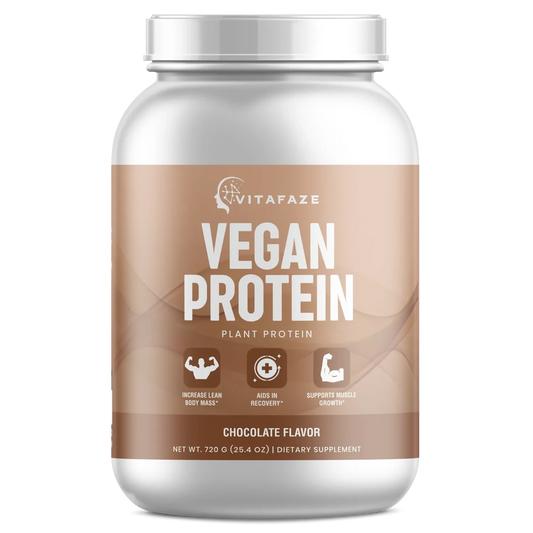
Look for formulas that list multiple protein sources in the first few ingredients. VitaFaze's Vegan Protein Chocolate Shake uses an Organic Pea Protein and Organic Brown Rice Protein blend, delivering 22 grams of complete plant-based protein per serving while maintaining smooth mixability. The combination ensures you get a full amino acid profile without sacrificing texture or taste.
Some powders use hemp protein or sacha inchi as secondary sources, but these tend to add earthiness and can make mixing more difficult. Stick with proven combinations, pea and rice, or pea and hemp in smaller amounts, if smooth mixing is your priority.
How to Mix Vegan Protein Powder Without Clumps
Most guides tell you to add liquid first and shake harder. That advice is correct, but it doesn't tell you which powders actually dissolve and which ones only look like they do.
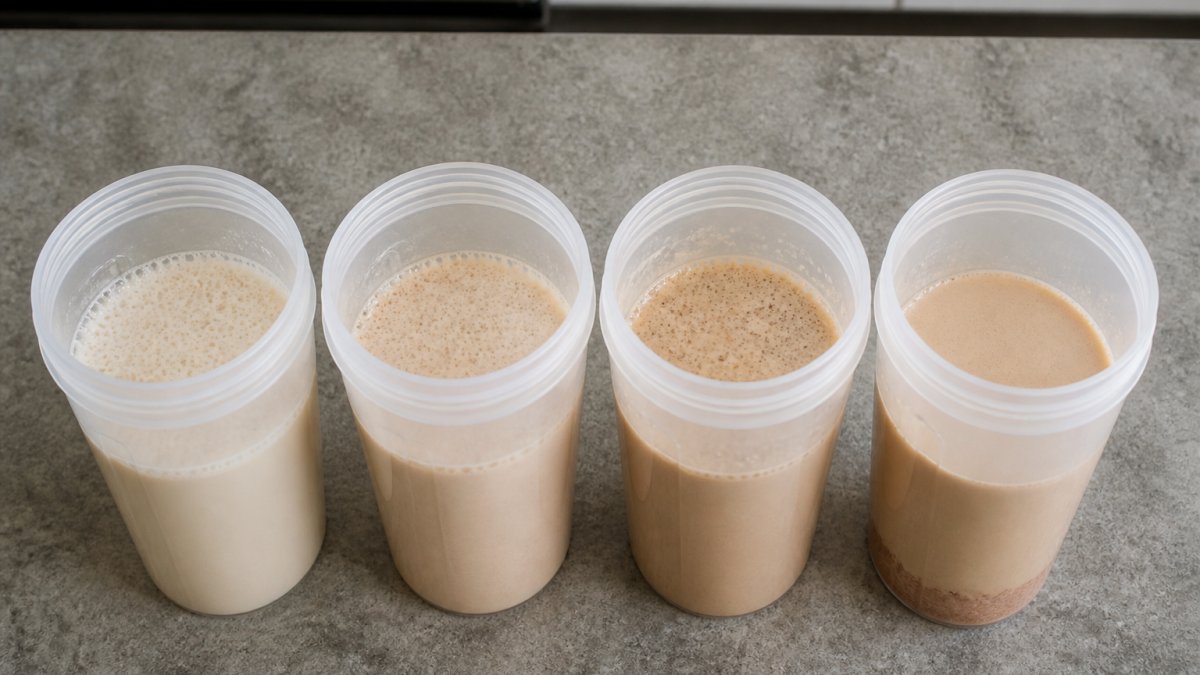
The Test Conditions We Used
Every powder was evaluated under identical conditions so the numbers mean something:
- Serving size: one level scoop, weighed to the manufacturer's stated serving (typically 30-35 g)
- Liquid: 10 oz unsweetened almond milk, refrigerated to 40°F
- Vessel: the same 28 oz shaker bottle with a stainless mixing ball
- Mixing time: 30 seconds of vigorous shaking, then a 2-minute rest, then 10 more seconds
- Second method: the same powder stirred with a spoon in a glass for 60 seconds, no shaker and no ball
- Third method: blended on medium for 25 seconds
We then scored each result on five factors using a 1-5 scale, where 1 is "unusable" and 5 is "smooth with no residue":
| Factor | What we looked for |
|---|---|
| Clumps | Visible dry pockets or gel-shelled lumps after mixing |
| Grit | Fine sandy particles felt on the tongue |
| Foam | Air whipped into the surface that won't settle |
| Sediment | Powder settled at the bottom after 10 minutes |
| Mouthfeel | Overall smoothness and body |
What the Results Showed
A consistent pattern emerged across the powders we tested:
- Pea-and-rice blends with acacia gum scored highest on clumps and sediment. The gum keeps particles suspended, so even a spoon-stirred glass stayed uniform for 10-15 minutes.
- Single-source pea protein mixed acceptably in a shaker but left noticeable grit and a chalky finish when stirred by hand.
- Hemp-heavy and high-fiber formulas were the weakest performers. Fiber absorbs water fast and forms gel pockets, so these needed a blender to reach a drinkable texture.
- "Instantized" or "micronized" powders dissolved faster in cold liquid than standard-milled versions, which matters most when you're mixing without equipment.
The Technique That Actually Works
Based on the test results, here is the sequence that produced the smoothest shake for every powder, including the weaker performers:
- Liquid first, always. Pour your almond milk or water into the shaker before the powder. Powder-first creates gel shells that trap dry powder inside.
- Add powder gradually. Dump the whole scoop in at once and you get a mound that hydrates unevenly. Add it in two or three additions while the shaker is already moving.
- Shake in bursts. 15 seconds, rest 30 seconds, then 15 more seconds. The rest period lets the powder hydrate between bursts instead of clumping on contact.
- Let it sit for 2 minutes, then re-shake. This second pass catches clumps that formed during the first mix.
- If you're stirring by hand, use a fork or small whisk in a wide glass rather than a spoon in a narrow one. Wider surface area and more agitation break up clumps faster.
Mixing Without a Shaker or Blender
This is the practical question most guides skip. If you're at a desk, a hotel, or a gym with no equipment, here's what the test showed:
- A plain water bottle works if you add liquid first, drop in the powder, cap it, and shake hard for 45 seconds. Expect more foam than a shaker bottle because there's no mixing ball to break surface tension.
- A spoon in a glass is the weakest method. Powders with acacia or xanthan gum still dissolved acceptably; single-source pea and hemp powders left visible grit.
- A fork used as a whisk outperformed a spoon in every test, because the tines create more turbulence and break up clumps as they form.
If you regularly mix without equipment, prioritize powders that list acacia gum, guar gum, or xanthan gum and use the words "instantized" or "micronized" on the label. Those two factors made the biggest difference in our no-shaker tests.
Best Vegan Protein Powder for Smoothies and Plant Milk
Smoothies mask texture issues better than simple shakes, so a powder that struggles with mixability can still work in a blended drink. However, the best vegan protein powder for smoothies should still mix cleanly without gritty residue settling at the bottom.
Vegan Protein Chocolate Shake - 1.5lb Pure Plant-Based Nutrition for Optimal →
Plant milk choice matters. Unsweetened almond milk mixes more smoothly than coconut milk, which has higher fat content and can create separation. Oat milk provides a thicker base that helps suspend the powder, while soy milk offers the creamiest texture. If you're mixing without a blender, choose a plant milk with higher viscosity, it helps the powder stay suspended longer.
A quality powder like VitaFaze's formula works well in smoothies because the blend of pea and rice protein combined with acacia gum creates a stable suspension. Add frozen fruit, plant milk, and the powder in that order. Blend for 20-30 seconds until smooth. The fruit's natural thickness and the blender's action mask any minor texture issues that might appear in a simple shake.
For cold smoothies, add ice last and blend briefly, extended blending can incorporate too much air and create an overly foamy texture. For thicker smoothie bowls, use less liquid and blend until the consistency is spoon-thick rather than drinkable.
Vegan Protein Powder That Doesn't Clump
Clumping is a chemistry problem, not a mixing problem. When moisture hits powder unevenly, the outer layer hydrates first and forms a gel-like shell that seals dry powder inside. No amount of extra shaking fixes a shell that's already formed, which is why the formula matters more than the technique.
What Actually Prevents Clumping
Three formulation choices drive most of the difference between a powder that dissolves cleanly and one that fights you:
1. Particle size. Smaller, more uniform particles hydrate faster and more evenly. Labels that say "micronized" or "instantized" mean the manufacturer has milled the protein to a finer, more consistent size.
2. Emulsifiers and stabilizers. Acacia gum, guar gum, and xanthan gum don't just thicken, they coat particles and keep them from sticking to each other. Acacia gum is the gentlest on digestion because it's a soluble fiber that ferments slowly. Guar and xanthan are more effective thickeners but can feel slimy at higher doses.
3. Protein source. Pea protein alone is the most clump-prone single source because its particles are dense and absorb water slowly. Blending pea with brown rice protein improves mixability because the two sources have different particle densities and hydration rates, so they fill gaps in each other's texture.
The Trade-Off Nobody Mentions
There's a real tension between mixability and nutrition that most roundups ignore:
- More fiber = worse mixing. Fiber particles absorb water aggressively and form gel pockets. A powder with 3-5 g of fiber per serving balances digestibility with smooth mixing. Push past 8 g and you'll notice grit no matter how long you shake.
- More protein per scoop = thicker shake. A 25 g protein scoop needs more liquid to reach the same consistency as a 20 g scoop. That's not a flaw, it just means you should adjust your liquid volume, not blame the powder.
- Fewer additives = harder mixing. "Clean label" powders that skip gums and emulsifiers often mix worse than conve
Texture, Thickness, and Ingredient Quality
The feel of your shake matters as much as the taste. A smooth, creamy texture signals good mixability, while a gritty or chalky mouthfeel means the powder didn't dissolve properly.
Thickness depends on protein concentration and the type of stabilizers used. A powder with 20+ grams of protein per serving will naturally create a thicker shake than one with 15 grams. This isn't bad, it just means you may need slightly more liquid to reach your preferred consistency. VitaFaze's formula delivers 22 grams of protein while maintaining a smooth, drinkable texture because the pea and rice blend creates the right balance.
Ingredient quality directly impacts how well a powder mixes. Organic ingredients are processed differently than conventional ones, and this affects particle size and hydration properties. Clean ingredients without artificial thickeners or emulsifiers tend to mix less smoothly, which is why many premium powders use natural gums. These aren't fillers, they're functional ingredients that improve texture and mixability.
Sweetener choice affects mouthfeel too. Artificial sweeteners like aspartame can create a slightly grainy sensation, while sugar alcohols like erythritol (used in VitaFaze's formula) provide a cleaner taste and smoother texture. Natural stevia adds sweetness without the bulk of sugar, which helps the powder mix more evenly.
Vegan Protein Shake Recipes for Better Mixability
Simple recipes work best when testing a new powder's mixability. Start with basic combinations before adding multiple ingredients that can mask mixing issues.
Basic Plant Milk Shake: One scoop of powder, 8-10 oz of unsweetened almond milk, ice. Mix in a shaker bottle for 45 seconds. This reveals exactly how well the powder dissolves without other ingredients interfering.
Vegan Protein Chocolate Shake - 1.5lb Pure Plant-Based Nutrition for Optimal →
Smoothie Base: One scoop of powder, 1 cup of oat milk, ½ frozen banana, handful of spinach. Blend for 20-30 seconds. The banana adds natural thickness and masks minor grittiness while providing carbs for post-workout recovery.
Cold Brew Coffee Shake: One scoop of powder, 6 oz cold brew coffee, 4 oz plant milk, ice. Shake for 45 seconds. Coffee's bitterness complements most chocolate and vanilla protein powders, and the liquid ratio gives you a thinner, more drinkable shake that clearly shows mixability.
Overnight Oats Addition: Mix one scoop of powder with ½ cup rolled oats, ¾ cup plant milk, and ¼ cup water. Let sit overnight in the refrigerator. The extended hydration time allows the powder to fully dissolve, and you can stir in more milk in the morning if needed.
Common Mistakes That Ruin Mixability
Most people make the same mixing errors repeatedly. Recognizing these mistakes helps you get the best results from any powder, even formulas that aren't optimized for mixability.
Adding powder before liquid creates clumps almost every time. The powder absorbs moisture unevenly, forming gel-like pockets that trap dry particles inside. This is the single biggest cause of grainy shakes. Always add liquid first, powder second.
Using water that's too hot denatures plant proteins and causes them to clump. If you prefer warm shakes, mix with cool liquid first, then add hot water or warm it in a microwave after mixing. This maintains smooth texture while giving you the warm drink you want.
Not mixing long enough leaves undissolved particles throughout your shake. A minimum of 30-45 seconds in a shaker bottle or 20-30 seconds in a blender ensures complete hydration. Longer mixing doesn't hurt, it just means a slightly airier texture.
Over-filling your shaker bottle prevents proper mixing. Fill it only halfway with liquid before adding powder, then add more liquid after mixing if you want a thinner shake. A crowded shaker bottle doesn't allow the mixing ball to move freely, leaving clumps behind.
Choosing plant milk with too much fat can create separation. Coconut milk and full-fat oat milk mix less smoothly than almond milk or soy milk. If you prefer creamy milk, add it after mixing your basic shake, this gives you the best of both worlds.
Choosing the best vegan protein powder that mixes well means prioritizing formulas with proven protein blends, quality emulsifiers, and fine particle sizes. VitaFaze's Vegan Protein Chocolate Shake delivers 22 grams of complete plant-based protein using Organic Pea Protein and Organic Brown Rice Protein, combined with Organic Acacia Gum for smooth mixing and easy digestion. The formula contains just 3 grams of sugar and 140 calories per serving, making it ideal for muscle recovery and post-workout nutrition without unnecessary additives. Shop All Products and experience how clean ingredients and thoughtful formulation transform your daily shake routine.
Frequently Asked Questions
Which vegan protein powder mixes the smoothest?
Vegan protein powders with pea and rice protein blends tend to mix most smoothly because they have smaller particle sizes and lower grit than single-source powders. VitaFaze's Vegan Protein Chocolate Shake combines organic pea protein and organic brown rice protein in a 22-gram serving, designed to dissolve without residue. The addition of acacia gum helps bind moisture and prevents clumping. Particle size matters more than brand reputation, finer powders dissolve faster in any liquid.
How can I keep vegan protein powder from clumping?
Mix in a shaker bottle with a ball insert, or use a blender for best results. Add liquid first, then powder, to prevent clumps from forming at the bottom. Use room-temperature or cold water rather than hot liquid, which can cause proteins to seize. If mixing by hand, stir continuously in small circular motions rather than stirring up and down. For powders prone to clumping, a small amount of xanthan gum or acacia gum in the formula helps, check the ingredient list before buying.
Does vegan protein powder mix better with water or plant milk?
Both work, but cold water dissolves faster and produces a thinner shake, while plant milk creates creamier texture and masks grittiness better. Oat milk and soy milk blend more smoothly than almond milk because of their higher fat content. If you're mixing by hand or without a blender, plant milk's viscosity helps suspend particles and reduce visible sediment. For post-workout recovery, either option delivers amino acids, choose based on taste preference and texture goals, not absorption speed.
What ingredients help vegan protein powder mix smoothly?
Acacia gum, xanthan gum, and lecithin act as natural emulsifiers that improve solubility and reduce clumping. Smaller particle-size proteins (especially pea and rice blends) dissolve faster than larger particles. Organic erythritol and stevia can help with texture when used as sweeteners. VitaFaze's formula includes 4 grams of dietary fiber and organic acacia gum per serving, both of which support smooth mixing and digestion. Always check the ingredient label to confirm these additives are present.