



Pea Protein vs Rice Protein for Muscle Building
Table of Contents
- Pea Protein vs Rice Protein for Muscle Building: What the Evidence Says
- Pea Protein for Muscle Growth: High Lysine, Low Methionine
- Rice Protein for Muscle Building: Low Lysine, Higher Methionine
- Amino Acid Profiles: The Limiting Amino Acid Problem
- Leucine Dose and Muscle Protein Synthesis: What 2-3 Grams Per Serving Means
- Pea and Rice Protein Blend: Why Combining Plant Proteins Works
- Plant Protein Powder for Muscle Gain: How to Choose a Product
- How Much Plant Protein Per Day to Build Muscle
- Conclusion: Which Plant Protein Wins for Muscle Building
- Frequently Asked Questions
Last Updated: October 13, 2026
Pea Protein vs Rice Protein for Muscle Building: What the Evidence Says
Pea protein vs rice protein for muscle building comes down to one thing: which amino acids each one is missing. Pea protein is high in lysine but low in methionine. Rice protein is the reverse. Neither is complete on its own. Blend them, and the gaps close.
That single fact explains almost everything else in this comparison, from serving sizes to why so many plant-based athletes stall on recovery. At VitaFaze, we build our plant protein around that principle.
Here is the short version before we get into the detail:
| Question | Pea Protein | Rice Protein |
|---|---|---|
| Strongest amino acid | Lysine | Methionine |
| Weakest amino acid | Methionine | Lysine |
| Complete on its own? | No | No |
| Best use | Blended with rice | Blended with pea |
| Digestive tolerance | Generally good | Generally good |
Below, we break down the amino acid profiles, the leucine dose that actually triggers muscle protein synthesis, and how much plant protein you need per day to build muscle.
Pea Protein for Muscle Growth: High Lysine, Low Methionine
Pea protein is a legume-derived protein isolate with a strong lysine content and a weak spot at methionine. That combination makes it a solid base for a plant protein powder for muscle gain, as long as you pair it correctly.
Lysine does real work in muscle building. It supports collagen formation and calcium absorption, and it plays a role in the signaling that follows resistance training. Pea protein also digests reasonably well for most people, with fewer of the bloating complaints that dairy proteins sometimes trigger in sensitive digestion.
Where pea protein falls short is methionine, one of the nine essential amino acids your body cannot make. Methionine supports muscle repair and acts as a precursor in several metabolic pathways. A pea-only powder leaves that gap open.
One more thing worth knowing: pea protein isolate typically lands in the 80 to 90 percent protein range by weight, which is why it forms the backbone of most quality vegan protein powder formulas. It mixes thicker than rice protein, which some people love and others do not.

Rice Protein for Muscle Building: Low Lysine, Higher Methionine
Rice protein is a grain-derived protein with a higher methionine content than pea, but it is low in lysine. That is the mirror image of pea, and it is exactly why the two work together.
Brown rice protein has one practical advantage that rarely gets mentioned: it is hypoallergenic. If you react to soy, dairy, or legumes, rice protein is often the safest single-source option. It also tends to be smoother in texture and easier to hide in smoothies.
The lysine problem is real, though. Lysine is the limiting amino acid in rice protein, meaning your body can only build as much muscle protein as the lysine supply allows. Load up on rice protein alone and you hit a ceiling fast, no matter how many scoops you take.
Rice protein also has a slightly lower protein density than pea isolate, so you may need a larger scoop to hit the same protein content.
That is the trade-off. Rice protein wins on tolerance and taste; it loses on amino acid completeness.
Amino Acid Profiles: The Limiting Amino Acid Problem
A limiting amino acid is the essential amino acid present in the smallest amount relative to what your body needs to build protein. When one is short, protein synthesis stops there, regardless of how much total protein you consume.
This is the concept most plant protein guides skip, and it is the one that decides whether your powder actually supports muscle growth.
Here is how the two stack up:
- Pea protein: high in lysine, low in methionine and cysteine
- Rice protein: high in methionine and cysteine, low in lysine
- Whey protein: complete, with all nine essential amino acids in adequate amounts
Cysteine matters alongside methionine because your body can convert methionine into cysteine, so a methionine shortfall drags cysteine down with it.
For a complete protein, you need all nine essential amino acids: histidine, isoleucine, leucine, lysine, methionine, phenylalanine, threonine, tryptophan, and valine. Pea and rice each cover most of the list. Neither covers all of it.
The good news is that you do not need a single perfect protein source. You need the right combination across your day, and ideally in the same shake.
Leucine Dose and Muscle Protein Synthesis: What 2-3 Grams Per Serving Means
Leucine is the amino acid that flips the switch on muscle protein synthesis (MPS). Most research points to a threshold of roughly 2 to 3 grams of leucine per serving to trigger a meaningful anabolic response after resistance exercise in younger adults, with some evidence suggesting older adults may need toward the higher end of that range.
That number is where a lot of plant proteins quietly fail. Rice protein is notably low in leucine. Pea protein does better, but a pea-only powder still trails whey on leucine density per gram of protein.
The per-serving math most guides skip
Leucine content scales with total protein quality, not just scoop size. As a rough guide:
- Whey isolate: roughly 10-11% leucine by protein weight, so a 25 g serving delivers about 2.5-2.8 g
- Pea protein isolate: roughly 8% leucine by protein weight, so a 25 g serving delivers about 2.0 g
- Rice protein: roughly 8-9% leucine by protein weight but lower total essential amino acids, so a 25 g serving often lands near 2.0 g with a thinner EAA pool behind it
- A pea-rice blend at 22-25 g protein: typically lands in the 2.0-2.5 g leucine range, and the complementary EAAs push the total anabolic signal higher than either source alone
Those percentages are approximations, not label guarantees. The point is that you cannot assume a 25 g scoop of any plant protein clears the threshold. You have to check the amino acid panel, and many brands do not publish one.
Why leucine alone is not the whole story
Leucine triggers the signal, but the other eight essential amino acids are the raw material your body uses to actually build muscle protein. A serving can hit 2.5 g of leucine and still underperform if the total EAA pool is thin. This is why the leucine threshold and the completeness question are linked, not separate.
A practical way to think about it:
- Leucine turns the switch on
- Total EAAs determine how much building material is available once the switch is on
- Digestibility determines how much of that material actually reaches muscle tissue
Direct evidence vs indirect comparisons
Here is where the marketing gets ahead of the science. There are relatively few direct, head-to-head resistance-training trials pitting pea protein against rice protein with muscle or strength outcomes as the endpoint. Most of what gets cited is one of three things:
- Direct trials of a single plant protein vs whey, for example, resistance-training studies using pea protein or rice protein against whey, which tell you how each performs against a dairy benchmark, not against each other
- Amino acid composition analyses, lab comparisons of leucine, lysine, and methionine content, which predict anabolic potential but do not measure hypertrophy
- Acute MPS studies, short-term measurements of muscle protein synthesis after a single dose, which are useful but do not capture long-term strength or size gains
A common pattern in the literature is that blended plant proteins and well-dosed single-source plant proteins can support resistance-training adaptations comparably to whey when total daily protein is matched and adequate. The honest summary is that the blend advantage is well-supported by amino acid logic and short-term MPS data, while long-term head-to-head pea-vs-rice hypertrophy trials are limited.
What this means in practice
- A blend that hits 2 to 3 grams of leucine per serving gives you a genuine muscle-building signal
- A single-source rice protein at a typical serving often falls short of that threshold
- Doubling your scoop to compensate adds calories and cost without guaranteeing the leucine you need
- If you cannot find a leucine number on the label, treat the product as unverified rather than assume it clears the bar
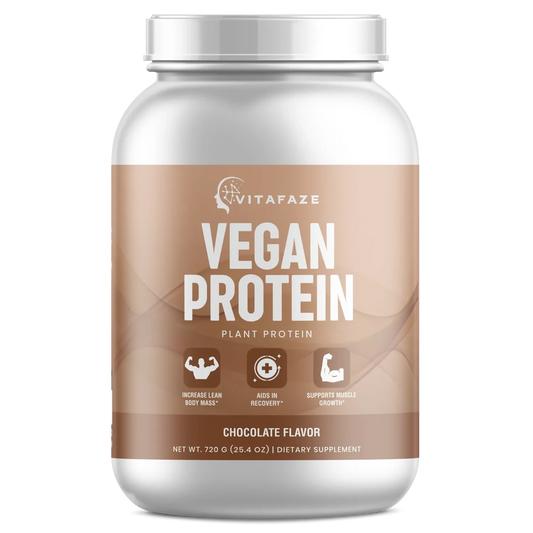
This is why we formulate around blends rather than single sources. Our Vegan Protein Chocolate Shake delivers 22 grams of complete plant-based protein per scoop from organic pea and organic brown rice, with 140 calories and 3 grams of sugar.

Pea and Rice Protein Blend: Why Combining Plant Proteins Works
A pea and rice protein blend works because the two sources cover each other's gaps. Pea supplies the lysine rice lacks. Rice supplies the methionine and cysteine pea lacks. Together they form a complete protein with all nine essential amino acids.
This is not a marketing trick. It is basic amino acid accounting, and it is the same logic behind traditional food pairings like rice and beans.
Vegan Protein Chocolate Shake - 1.5lb Pure Plant-Based Nutrition for Optimal →
The practical benefits of blending:
- Complete amino acid profile without adding a separate supplement
- Better leucine delivery per serving than either source alone
- Smoother texture, since rice protein softens pea protein's thickness
- Broader tolerance, because you are spreading the load across two sources
There is also a cost angle.
A well-built blend handles that for you. Our 2.9lb Essential Meal Replacement Protein takes a different route, combining seven protein sources for a sustained release of amino acids across the day, with 24 grams of protein, 5 grams of fiber, and digestive enzymes per serving.

Plant Protein Powder for Muscle Gain: How to Choose a Product
Choosing a plant protein powder for muscle gain comes down to five label checks: protein per serving, amino acid completeness, leucine content, added sugar, and whether the formula is third-party tested.
Run every product through this checklist before you buy:
- Does the label state protein grams per serving clearly?
- Are pea and rice both listed, or is it a single source?
- Does the serving provide 2 to 3 grams of leucine?
- Is added sugar under 5 grams per serving?
- Are the ingredients recognizable, with no artificial colors or sweeteners?
- Does the brand publish its sourcing or testing standards?
Texture and mixability matter more than most guides admit. A powder you dread drinking is a powder you stop buying, and consistency beats perfection over a training block.
For a straightforward recovery option, our Vegan Protein Chocolate Shake covers the first four checks at $32.97, with organic pea and brown rice protein, 4 grams of fiber, and 155 mg of calcium per serving. It is sweetened with organic erythritol and stevia rather than sugar.
If you are not strictly plant-based and simply want a complete protein with digestive support, our Whey Armor Natural Protein Vanilla delivers 24 grams per serving from non-GMO whey with digestive enzymes included. For a chocolate option in the same line, the Whey Armor Natural Protein Chocolate uses the same formula at $59.97.
Do not judge a plant protein by the front of the tub. "Plant-based" says nothing about amino acid completeness. Flip to the supplement facts panel and the ingredient list, because that is where the blend either holds up or falls apart.
How Much Plant Protein Per Day to Build Muscle
Most people building muscle do well with roughly 1.6 to 2.2 grams of protein per kilogram of body weight per day, spread across three to five meals. That range comes from the broader sports-nutrition literature and is widely cited for resistance-trained adults.
For plant-based athletes, aim toward the upper end of that range. The reason is digestibility, not preference.
Why plant protein needs a higher total
Plant proteins generally score lower on digestibility than animal proteins. The most common way this is expressed is the DIAAS score (Digestible Indispensable Amino Acid Score), which replaced the older PDCAAS method as the preferred metric. Animal proteins like whey and egg tend to score above 1.0 on DIAAS. Many single-source plant proteins score meaningfully below that, and blends score higher than their individual components because the limiting amino acids are covered.
What that means practically: a gram of pea protein and a gram of whey protein are not interchangeable at the tissue level. You are not just counting grams; you are accounting for how much of each gram your body actually uses. A slightly higher total intake helps compensate.
A body-weight starting point
| Body Weight | Daily Protein Target | Per Meal (4 meals) |
|---|---|---|
| 60 kg (132 lb) | 96-132 g | 24-33 g |
| 75 kg (165 lb) | 120-165 g | 30-41 g |
| 90 kg (198 lb) | 144-198 g | 36-50 g |
These are starting points, not prescriptions. Total calorie intake, training volume, age, and whether you are in a surplus or deficit all shift the target. Older adults often need toward the higher end because of anabolic resistance.
Per-meal distribution matters as much as the daily total
Muscle protein synthesis responds to each feeding, so four moderate doses beat one large one. A useful per-meal target is roughly 0.3 to 0.4 grams of protein per kilogram of body weight, or about 20 to 40 grams for most adults, with each meal ideally delivering enough leucine to clear the threshold discussed above.
For plant-based eaters, that usually means:
- Breakfast: a blended plant protein shake or fortified oatmeal with plant protein
- Lunch and dinner: a legume or soy anchor plus a grain, so the amino acid gaps close across the meal
- Post-workout: a blend that hits the leucine threshold rather than a single-source powder
- Before bed: optional, but a slower-digesting protein source can help if daily totals are hard to hit
The limits of the evidence
Most of the daily-protein and per-meal-distribution research has been done in younger, resistance-trained adults, often with animal-based proteins. Extrapolating directly to plant-based athletes, older adults, or people in a calorie deficit involves some guesswork. The honest position is that the direction of the advice is well-supported, higher total intake, even distribution, adequate leucine, while the exact numbers carry more uncertainty than the confident tone of most supplement marketing suggests.
For context on how this fits into a training week, the ACSM position stand on nutrition and athletic performance outlines protein and timing guidance for active adults, and the USDA Dietary Guidelines for Americans covers baseline protein needs for the general population. The NIH Office of Dietary Supplements amino acid reference is a useful reference if you want to check individual amino acid requirements.
Do not treat a daily protein number as a finish line. If your total is on point but your per-meal doses are lopsided or your leucine per serving is low, you can still leave adaptation on the table.
Conclusion: Which Plant Protein Wins for Muscle Building
Neither pea nor rice wins alone. The blend wins.
Pea protein brings the lysine. Rice protein brings the methionine and cysteine. Together they deliver the complete amino acid profile, the leucine dose, and the digestive tolerance that muscle building actually requires. If you had to pick one, pea protein edges ahead for muscle growth, but the gap closes the moment you combine them.
The real challenge is not choosing a side. It is finding a blend that hits 2 to 3 grams of leucine per serving without loading up on sugar.
Our plant-powered formulas use clean, bioavailable ingredients, support muscle protein synthesis, and are made for athletes who want recovery and endurance without compromising their values.
Get started with VitaFaze and give your training the amino acid profile it has been missing.
Frequently Asked Questions
Which is healthier, pea protein or rice protein?
Both are healthy, but they differ in amino acid strengths. Pea protein is rich in lysine and leucine, which support muscle protein synthesis. Rice protein is higher in methionine and cysteine. If your goal is muscle building, pea protein has a slight edge because of its leucine content. However, a pea and rice protein blend covers both strengths and provides a more complete amino acid profile. Neither is inherently healthier than the other; the best choice depends on your overall daily protein intake and fitness goals.
Does pea protein actually build muscle?
Yes, pea protein supports muscle building when you consume enough total daily protein. Research on resistance-trained individuals shows that pea protein can support muscle growth and lean body mass gains when the leucine dose per serving reaches about 2 to 3 grams. Pea protein isolate typically provides around 2.5 grams of leucine per 25-gram serving, which is enough to trigger muscle protein synthesis in many people. Pair it with resistance training and a daily protein intake of 1.6 to 2.2 grams per kilogram of body weight for best results.
Can you build muscle with rice protein?
You can build muscle with rice protein, but it requires attention to total daily intake and meal timing. Rice protein is lower in lysine, its limiting amino acid, so a single serving may not maximize muscle protein synthesis. Studies on rice protein in resistance-training men show it can support muscle growth and recovery when dosed adequately, often around 48 grams per day. Combining rice protein with pea protein fills the lysine gap and creates a more complete amino acid profile for muscle building.
Does combining pea and rice protein provide a more complete amino acid profile?
Yes. Pea protein is high in lysine but low in methionine. Rice protein is high in methionine but low in lysine. When you combine them, the strengths of each cover the other's limiting amino acid. This creates a complete protein profile that supports muscle protein synthesis more effectively than either source alone. A pea and rice protein blend is a practical way to get a full spectrum of essential amino acids in one serving, which matters for plant-based athletes focused on muscle growth and recovery.
These statements have not been evaluated by the Food and Drug Administration. These products are not intended to diagnose, treat, cure, or prevent any disease.