



How to Get Enough Zinc on a Vegan Diet: 2026 Guide
Last Updated: October 23, 2026
Quick Summary
To get enough zinc vegan eaters should build meals around seeds, nuts, legumes, whole grains and soy foods, since pumpkin seeds alone supply about 2.2 mg per ounce. Adults need 8 to 11 mg daily, and vegans should aim toward the upper end because phytates reduce absorption. Soaking, sprouting and fermenting foods, plus pairing zinc with vitamin C, helps your body absorb more.
- Men need 11 mg of zinc daily and women need 8 mg, with lactation raising the target to 12 mg.
- A cup of cooked lentils or chickpeas contributes about 2.5 mg of zinc.
- Soak, sprout or ferment beans, grains and nuts to lower phytate levels and improve absorption.
- Keep total zinc intake under the 40 mg upper limit from food and supplements combined.
- Slow wound healing, frequent illness and hair loss are signs that warrant a blood test.
Table of Contents
- Why Zinc Matters on a Vegan Diet
- How Much Zinc Do Adults Need Daily?
- Vegan Foods High in Zinc: A Numbered List
- Zinc Absorption From Plant Foods: Phytates and Prep Methods
- A One-Day Vegan Meal Plan With Zinc Totals
- Vegan Zinc Supplement: When You Actually Need One
- Signs of Deficiency and When to Get Tested
- Common Mistakes That Leave Vegans Short on Zinc
- Conclusion
- Frequently Asked Questions
Why Zinc Matters on a Vegan Diet
Zinc is an essential mineral your body cannot store, so you need it from food every day. On a plant-based diet, getting enough takes planning. That is the core challenge behind how to get enough zinc vegan eaters face, and VitaFaze helps athletes close that gap.
Zinc supports immune function, wound healing, and protein synthesis. For plant-based athletes, it also plays a role in recovery and energy metabolism.
Here is the catch. Plant foods contain phytates, natural compounds that bind zinc and reduce how much your body absorbs. So a vegan diet can look zinc-rich on paper yet still fall short in practice.
The fix is not complicated. Choose the right foods, prep them well, and know your daily target. Below, we show you exactly how to do all three.
National Institutes of Health Office of Dietary Supplements zinc fact sheet
For the bigger nutrient picture beyond zinc, our guide to essential nutrients for vegan athletes covers what else to watch.
How Much Zinc Do Adults Need Daily?
Most adults need 8 to 11 milligrams of zinc per day, depending on sex and life stage. Men generally need 11 mg, while women need 8 mg. Pregnancy raises the target to 11 mg, and lactation to 12 mg.
Those figures come from the NIH Office of Dietary Supplements. They are the standard recommended dietary allowance for healthy adults.
Vegans may need more. Because phytates block some absorption, many dietitians suggest aiming toward the higher end of the range. Think of the RDA as a floor, not a ceiling.
Here is a quick reference:
| Life Stage | Daily Zinc Target |
|---|---|
| Adult men | 11 mg |
| Adult women | 8 mg |
| Pregnancy | 11 mg |
| Lactation | 12 mg |
| Vegan adults (practical aim) | Upper end of range |
A common mistake is assuming a multivitamin covers it. Check the label. Many multis carry only a fraction of your daily need.
Vegan Foods High in Zinc: A Numbered List
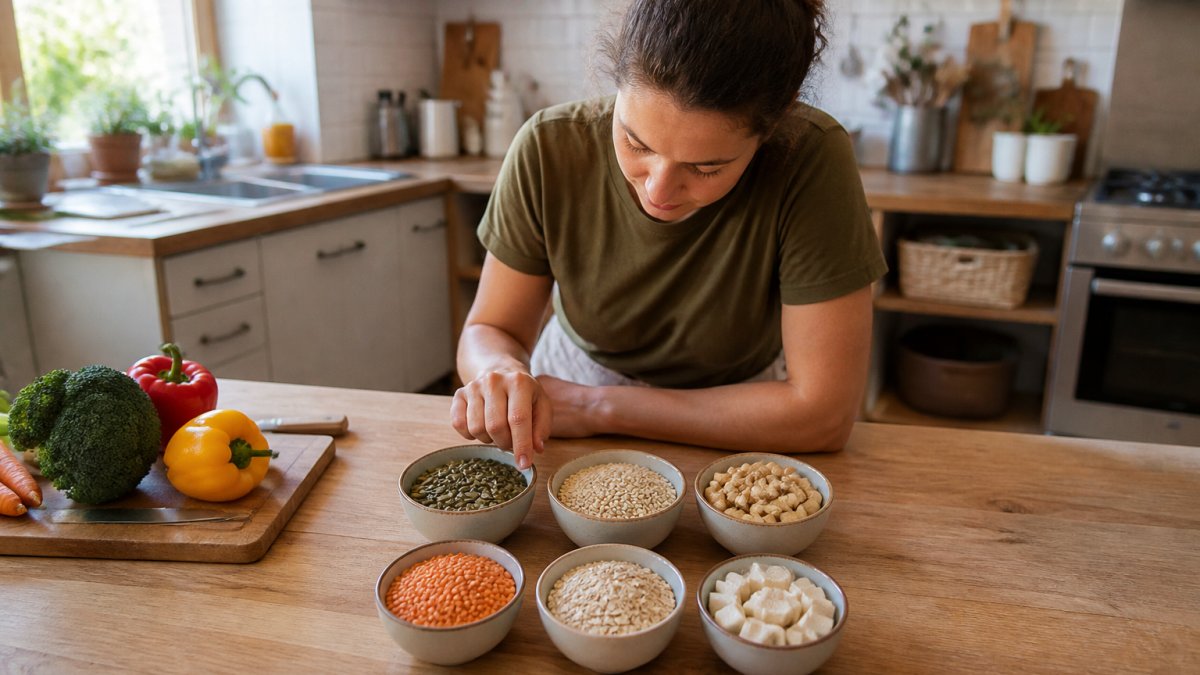
The best vegan zinc sources fall into five groups: seeds, nuts, legumes, whole grains, and soy foods. Each brings something different to your plate. The table below gives zinc per realistic serving and per 100 g, using data from the USDA FoodData Central and the NIH Office of Dietary Supplements zinc fact sheet. Values are for the food as commonly eaten; preparation and brand change the numbers, so check labels for packaged items.
| Food | Common serving | Zinc per serving | Zinc per 100 g |
|---|---|---|---|
| Pumpkin seeds (hulled, roasted) | 1 oz (about 28 g) | ~2.2 mg | ~7.8 mg |
| Sesame seeds | 1 tbsp (about 9 g) | ~0.7 mg | ~7.8 mg |
| Chia seeds | 1 oz (about 28 g) | ~1.3 mg | ~4.6 mg |
| Sunflower seeds (hulled) | 1 oz (about 28 g) | ~1.5 mg | ~5.3 mg |
| Cashews (roasted) | 1 oz (about 28 g) | ~1.6 mg | ~5.6 mg |
| Almonds | 1 oz (about 28 g) | ~0.9 mg | ~3.1 mg |
| Lentils (cooked) | 1 cup (about 198 g) | ~2.5 mg | ~1.3 mg |
| Chickpeas (cooked) | 1 cup (about 164 g) | ~2.5 mg | ~1.5 mg |
| Black beans (cooked) | 1 cup (about 172 g) | ~1.9 mg | ~1.1 mg |
| Oats (dry, rolled) | 1/2 cup (about 40 g) | ~1.5 mg | ~3.6 mg |
| Wheat germ | 2 tbsp (about 14 g) | ~2.0 mg | ~14.0 mg |
| Fortified cereal | 1 cup (varies) | 2-5 mg (label-dependent) | varies |
| Tofu (firm, prepared with calcium) | 1/2 cup (about 126 g) | ~1.0 mg | ~0.8 mg |
| Tempeh | 1/2 cup (about 83 g) | ~0.8 mg | ~1.0 mg |
Use the per-serving column for planning and the per-100 g column for comparing foods fairly. A few notes on reading the table:
- Seeds win on density. Pumpkin seeds and sesame seeds deliver the most zinc per bite, which is why a tablespoon or two sprinkled on a meal moves the daily total more than most people expect.
- Legumes win on volume. A cup of cooked lentils or chickpeas carries about 2.5 mg, and that cup also brings protein and fiber, so it earns its place in the meal rather than being a garnish.
- Fortified cereals are label-dependent. The added zinc varies by product, so the box is the source of truth, not a generic figure.
- Tofu and tempeh are modest zinc sources. They are worth eating for protein and other nutrients, but do not count on them alone to close a zinc gap.
1. Seeds: Pumpkin, Sesame, Chia, and Sunflower
Seeds are the easiest win for vegan foods high in zinc. Pumpkin seeds lead the pack at roughly 2.2 mg per ounce, and sesame seeds pack about 7.8 mg per 100 g, so even a tablespoon of tahini or a sprinkle of sesame adds up. Chia and sunflower seeds contribute meaningful amounts too.
Sprinkle them on oats, salads, or smoothie bowls. A tablespoon here and there adds up fast, and because seeds need no cooking, they are the lowest-effort way to raise a meal's zinc.
2. Nuts: Cashews, Almonds, and More
Cashews and almonds are solid zinc sources, and they double as easy snacks. An ounce of cashews delivers about 1.6 mg, while the same amount of almonds gives about 0.9 mg. Cashews are the stronger pick if zinc is the goal.
Keep a jar at your desk. It beats a vending machine run and quietly raises your daily intake.
3. Legumes, Beans, Lentils, and Peas
Legumes carry zinc along with protein and fiber. A cup of cooked lentils or chickpeas contributes about 2.5 mg, and black beans add about 1.9 mg per cup. A bowl of lentil soup or a chickpea salad does real work here.
This group matters most for plant-based athletes. It pairs zinc with the protein your muscles need for recovery.
4. Whole Grains, Oats, and Fortified Cereals
Oats, wheat germ, and fortified cereals add zinc to your morning routine. A half cup of dry rolled oats brings about 1.5 mg, and two tablespoons of wheat germ add about 2 mg. Fortified cereals are especially useful because the zinc is added back after processing, though the amount varies by product.
Choose plain oats over sugary packets. You get the mineral without the added sugar.
5. Tofu and Other Soy Foods
Tofu and other soy foods round out the list. Half a cup of firm tofu brings about 1 mg of zinc plus complete protein, which suits athletes training hard. Tempeh, a fermented soy food, is another option at roughly 1 mg per half cup, and fermentation also helps with absorption, which we cover next.
Treat soy foods as contributors, not as your primary zinc source. Pair them with seeds or legumes at the same meal to make the total count.
Zinc Absorption From Plant Foods: Phytates and Prep Methods
Phytates are the main reason plant zinc is less absorbable than zinc from animal foods. These natural compounds bind the mineral in your gut. The good news: simple prep methods cut phytate levels.
Here is what works:
Ashwagandha with Vitamin D and Zinc Gummies →
- Soaking: Soak beans, grains, and nuts before cooking to reduce phytates.
- Sprouting: Let seeds and grains sprout to lower phytate content.
- Fermentation: Choose fermented foods like tempeh or sourdough.
- Pairing: Eat zinc-rich foods with vitamin C to support absorption.
Each method has a trade-off. Soaking takes planning ahead. Fermentation changes flavor. Pick the ones that fit your routine and stack them.
Wondering whether plant supplements absorb well at all? Our breakdown of whether plant based supplements are effective digs into the science.
A One-Day Vegan Meal Plan With Zinc Totals
A practical meal plan makes this concrete. Here is one day built around zinc-rich foods. Amounts are estimates, so check labels for exact figures.
- Breakfast: Oatmeal with pumpkin seeds and fortified cereal (about 4 mg)
- Lunch: Lentil soup with a side salad and sesame dressing (about 3 mg)
- Snack: Handful of cashews and almonds (about 1.5 mg)
- Dinner: Tofu stir-fry with chickpeas and whole grains (about 3 mg)
That lands near the daily target for most adults. The point is not perfection. It is stacking several zinc sources across the day.
Rotate your foods. A varied diet covers more nutrients than any single "superfood."
Vegan Zinc Supplement: When You Actually Need One
A vegan zinc supplement makes sense when food alone falls short. That happens during heavy training, travel, or busy weeks when meals slip. It is a backup, not a replacement for real food.
Before you buy, know the numbers that matter:
- The RDA is a target, not a minimum to exceed. Adult men need 11 mg and adult women need 8 mg per day; pregnancy calls for 11 mg and lactation 12 mg, per the NIH Office of Dietary Supplements.
- The upper limit for adults is 40 mg per day. That ceiling applies to total zinc from food and supplements combined, and it is set by the NIH Office of Dietary Supplements. Long-term intake above it is where trouble starts.
- Supplement doses vary widely. Many standalone zinc products supply 10-50 mg per tablet, and multivitamins often carry 8-15 mg. Read the label and add up every source before deciding you need more.
What goes wrong with too much zinc
Zinc and copper compete for absorption in the gut. A high-dose zinc supplement taken daily for months can push copper status down, which may show up as anemia, low white blood cell counts, or nerve symptoms. This is the main reason practitioners caution against open-ended high-dose use. Stomach upset and nausea are the more immediate side effects of taking zinc on an empty stomach.
A common pattern is a person who takes a 50 mg zinc tablet daily for immune support, adds a multivitamin with zinc, and ends up well above the 40 mg upper limit without realizing it. Stacking is the usual culprit.
Medication interactions to raise with a clinician
Zinc supplements can interfere with how some drugs are absorbed. The best-known examples are certain antibiotics (tetracyclines and fluoroquinolones), penicillamine used for rheumatoid arthritis, and some diuretics. If you take any prescription medication, ask a pharmacist or doctor about timing and whether a zinc supplement is appropriate. Separating doses by a few hours is often the fix, but the specific advice depends on the drug.
How to choose and use one
Look for a product with a clear dose and clean ingredients. Our elderberry, zinc and vitamin C formula pairs 10 mg of zinc with vitamin C and elderberry for immune support. If you prefer a gummy, our ashwagandha with vitamin D and zinc gummies offer another option. Both stay within a reasonable daily range when taken as directed.


Use these guardrails:
- Take zinc with food to reduce nausea.
- Keep total intake under 40 mg per day from all sources.
- Do not take a high-dose supplement indefinitely without checking in with a clinician.
- Do not combine multiple zinc products without adding up the totals first.
If you are unsure whether you need a supplement at all, the next section covers the signs that warrant testing rather than guessing.
Signs of Deficiency and When to Get Tested
Zinc deficiency can show up as slow wound healing, frequent illness, hair loss, or a dulled sense of taste and smell. Fatigue and poor recovery after training are quieter signs.
If several of these sound familiar, do not guess. Ask a doctor for a blood test. Self-diagnosing from symptoms alone is unreliable.
Testing matters more for vegans because plant zinc is harder to absorb. A simple check gives you real data instead of worry.
Concerned about other key nutrients too? Our guide to the best vegan iron and B12 supplements covers the pair most plant-based eaters watch.
Common Mistakes That Leave Vegans Short on Zinc
Even careful eaters miss the mark. These are the mistakes we see most often.
- Skipping seeds and nuts: These are the densest plant sources. Leave them out and hitting your target gets hard.
- Ignoring phytates: Eating beans and grains without soaking or fermenting means less zinc actually gets absorbed.
- Relying on one food: A varied diet beats a single "zinc food" every time.
- Overdoing supplements: More is not better. Excess zinc blocks copper and can cause side effects.
- Never testing: Guessing your status wastes effort. A blood test settles it.
Fix one mistake at a time. Small changes compound into a diet that actually meets your needs.
Conclusion
Getting enough zinc on a vegan diet is a planning problem, not an impossible one. Choose zinc-rich foods, prep them well, and know your daily target. When training load rises and meals get rushed, a clean zinc supplement can cover the gap.
At VitaFaze, we build plant-powered nutrition for athletes who want to perform without compromise. Our formulas use clean, bioavailable ingredients to support recovery, endurance, and cellular energy. Explore our full product range and give your body the minerals it needs to train and recover at its best.
Frequently Asked Questions
Do vegans need a zinc supplement?
Most vegans can meet zinc needs through food, but a vegan zinc supplement can help if you eat a restricted diet, train heavily, or struggle with absorption. Adult men need about 11 mg daily and women about 8 mg. If you notice slow wound healing, frequent illness, or hair thinning, talk to a doctor about testing. A supplement like VitaFaze's Elderberry, Zinc and Vitamin C Formula provides 10 mg of zinc per serving alongside whole food vitamin C.
Does soaking or sprouting beans and grains improve zinc absorption?
Yes. Soaking, sprouting, and fermenting beans, grains, and seeds lowers phytic acid, the compound that binds zinc and limits how much your body absorbs. Overnight soaking dried beans before cooking, choosing sprouted breads, and fermenting foods like tempeh all reduce phytate content. These steps won't eliminate phytic acid entirely, but they make a measurable difference when plant foods are your main zinc sources.
Which vegan foods are highest in zinc?
Pumpkin seeds lead the pack at roughly 2.2 mg per ounce, followed by hemp seeds, cashews, and lentils. A half-cup of cooked lentils provides about 1.3 mg, and firm tofu delivers around 1 mg per half-cup. Fortified cereals and wheat germ add another reliable source. Pair these with vitamin C-rich foods and use soaking or sprouting to improve absorption from plant foods.
How can I get 100% of my daily zinc from vegan foods?
Build meals around a rotation of seeds, legumes, whole grains, and soy foods. A day that includes oatmeal with pumpkin seeds, a lentil bowl, tofu at dinner, and a handful of cashews can reach 11 mg without much effort. Keep portions consistent, soak or sprout grains and beans when possible, and track intake for a week to confirm you're hitting the recommended intake before adding a supplement.
Zinc is one nutrient in a bigger recovery picture, and missing it can slow you down when training gets hard. VitaFaze makes plant-based supplements built to fill those gaps, with clean ingredients and targeted formulas for recovery, endurance, and cellular energy. Get started with VitaFaze and give your plant-based training the mineral support it deserves.
