



Plant-Based Protein for Athletes: Complete Guide
Table of Contents
- Can Plant-Based Protein Support Athletic Performance?
- Daily Protein Requirements for Endurance Athletes
- Essential Amino Acids and Bioavailability in Plant Proteins
- Complete vs Incomplete Plant Proteins
- Best Plant-Based Protein Sources for Muscle Gain
- Muscle Protein Synthesis on a Plant-Based Diet
- Protein Timing and Nutrient Timing for Recovery
- Plant-Based Protein Powders and Supplementation
- Common Myths About Plant Protein and Athletic Performance
- Meal Planning and Protein Density for Athletes
- Addressing Micronutrient Gaps on a Plant-Based Athletic Diet
- Frequently Asked Questions
Last Updated: September 3, 2026
Can Plant-Based Protein Support Athletic Performance?
Plant-based protein is enough for athletes when you understand the science and structure your diet strategically. The question isn't whether plant-based protein can work, it's how to optimize it for your specific training demands.
Athletes on plant-based diets face a genuine challenge: most plant proteins are incomplete, meaning they lack one or more essential amino acids your muscles need for growth and recovery. But this isn't an insurmountable problem. With intentional food combinations and targeted supplementation, plant-based athletes can achieve the same muscle protein synthesis, recovery rates, and performance outcomes as their animal-eating counterparts.
The real advantage of plant-based protein for athletes goes beyond ethics. Many plant-based foods come with fiber, micronutrients, and phytocompounds that support endurance performance, reduce inflammation, and improve cardiovascular function. The challenge is hitting your daily protein targets while managing the higher fiber load that comes with whole-food plant sources.
At VitaFaze, we work with plant-based athletes daily who've struggled with recovery, muscle soreness, and the frustration of not seeing progress despite consistent training. The turning point for most is understanding that plant-based protein requires a different approach than animal protein, not a worse one, just different. This guide walks you through exactly how to make plant-based protein work for your athletic goals.
Daily Protein Requirements for Endurance Athletes
Endurance athletes need more protein than sedentary individuals, but not as much as strength athletes. Your daily requirement depends on your training intensity and body composition goals.
Most endurance athletes should target 1.2 to 1.4 grams of protein per kilogram of body weight daily (peer-reviewed research). For a 150-pound (68 kg) endurance athlete, that's roughly 82 to 95 grams of protein per day. This supports muscle maintenance, aerobic capacity, and recovery between training sessions without excessive muscle breakdown.
Strength and hypertrophy-focused athletes need more: 1.6 to 2.2 grams per kilogram of body weight (peer-reviewed research). A 150-pound strength athlete should aim for 109 to 150 grams daily. The higher intake supports muscle protein synthesis and the greater mechanical damage from resistance training.
The timing matters less than the total daily amount. Research consistently shows that total daily protein intake matters far more than whether you consume it immediately post-workout. Spreading protein across 4-5 meals, with at least 20-25 grams per meal, optimizes muscle protein synthesis throughout the day.
For plant-based athletes, hitting these targets requires deliberate planning. Plant proteins are often less dense than animal proteins, a cup of cooked lentils has about 18 grams of protein, while a 3-ounce chicken breast has 26 grams. You'll eat slightly larger portions, but the protein is absolutely achievable.
Essential Amino Acids and Bioavailability in Plant Proteins
Essential amino acids are the nine amino acids your body cannot produce on its own: histidine, isoleucine, leucine, lysine, methionine, phenylalanine, threonine, tryptophan, and valine. You must consume them through food. Among these, leucine is the primary trigger for muscle protein synthesis, it's the amino acid your muscles respond to most strongly during recovery.
This is where plant-based protein becomes tricky. Most individual plant proteins are low in one or more essential amino acids. Legumes (beans, lentils, peas) are low in methionine and cysteine. Grains are low in lysine. Seeds and nuts vary widely in their amino acid profiles. No single plant source delivers all nine essential amino acids in optimal ratios.
Bioavailability, how efficiently your body absorbs and uses the protein you consume, also differs between plant and animal sources. Plant proteins have lower digestibility scores than animal proteins, meaning your body doesn't absorb 100% of the amino acids present. A common metric is the Protein Digestibility Corrected Amino Acid Score (PDCAAS). Whey protein scores near 1.0 (nearly perfect), while many plant proteins score 0.5 to 0.8, meaning your body uses only 50-80% of the protein you consume (peer-reviewed research).
The fix is combining complementary proteins. Eating beans with rice, or hummus with whole grain bread, creates a complete amino acid profile. The lysine from legumes combines with the methionine from grains to form a complete protein. This is not a myth, it's basic biochemistry. You don't need to combine them in the same meal, but consuming them on the same day ensures your body has access to all nine essential amino acids.
For athletes serious about muscle protein synthesis, targeted supplementation becomes valuable. Plant-based protein powders formulated with added leucine or branched-chain amino acids (BCAAs) can boost bioavailability and trigger muscle protein synthesis more reliably than whole foods alone.
Complete vs Incomplete Plant Proteins
A complete protein contains all nine essential amino acids in sufficient quantities to support muscle protein synthesis. An incomplete protein is missing one or more essential amino acids in meaningful amounts.
Complete plant proteins are rare but do exist. Soy and soy products (tofu, tempeh, edamame) are complete proteins with excellent amino acid profiles. Quinoa is complete. Buckwheat is complete. Hemp seeds are complete. Spirulina and other algae-based proteins are complete. The problem: most people don't eat enough of these daily to hit their total protein targets.
Incomplete proteins dominate most plant-based diets. Peanuts are low in lysine. Lentils are low in methionine. Brown rice is low in lysine. Almonds are low in lysine. Most nuts and seeds are incomplete in different ways. Grains are universally low in lysine.
This doesn't mean incomplete proteins are useless. When combined strategically, they form complete amino acid profiles. This is called protein complementarity. Beans and rice together create a complete protein. Pita bread and hummus create a complete protein. Peanut butter on whole wheat toast creates a complete protein.
The practical approach for athletes: build each meal around one complete plant protein source, then add incomplete sources for additional calories and nutrients. A tofu stir-fry with brown rice and vegetables gives you complete protein from the tofu, plus additional protein from the rice. A lentil curry with quinoa and coconut milk delivers complete protein from both the lentils (when combined with the grain) and the quinoa (which is complete on its own).
Many athletes find that mixing complete and incomplete proteins throughout the day, rather than obsessing over complementarity at each meal, is more sustainable and equally effective.
Best Plant-Based Protein Sources for Muscle Gain
Legumes and Their Amino Acid Profiles
Legumes are the foundation of most plant-based athletic diets. They're affordable, nutrient-dense, and deliver 15-20 grams of protein per cooked cup. Their amino acid profiles vary, so understanding which legumes work best for your goals matters.
Lentils deliver about 18 grams of protein per cooked cup and are rich in iron, folate, and polyphenols. Red lentils cook faster and have a milder flavor. Green and brown lentils hold their shape better in salads and grain bowls. Lentils are low in methionine, so pair them with grains or seeds to create a complete protein.
Black beans and kidney beans provide 15 grams of protein per cooked cup, plus significant fiber and resistant starch. Both are low in methionine. They're versatile, work in tacos, bowls, soups, and side dishes. Their higher fiber content supports gut health but can cause digestive discomfort if you're not accustomed to high-fiber eating.
Chickpeas (garbanzo beans) deliver 19 grams of protein per cooked cup and are low in methionine. They're incredibly versatile: roast them for snacks, blend into hummus, add to curries, or toss into salads. Their mild flavor works in both savory and sweet applications.
Peas (including split peas) offer 8 grams of protein per cooked cup, lower than other legumes, but they're easier to digest and cause less bloating. Pea protein powder is increasingly common and offers a complete amino acid profile when fortified.
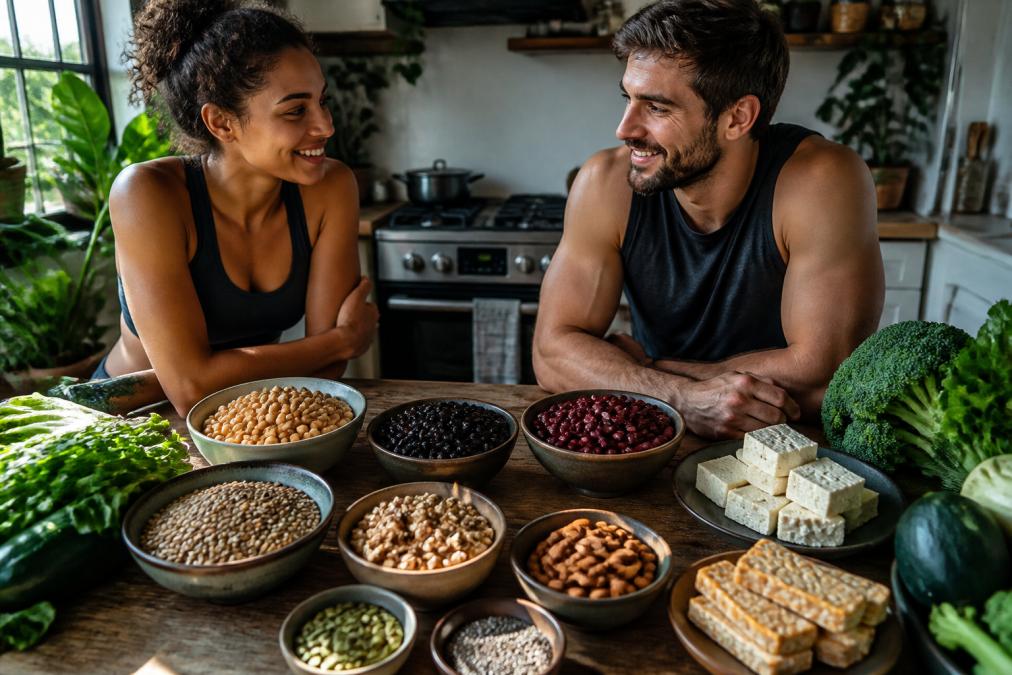
Soy products deserve special attention because they're complete proteins. Tofu provides 10-20 grams of protein per 3-ounce serving depending on firmness (firmer tofu has more protein). Tempeh is fermented soy with 19 grams of protein per 3-ounce serving and a nuttier flavor than tofu. Edamame (young soy beans) deliver 11 grams of protein per cooked cup. All soy products contain all nine essential amino acids in optimal ratios.
The practical reality: most plant-based athletes rotate between legumes and soy products. A typical week might include three lentil-based meals, two tofu-based meals, two chickpea-based meals, and one tempeh-based meal. This variety ensures you're hitting all amino acid targets while managing the fiber load and avoiding palate fatigue.
Nuts, Seeds, and Grains
Nuts and seeds are protein-dense but lower in total protein than legumes. They're best used as complementary proteins alongside legumes or grains, not as primary protein sources.
Peanuts deliver 7 grams of protein per ounce (about 23 peanuts). Almonds provide 6 grams per ounce. Walnuts offer 4 grams per ounce. All are low in lysine, making them incomplete proteins. But they're calorie-dense, nutrient-rich, and convenient. Two tablespoons of peanut butter adds 8 grams of protein plus healthy fats and micronutrients.
Seeds are nutritional powerhouses. Hemp seeds deliver 10 grams of protein per 3 tablespoons and are a complete protein. Pumpkin seeds provide 9 grams per ounce and are rich in magnesium and zinc. Sunflower seeds offer 6 grams per ounce. Chia seeds deliver 5 grams per ounce plus exceptional fiber content. Flax seeds provide 3 grams per ounce. Seeds work best sprinkled onto salads, blended into smoothies, or added to grain bowls.
Grains are often overlooked as protein sources, but they contribute meaningfully when consumed in quantity. Oats deliver 5 grams of protein per half cup dry. Quinoa provides 8 grams per cooked cup and is a complete protein. Brown rice offers 5 grams per cooked cup. Whole wheat bread contains 4 grams per slice. While lower than legumes individually, grains consumed across multiple meals add up. A plant-based athlete eating oatmeal for breakfast (5g), a grain bowl for lunch (8g), and whole grain bread at dinner (8g) gains 21 grams from grains alone.
The strategic approach: use grains and seeds as supporting proteins that complement legumes and soy products, not as replacements. A bowl with quinoa (8g), black beans (15g), hemp seeds (5g), and roasted vegetables creates 28 grams of complete protein in a single meal.
Muscle Protein Synthesis on a Plant-Based Diet
Muscle protein synthesis is the process where your body builds new muscle tissue in response to training stimulus and adequate nutrition. It's the mechanism behind muscle growth. Your muscles don't grow during training, they grow during recovery when protein is available to repair and build new muscle fibers.
Plant-based athletes can trigger muscle protein synthesis just as effectively as omnivorous athletes, but the approach differs slightly. The primary trigger is leucine, one of the branched-chain amino acids. Leucine activates mTOR, a cellular signaling pathway that initiates muscle protein synthesis. Animal proteins are generally higher in leucine than plant proteins, which is why animal-eating athletes often see faster muscle gains without dietary optimization.
Plant-based athletes need to be more intentional about leucine intake. Soy products are relatively high in leucine. Legumes contain leucine but in lower concentrations. Seeds and nuts contain leucine but require larger portions to match animal protein sources. The practical solution: consume slightly larger portions of plant protein per meal, or add leucine-rich foods strategically.
Consuming 20-25 grams of protein per meal, with emphasis on leucine-rich sources, optimizes muscle protein synthesis. For plant-based athletes, this often means larger portions than omnivorous athletes eating the same number of calories. A 150-pound strength athlete might consume 150 grams of protein daily across 5-6 meals, with each meal containing 25-30 grams of plant protein.
Timing matters less than total daily intake, but there's value in consuming protein within 2 hours after training. Your muscles are primed for protein synthesis during this window, and having amino acids available accelerates recovery. A post-workout smoothie with plant-based protein powder, banana, and almond butter delivers immediate amino acids when your muscles are most responsive.
Protein Timing and Nutrient Timing for Recovery
The "anabolic window," the belief that you must consume protein immediately post-workout, is overstated. Your muscles remain primed for protein synthesis for several hours after training, not just 30 minutes. But nutrient timing still matters for recovery and performance, and for plant-based athletes, the challenge isn't timing alone, it's managing the fiber load that comes with plant-based recovery meals.
Consuming carbohydrates within 1-2 hours after training replenishes muscle glycogen, which is depleted during intense exercise. This supports faster recovery and better performance in your next training session. Protein consumed within this window provides amino acids for muscle repair. Together, carbohydrates and protein optimize recovery.
For endurance athletes, the priority is carbohydrate replenishment. A long run depletes glycogen stores significantly. Consuming a meal with 1-1.2 grams of carbohydrate per kilogram of body weight within 2 hours after training accelerates glycogen restoration. Adding protein supports muscle repair without competing for carbohydrate absorption.
For strength athletes, the priority is protein and carbohydrates together. Resistance training damages muscle fibers mechanically, requiring both amino acids for repair and carbohydrates for energy restoration. A post-workout meal with 25-30 grams of protein and 40-50 grams of carbohydrates supports optimal recovery.
The Plant-Based Recovery Meal Challenge: Fiber and Digestion
Plant-based athletes have a unique advantage and disadvantage here. The advantage: plant foods are naturally high in carbohydrates, making carbohydrate replenishment straightforward. The disadvantage: most whole-food plant proteins come packaged with significant fiber, which can cause bloating, cramping, and GI distress during the recovery window when your digestive system is already stressed from training.
A post-workout bowl with tofu (25g protein), brown rice (40g carbs), and roasted vegetables delivers ideal macronutrients but also 8-12 grams of fiber. For many athletes, especially those new to plant-based eating or training at high intensity, this fiber load triggers discomfort precisely when you want rapid nutrient absorption and recovery.
The practical solution involves strategic meal selection based on training intensity and individual tolerance:
High-intensity or long-duration training: Use lower-fiber recovery options immediately post-workout. Plant-based protein powder with white rice, banana, and plant milk delivers 25-30g protein and 50-60g carbs with minimal fiber (2-3g). This prioritizes rapid nutrient absorption when your muscles are most primed for protein synthesis. Follow with a fiber-rich whole-food meal 2-3 hours later once your digestive system has settled.
Moderate-intensity training: A smoothie with plant-based protein powder (25g), banana (27g carbs), oat milk (additional carbs), and a handful of berries (minimal fiber) provides balanced recovery nutrition without excessive fiber. This approach works well for most athletes and avoids the digestive discomfort of whole-food plant meals immediately post-workout.
Lower-intensity or recovery days: Whole-food plant meals are ideal. A lentil-based curry with white rice, a chickpea salad with whole grain bread, or a tofu stir-fry with quinoa all deliver complete nutrition with the added micronutrients and phytocompounds that support long-term recovery and adaptation.
Practical Recovery Meal Examples by Training Type
| Training Type | Immediate Post-Workout (0-30 min) | Secondary Meal (2-3 hours later) | Fiber Content |
|---|---|---|---|
| Strength (60-90 min) | Plant protein powder + white rice + banana + plant milk (28g protein, 65g carbs, 2g fiber) | Tofu stir-fry with brown rice and vegetables (22g protein, 45g carbs, 8g fiber) | Distributed |
| Endurance (90+ min) | Plant protein powder + white rice + dates + plant milk (25g protein, 75g carbs, 3g fiber) | Lentil soup with whole grain bread (20g protein, 50g carbs, 10g fiber) | Distributed |
| Moderate (45-60 min) | Smoothie: protein powder + banana + oat milk + berries (22g protein, 50g carbs, 4g fiber) | Chickpea salad with whole grain pita (18g protein, 40g carbs, 8g fiber) | Moderate |
Timing Matters Less Than Total Daily Intake, But Consistency Matters More
The most important principle: eat a balanced meal with protein and carbohydrates within 2 hours of training. Don't obsess over the exact timing or whether you're hitting the "anabolic window" perfectly. Consistency matters far more than precision.
An athlete who eats adequate protein and carbohydrates daily, distributed across 4-5 meals, will outperform one who obsesses over consuming them within 30 minutes of training but neglects total daily intake. The difference between a post-workout meal at 45 minutes versus 90 minutes is negligible compared to the difference between eating 100g of protein daily versus 150g daily.
For plant-based athletes specifically, the real win is building a recovery routine that works with your digestive system, not against it. Some athletes thrive on whole-food plant meals immediately post-workout. Others need the gentler approach of protein powder and simple carbs first, followed by whole foods later. Track your own response over 2-3 weeks and adjust accordingly. Your recovery nutrition should support your training, not create additional stress on your body.
Plant-Based Protein Powders and Supplementation
Whole-food plant proteins are ideal, but protein powders solve real problems for athletes. They're convenient for post-workout consumption, travel-friendly, and deliver concentrated protein without excessive calories or fiber.
Plant-based protein powders vary significantly in quality and amino acid profiles. Pea protein is increasingly common and delivers a complete amino acid profile when fortified. Rice protein is mild-flavored but incomplete on its own. Hemp protein is complete but has a strong, earthy flavor many find unappealing. Soy protein isolate is complete and has an excellent amino acid profile but carries the soy controversy some athletes prefer to avoid.
The best plant-based protein powders blend multiple sources to create complete amino acid profiles and improve taste. A blend of pea, rice, and hemp proteins delivers all nine essential amino acids while balancing flavor. VitaFaze's plant-based protein powders are formulated specifically for athletes, combining multiple plant sources with added leucine to optimize muscle protein synthesis.
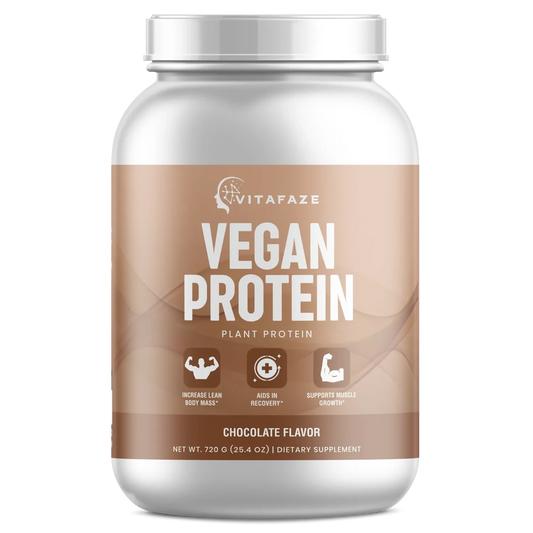
VitaFaze's Vegan Protein Chocolate Shake delivers 22 grams of complete plant-based protein per serving, designed to support post-workout recovery and muscle growth. The formulation includes added leucine to enhance muscle protein synthesis beyond what whole-food plant proteins typically provide. At $32.97 for 1.5 pounds, it costs roughly $1.10 per serving, competitive with quality plant-based options while delivering superior bioavailability.
For athletes concerned about micronutrient gaps, VitaFaze's Essential Meal Replacement options provide comprehensive nutrition. The 2.9lb Essential Meal Replacement Protein Chocolate Milkshake and Vanilla Milkshake each deliver 24 grams of protein per serving with zero added sugar, plus added vitamins and minerals. At $33.32 per container, they're ideal for meal replacement when whole foods aren't available.
Supplementation beyond protein powder is worth considering. Creatine monohydrate supports muscle strength and endurance performance equally in plant-based and omnivorous athletes. Branched-chain amino acids (BCAAs) can enhance muscle protein synthesis when whole-food protein intake is marginal, though they're less critical if you're hitting your daily protein targets. Beta-alanine supports endurance performance by buffering lactic acid accumulation.
Vitamin B12 supplementation is non-negotiable for plant-based athletes. B12 is found naturally only in animal products. Deficiency impairs energy production and recovery. Most plant-based athletes supplement with either a daily oral supplement or weekly injections. Many plant-based protein powders include B12, but checking labels and supplementing separately ensures you're not deficient.
Common Myths About Plant Protein and Athletic Performance
Myth 1: Plant protein is inferior to animal protein for muscle growth.
Reality: Plant protein builds muscle equally effectively when total daily intake is adequate and amino acid profiles are complete. The research on soy protein shows muscle growth equivalent to whey protein in resistance-trained athletes. The difference isn't the source, it's the total amount and amino acid composition.
Myth 2: You need animal protein to be a strong athlete.
Reality: Elite plant-based athletes compete successfully across all sports. Ultramarathoners, weightlifters, soccer players, and tennis professionals perform at world-class levels on plant-based diets. The limiting factor isn't the protein source, it's whether you're eating enough total protein and training consistently.
Myth 3: Plant proteins lack essential amino acids.
Reality: Many plant proteins are incomplete individually, but combining complementary proteins creates complete amino acid profiles. Additionally, complete plant proteins like soy, quinoa, and hemp exist. The issue is awareness and intentional planning, not an inherent limitation of plant foods.
Myth 4: Plant-based athletes recover more slowly.
Reality: Recovery speed depends on total protein intake, sleep, training stimulus, and overall nutrition, not the protein source. A plant-based athlete eating adequate protein recovers as quickly as an omnivorous athlete eating adequate protein.
Myth 5: You can't build muscle on a plant-based diet.
Reality: Muscle growth depends on protein intake, training stimulus, and caloric balance, not animal products. Plant-based athletes can build muscle at the same rate as omnivorous athletes when nutrition is optimized.
Meal Planning and Protein Density for Athletes
Protein density, the grams of protein per 100 calories, matters for plant-based athletes because plant proteins often come with more calories from carbohydrates and fiber than animal proteins.
High-protein-density plant foods include tofu (11 grams per 100 calories), tempeh (19 grams per 100 calories), and soy protein powder (20+ grams per 100 calories). Medium-density options include lentils (9 grams per 100 calories), chickpeas (8 grams per 100 calories), and hemp seeds (10 grams per 100 calories). Lower-density options include nuts (6 grams per 100 calories), seeds (7-8 grams per 100 calories), and whole grains (3-5 grams per 100 calories).
A practical meal-planning approach uses high-density proteins as primary sources, then adds medium and lower-density options for additional nutrients and calories.
| Meal Type | Primary Protein | Amount | Protein (g) | Complementary Protein | Total Protein (g) |
|---|---|---|---|---|---|
| Breakfast | Oatmeal | 1 cup cooked | 5 | Hemp seeds (3 tbsp) | 15 |
| Snack | Almonds | 1 ounce | 6 | Apple | 6 |
| Lunch | Lentil curry | 1.5 cups | 27 | Brown rice (1 cup) | 32 |
| Snack | Hummus | 0.5 cup | 12 | Whole grain pita | 18 |
| Dinner | Tofu stir-fry | 6 oz | 18 | Quinoa (1 cup) | 26 |
| Daily Total | 97g |
This meal plan delivers 97 grams of protein across five meals, averaging 19 grams per meal, optimal for muscle protein synthesis. The combination of complete and incomplete proteins ensures all nine essential amino acids are available daily.
The key to sustainable plant-based athletic eating is building meals around one primary protein source, then adding complementary proteins and whole foods. This approach is more flexible than obsessing over specific combinations and easier to follow long-term.
Addressing Micronutrient Gaps on a Plant-Based Athletic Diet
Protein gets the attention, but micronutrient gaps are often the real limitation for plant-based athletes. Three nutrients deserve specific focus: iron, zinc, and B12. However, the real challenge isn't just meeting minimum requirements, it's understanding how these micronutrients interact with plant-based protein sources and optimizing absorption without inflating your supplement budget.
Iron: Bioavailability and Strategic Food Pairing
Iron from plant sources (non-heme iron) is absorbed less efficiently than iron from animal sources (heme iron). Plant-based athletes need roughly 1.8 times more dietary iron than omnivorous athletes to maintain equivalent blood iron levels. For a plant-based female athlete aged 19-50, the recommended dietary allowance is 32.4 mg daily (compared to 18 mg for omnivorous women); for males 19+, it's 16.2 mg daily (compared to 8 mg for omnivorous men).
This isn't impossible, it requires intentional inclusion of iron-rich plant foods and strategic pairing with vitamin C sources to enhance absorption. The mechanism: vitamin C (ascorbic acid) reduces ferric iron to ferrous iron, the form your intestines absorb most efficiently.
High-iron plant sources (cost-effective per serving):
- Lentils: 6.6 mg iron per cooked cup (~$0.40 per serving)
- Chickpeas: 4.7 mg iron per cooked cup (~$0.35 per serving)
- Fortified cereals: 4-18 mg per serving (~$0.30-0.50 per serving, varies widely)
- Spinach (cooked): 6.4 mg per cooked cup (~$0.60 per serving)
- Pumpkin seeds: 4.2 mg per ounce (~$0.80 per serving)
- Blackstrap molasses: 3.6 mg per tablespoon (~$0.15 per serving)
Vitamin C pairing for enhanced absorption:
- Lentil curry with tomato sauce (tomatoes provide 10-15 mg vitamin C per cup)
- Chickpea salad with lemon dressing (1 lemon provides 53 mg vitamin C)
- Fortified cereal with orange juice (1 cup orange juice provides 97 mg vitamin C)
- Spinach salad with bell peppers (1 red bell pepper provides 95 mg vitamin C)
- Pumpkin seeds with kiwi fruit (1 kiwi provides 64 mg vitamin C)
A practical approach: consume one iron-rich plant food daily with a vitamin C source. A lentil-based lunch with tomato sauce and a side salad with lemon dressing delivers 6-8 mg of highly absorbable iron for under $1.50. This is significantly cheaper than iron supplementation (typically $0.10-0.30 per day) and provides additional micronutrients.
When supplementation makes sense: If blood work shows iron deficiency (ferritin below 30 ng/mL), supplementation becomes necessary. Iron supplements are inexpensive ($0.05-0.15 per day for quality options) and highly effective. However, excessive iron supplementation can cause GI distress and constipation, a particular concern for plant-based athletes already managing higher fiber intake. If supplementing, start with 18-27 mg daily (the RDA for most adults) and retest after 8-12 weeks.
Zinc: Phytate Reduction and Absorption Optimization
Zinc from plant sources is also less bioavailable than from animal sources due to phytates in plant foods. Phytates bind zinc and reduce absorption by 30-50% compared to animal sources. Plant-based athletes should prioritize zinc-rich foods and use preparation methods that reduce phytate content.
High-zinc plant sources:
- Legumes (lentils, chickpeas, black beans): 2-3 mg per cooked cup (~$0.35-0.50 per serving)
- Nuts and seeds (pumpkin seeds, hemp seeds, cashews): 2-8 mg per ounce (~$0.50-1.20 per serving)
- Whole grains (oats, quinoa, brown rice): 1-2 mg per cooked cup (~$0.30-0.50 per serving)
- Fortified plant-based milks: 0.5-1 mg per cup (~$0.40-0.60 per serving)
Phytate-reduction strategies:
- Soaking legumes for 8-12 hours before cooking reduces phytate content by 20-30%
- Sprouting legumes and grains reduces phytates by 30-50% and increases zinc bioavailability
- Fermenting grains (as in sourdough bread) reduces phytates by 50-80%
- Cooking legumes thoroughly (pressure cooking is most effective) reduces phytates by 40-60%
A practical approach: soak and cook legumes from scratch rather than using canned (which still contain phytates but are more convenient). A batch of soaked, pressure-cooked lentils costs roughly $0.30 per serving and provides 2-3 mg of highly absorbable zinc. Pair with vitamin C sources (tomatoes, citrus) to further enhance absorption.
Zinc supplementation considerations: Plant-based athletes should aim for 11 mg daily (RDA for adult males) to 8 mg daily (RDA for adult females). If whole-food intake is marginal, a modest zinc supplement (8-11 mg daily) costs $0.05-0.10 per day and provides insurance against deficiency. However, excessive zinc supplementation (over 40 mg daily) can impair copper absorption and immune function. If supplementing, keep doses moderate and retest annually.
Vitamin B12: Non-Negotiable Supplementation
B12 is found naturally only in animal products and some fermented plant foods in negligible amounts. Plant-based athletes must supplement, this is not optional. B12 deficiency impairs energy metabolism, oxygen transport, and recovery. Symptoms include fatigue, weakness, and impaired cognitive function, all detrimental to athletic performance.
B12 supplementation options and cost:
- Daily oral supplement (25-100 mcg): $0.05-0.15 per day
- Weekly oral supplement (2,000 mcg): $0.03-0.10 per day
- Bi-weekly or monthly injections (1,000 mcg): $0.30-0.50 per injection (less frequent but higher per-dose cost)
- Fortified plant-based milks and cereals: variable, typically $0.10-0.30 per serving
Most plant-based athletes benefit from a daily oral supplement (25-100 mcg) or weekly supplement (2,000 mcg). Many plant-based protein powders include B12, but relying solely on this is risky, fortification levels vary, and absorption depends on stomach acid and intrinsic factor. Supplementing separately ensures adequate intake.
Testing and monitoring: Blood B12 levels should be checked annually. Normal range is 200-900 pg/mL, but many functional medicine practitioners recommend levels above 400 pg/mL for optimal athletic performance. If levels drop below 300 pg/mL, increase supplementation frequency or switch to injections.
Additional Micronutrient Considerations
Vitamin D: Plant-based athletes in northern climates or with limited sun exposure should supplement, especially during winter months. Vitamin D supports calcium absorption, immune function, and mood, all relevant to athletic performance. A daily supplement of 1,000-2,000 IU costs $0.05-0.10 per day. Blood testing (25-hydroxyvitamin D) should show levels above 30 ng/mL; many athletes perform better at 40-50 ng/mL.
Omega-3 fatty acids: Plant sources of omega-3s (flax, chia, walnuts) contain ALA, which converts to EPA and DHA at only 5-10% efficiency. Plant-based athletes should either consume large quantities of ALA sources or supplement with algae-based EPA/DHA. An algae supplement providing 200-300 mg combined EPA/DHA costs $0.15-0.30 per day and supports joint health and inflammation management.
Iodine: Plant-based athletes relying on iodized salt get adequate iodine, but those avoiding salt should consider a supplement or regular seaweed consumption. Iodine supports thyroid function and metabolic rate. A modest iodine supplement (75-150 mcg daily) costs $0.03-0.08 per day.
Age-Specific Micronutrient Needs for Plant-Based Athletes
Masters athletes (40+): Iron absorption decreases with age, particularly for women post-menopause (though iron needs drop to 8 mg daily). However, B12 absorption from food sources decreases significantly after age 50, making supplementation even more critical. Calcium needs increase to 1,000-1,200 mg daily; plant-based sources include fortified plant milks, tofu (if prepared with calcium sulfate), and leafy greens. Vitamin D needs increase to 600-800 IU daily, with many practitioners recommending 1,000-2,000 IU for optimal performance.
Youth athletes (13-18): Iron needs are higher during adolescence due to growth and menstruation (females). Zinc needs increase to 11 mg daily (males) and 9 mg daily (females) to support growth and immune function. B12 supplementation remains non-negotiable. Calcium needs are at their peak (1,300 mg daily) to support bone development; inadequate intake during adolescence increases osteoporosis risk later in life.
Budget-Conscious Micronutrient Strategy
A comprehensive micronutrient strategy for plant-based athletes doesn't require expensive supplementation:
- Daily cost of whole-food micronutrient sources: $1.50-2.50 (lentils, leafy greens, fortified cereals, nuts, seeds)
- Daily cost of targeted supplementation: $0.25-0.50 (B12, vitamin D, omega-3, zinc if needed)
- Total daily micronutrient investment: $1.75-3.00
This is comparable to omnivorous athletes' supplement costs and significantly cheaper than expensive multivitamins or specialized plant-based supplement stacks. The key is prioritizing the three non-negotiables (B12, vitamin D, and iron/zinc if deficient based on testing) and getting remaining micronutrients from whole foods.
Frequently Asked Questions
Can I build significant muscle mass using only plant-based protein sources?
Yes, you can build muscle with plant-based protein if you meet your daily protein requirements and consume complete amino acid profiles. Research shows that plant-based athletes can achieve similar muscle protein synthesis rates as animal-based athletes when total protein intake is adequate (0.7-1.0 grams per pound of body weight for strength training). The key is strategic food combinations and consistent training stimulus. Many athletes combine legumes with grains, or use targeted plant-based protein supplements to ensure all essential amino acids are present in sufficient quantities for hypertrophy.
What's the difference between complete and incomplete plant proteins?
Complete plant proteins contain all nine essential amino acids in adequate amounts, while incomplete proteins lack one or more. Examples of complete plant proteins include quinoa, buckwheat, hemp seeds, soy, and spirulina. Incomplete proteins like beans, lentils, and nuts can be combined with complementary foods (beans with rice, for example) to create a complete amino acid profile. You don't need to combine them at the same meal, spreading them throughout the day works equally well for meeting your amino acid needs.
How much protein do athletes actually need per pound of body weight?
Strength and muscle-building athletes need 0.7-1.0 grams of protein per pound of body weight daily. Endurance athletes typically require 0.5-0.7 grams per pound, though those combining endurance and strength training should aim for the higher range. For example, a 150-pound strength athlete should target 105-150 grams of protein daily. Plant-based athletes may benefit from the upper end of these ranges due to slightly lower bioavailability of plant proteins compared to animal sources, ensuring adequate nitrogen balance for muscle protein synthesis.
What are the main downsides of relying solely on plant-based protein?
Plant proteins have lower bioavailability and less optimal amino acid profiles compared to animal proteins, requiring larger volumes of food or strategic combinations to meet needs. They often come with higher fiber loads, which can cause gastrointestinal discomfort during intense training. Plant sources may require more meal planning to ensure complete amino acid coverage, and some athletes find it challenging to hit protein targets without supplements. Additionally, plant-based diets require attention to micronutrients like B12, iron, and zinc, which are more readily absorbed from animal sources.
How does plant-based protein affect muscle recovery time for endurance athletes?
Plant-based protein supports recovery equally well as animal protein when consumed in adequate amounts and combined with proper carbohydrates and micronutrients. Recovery depends on total protein intake, leucine content (which triggers muscle protein synthesis), and overall energy balance. Endurance athletes should pair plant protein with carbohydrates within 30-60 minutes post-exercise to optimize glycogen replenishment and recovery rate. Bioavailable plant protein sources and targeted supplements ensure sufficient amino acid delivery for cellular adaptation and soreness reduction.
Do plant-based athletes need to combine specific foods to get all amino acids?
You don't need to combine specific foods at every meal, but strategic pairing throughout the day ensures complete amino acid coverage. Classic combinations like beans and rice, hummus and whole wheat pita, or lentils and quinoa create complete proteins. However, eating varied plant sources across your day, legumes at lunch, nuts at snack time, whole grains at dinner, naturally provides all nine essential amino acids. For athletes, adding a high-quality plant-based protein supplement ensures consistent amino acid profiles without relying solely on food combinations.
International Society of Sports Nutrition position on protein and exercise
Journal of the International Society of Sports Nutrition research on plant-based protein and muscle growth
American Journal of Clinical Nutrition study on plant protein bioavailability
This article was written using GrandRanker