



Garden of Life Alternatives for Athletes: 5 Plant Picks
Table of Contents
- Why Athletes Look Beyond Garden of Life
- Garden of Life Alternatives for Athletes at a Glance
- Plant Protein Powder for Athletes: What the Label Must Show
- Athlete Protein Powder Ingredients That Earn Their Place
- Best Tasting Plant Protein Powder: How to Judge Before You Buy
- Third-Party Tested Supplements for Athletes: Reading Certification Labels
- Amino Acids and Electrolytes: Filling the Gaps Protein Leaves
- Recovery Carbs and Hydration for Endurance Athletes
- Greens Powders and Whole-Food Coverage on a Plant-Based Diet
- Price and Value per Serving: The Comparison That Decides It
- Matching Supplements to Your Training Load and Dietary Constraints
- Frequently Asked Questions
Last Updated: October 18, 2026
Why Athletes Look Beyond Garden of Life
Garden of Life alternatives for athletes start with a simple problem: the label you trust and the formula your training actually needs are not always the same thing. Garden of Life built a strong reputation on organic, non-GMO whole-food nutrition, and that reputation is deserved. But a certified organic multivitamin and a sport-specific recovery stack answer different questions.
Here is what most buying guides get wrong. They compare brands by reputation instead of by the numbers on the panel. A powder can be organic and still deliver a protein dose too low to support muscle protein synthesis after a hard session. It can be clean and still carry no sport certification.
Below, we break down what the switch actually requires, then compare the categories that matter for athletes: protein, amino acids, electrolytes, recovery carbs, and greens. Every product we recommend is one we sell, and we will tell you plainly where each one fits and where it does not.
What the Switch Actually Requires
Switching brands is not a flavor decision. It is an audit of four numbers.
Start with protein content per scoop. Then check whether the source is a single plant protein or a blend, because blends fill amino gaps that isolates leave open. Next, confirm the product carries a sport certification if you compete under any drug-testing rules. Finally, divide the tub price by the number of servings to get your real cost.
Most athletes skip step four and regret it later. A larger tub at a higher price can still be the cheaper option per serving.
Garden of Life Alternatives for Athletes at a Glance
The fastest way to compare is a single table. The five options below cover protein, amino acids, recovery carbs, hydration, and micronutrient coverage, which together replace what most athletes were buying from a single brand.
| Product | Category | Price | Best For |
|---|---|---|---|
| Vegan Protein Chocolate Shake | Protein powder | $32.97 | Post-training muscle support |
| BCAA + EAA Strawberry Candy | Amino acids | $34.39 | Intra-workout and between meals |
| Recovery Carb + Electrolyte Summer Punch | Recovery carbs | $42.98 | Endurance and high-volume days |
| Recovery Carb + Electrolytes Lemon Lime | Recovery carbs | $43.52 | Post-workout glycogen refill |
| All-in-One Greens & Reds Superfood | Greens powder | $21.24 | Daily micronutrient coverage |
That table is the short answer. The rest of this guide explains how to read each row so you can decide which categories you actually need.

Plant Protein Powder for Athletes: What the Label Must Show
Plant protein powder for athletes must show three things on the panel: total protein per serving, a complete amino acid profile, and the actual plant sources used. Anything less and you are guessing at your recovery.
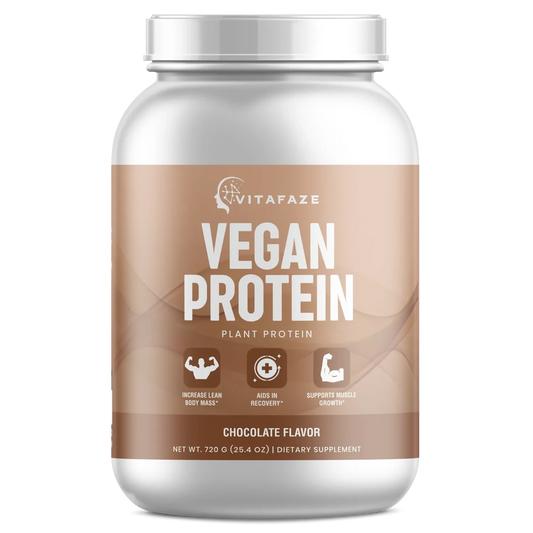
The protein number matters most. Our Vegan Protein Chocolate Shake delivers 22 grams per scoop from organic pea protein and organic brown rice protein. That pairing is deliberate. Pea protein is rich in lysine but low in methionine; brown rice is the reverse. Together they cover the essential amino acids a single source would miss.
Watch for these label traps:
- Proprietary blends that list protein sources without amounts
- Serving sizes of two scoops, which doubles your real cost
- Added sugars that push a recovery shake past 10 g per serving
- Missing leucine data, the amino acid most tied to muscle protein synthesis
Our chocolate shake keeps sugar at 3 g and calories at 140 per serving, with 4 g of fiber and 155 mg of calcium. That is a recovery drink you can use daily without wrecking a calorie target.
Athlete Protein Powder Ingredients That Earn Their Place
Athlete protein powder ingredients should do a job, not decorate a label. In practice, that means a short list of protein sources, a digestibility aid, and a sweetener that will not upset your stomach mid-training block.
Here is what we look for, and why:
- Organic pea protein for lysine and a neutral texture
- Organic brown rice protein to complete the amino profile
- Organic acacia gum as a prebiotic fiber that supports digestion
- Organic erythritol and stevia for sweetness without a sugar load
- Cocoa powder for flavor that does not rely on artificial additives
What most guides miss is that digestibility matters as much as protein content. Fiber sources like acacia gum help here, and they are one reason our chocolate shake mixes into a smooth texture rather than a gritty one.
Best Tasting Plant Protein Powder: How to Judge Before You Buy
Best tasting plant protein powder is a claim you can test in about five minutes, before you spend anything. Ask three questions: does it mix in water alone, does it stay smooth after two minutes, and does it avoid the chalky aftertaste that pea protein produces when it is under-flavored.
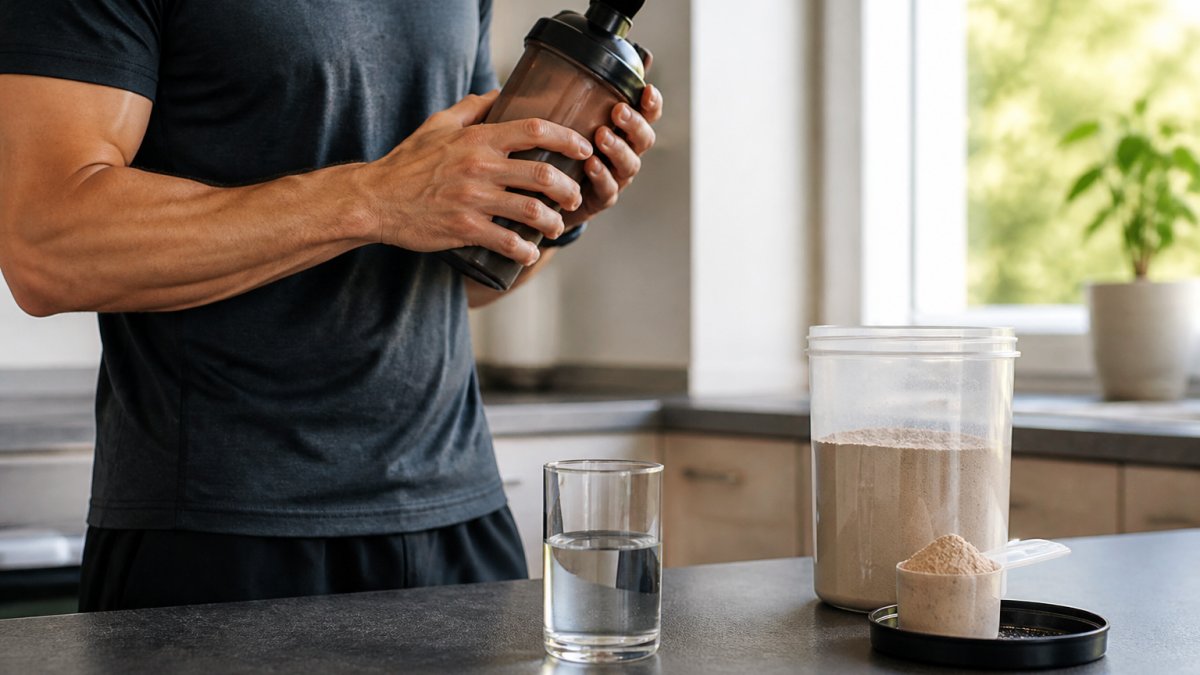
Flavor systems built on cocoa powder and organic chocolate flavor, like the one in our chocolate shake, tend to hold up better than artificial flavoring because they do not rely on a single intense note.
If you can, buy the smallest tub first. A flavor you dislike is a sunk cost no matter how good the macros are. And if you train early, test the powder on an empty stomach before you trust it on a long session.
Vegan Protein Chocolate Shake - 1.5lb Pure Plant-Based Nutrition for Optimal →
Third-Party Tested Supplements for Athletes: Reading Certification Labels
Third-party tested supplements for athletes carry a certification mark from an independent lab, not a claim written by the brand. The mark tells you the product was screened for contaminants and, depending on the program, for substances banned in competition. The distinction matters because the two scopes are not interchangeable, and a label that says "lab tested" without naming the lab tells you almost nothing.
Here is what the common certification language actually means:
- "Third-party tested", an outside lab ran some panel, but the scope is undefined. It may cover heavy metals, microbes, and solvents only. It may not screen against any prohibited list.
- "Certified for sport", a named program screened the product against a prohibited-substance list, typically the World Anti-Doping Agency list or a national equivalent. This is the claim that matters if you compete under drug-testing rules.
- "Informed Sport" or "NSF Certified for Sport", named programs with published testing scopes and batch-level certification. Both publish searchable databases, and both require renewal, which is why the certificate date matters.
- "Banned-substance tested", a marketing phrase unless it names the certifying body and the list it tested against.
What most athletes do not realize is that certification is batch-specific, not brand-specific. A brand can hold a certificate for one SKU and not another, and a certificate from two years ago does not cover the tub in your hand. When you verify, check three things: the certifying body's own database (not the brand's page), the lot number on your container, and the test date.
Risk is not evenly distributed across supplement categories. A common pattern in anti-doping guidance is that stimulant-heavy pre-workouts, testosterone-adjacent products, and weight-loss formulas carry the highest contamination risk, while single-ingredient proteins and carbohydrate powders carry lower risk but are not risk-free. If you compete, treat every category as needing verification until you have checked it.
The U.S. Anti-Doping Agency's supplement guidance explains how to verify a product and why high-risk categories warrant extra caution. The FDA's framework for dietary supplements is also worth reading, because supplement oversight differs from drug approval in ways that put the verification burden on you.
For the products in this guide, the practical rule is simple: if a product does not name its certifying body and publish a batch-level certificate, do not assume it is cleared for competition. Ask the seller for the certificate before you buy, and keep it with your training records.
Amino Acids and Electrolytes: Filling the Gaps Protein Leaves
Amino acid supplements cover the window protein cannot: the hours during training when digestion is too slow to deliver what your muscles need. Essential amino acids, including the three branched-chain amino acids, support muscle protein synthesis.
Our BCAA + EAA Strawberry Candy delivers 7,400 mg of essential amino acids and 5,000 mg of BCAAs per serving, plus a 550 mg electrolyte matrix. It includes all nine essential amino acids, which matters because BCAAs alone leave the other six unmet.

Electrolytes deserve equal attention. Sodium, potassium, magnesium, and calcium are lost in sweat, and water alone does not replace them.
Use it pre-workout, post-workout, or between meals, mixed at one scoop in 6 to 8 ounces of cold water. If you are phenylketonuric, note that the formula contains phenylalanine, and it does not contain aspartame.
Recovery Carbs and Hydration for Endurance Athletes
Endurance athletes need carbohydrate after training, not just protein. Hard sessions deplete glycogen, and fast-digesting carbs refill it.
Our Recovery Carb + Electrolyte line delivers 24 grams of carbohydrates per scoop from dextrose and glucose polymers, two fast-acting sources chosen for absorption speed. Each serving also carries four electrolytes and comes in two flavors, Summer Punch at $42.98 and Lemon Lime at $43.52, both with 50 servings per container.

Here is how we would use them:
- Before training: one scoop in 8 ounces of cold water for a quick carb top-up
- Immediately post-workout: one scoop to start glycogen refill during the recovery window
- On long endurance days: pair with the amino acid formula to cover both carbs and muscle support
Distance runners often ask whether these products are built only for gym athletes. They are not. Glycogen refill and electrolyte replacement matter more, not less, when your sessions run past 90 minutes.
Greens Powders and Whole-Food Coverage on a Plant-Based Diet
Greens powders fill the micronutrient gap that a plant-based diet can leave when training volume rises and food variety drops. They are not a substitute for vegetables, but they are a practical way to cover vitamins, minerals, and prebiotic fiber on days when meals are rushed.
Our All-in-One Greens & Reds Superfood packs 2,500 mg of greens superfood and 425 mg of super reds per serving, plus 4 grams of prebiotic fiber, B vitamins, mushroom and cordyceps for immune support, and a digestive enzyme matrix. It is sweetened with stevia, made with organic ingredients, and costs $21.24 for a 270 g tub.
Two nutrients deserve their own note. Vitamin B12 and iron are the ones plant-based athletes most often need to monitor, and a greens powder is not a guaranteed solution for either. Check the panel, and if your intake is short, use a dedicated supplement rather than assuming a greens blend covers it.
A common mistake is treating greens as a performance product. Treat them as nutrition insurance, and judge them on ingredient quality and digestive tolerance rather than on energy claims.
Vegan Protein Chocolate Shake - 1.5lb Pure Plant-Based Nutrition for Optimal →
Price and Value per Serving: The Comparison That Decides It
Value per serving is the number that settles most brand decisions, and it is the one athletes calculate least often. Divide the tub price by the servings listed, then divide again by the grams of protein or the milligrams of actives you get.
Run the math on our line:
- Vegan Protein Chocolate Shake at $32.97 delivers 22 g protein per scoop, so cost per gram of protein stays low for a plant-based blend
- BCAA + EAA at $34.39 delivers 7,400 mg of EAAs per serving, a full amino dose rather than a token sprinkle
- Recovery Carb + Electrolyte at $42.98 spreads across 50 servings, which brings the per-session cost down sharply for endurance athletes
- Greens & Reds at $21.24 is the lowest entry point in the lineup and covers daily micronutrients
The comparison that matters is not tub size. It is what one training day costs you across the categories you actually use. An athlete running four sessions a week needs protein and carbs far more than a fifth flavor option.
Matching Supplements to Your Training Load and Dietary Constraints
Matching supplements to your training means starting with session volume and dietary limits, then building the smallest stack that covers the gaps. More products is not a strategy. The framework below maps training profiles to specific products in this guide, so you can see what each stack actually costs and what it leaves uncovered.
Three to four sessions a week, general fitness. Protein powder plus greens covers muscle support and daily micronutrients. The Vegan Protein Chocolate Shake at $32.97 delivers 22 g of protein per scoop, and the All-in-One Greens & Reds Superfood at $21.24 covers 2,500 mg of greens, 425 mg of super reds, and 4 g of prebiotic fiber per serving. This stack is the lowest-cost entry point and leaves amino timing and electrolyte replacement uncovered, which is fine at this volume.
Five or more sessions, strength focus. Add the BCAA + EAA Strawberry Candy at $34.39 for intra-workout support. It delivers 7,400 mg of EAAs and 5,000 mg of BCAAs per serving, plus 550 mg of electrolytes. The reason to add it is timing: whole-food protein digests too slowly to deliver amino acids during a session, and BCAAs alone leave the other six essential amino acids unmet. This stack covers protein, amino timing, and micronutrients, but not carbohydrate refill.
Endurance training over 90 minutes. Add the Recovery Carb + Electrolyte line, Summer Punch at $42.98 or Lemon Lime at $43.52, both with 24 g of carbs and four electrolytes across 50 servings. Use one scoop before long sessions for a carb top-up and one immediately after to start glycogen refill. Pair with the amino acid formula on days when you want both carbs and muscle support. This is the stack where per-session cost matters most, because 50 servings spreads the tub price across months of training.
Competing under drug-testing rules. Verify certification for every product before you add it, and keep batch records. The certification section above explains what to check. A stack that is not verified is not a stack you can defend if a test result is questioned.
Managing a soy or gluten restriction. Read each panel individually rather than assuming a plant-based brand is automatically clear. Pea and brown rice proteins are naturally soy- and gluten-free, but flavor systems and fiber sources can introduce allergens. The chocolate shake uses organic cocoa powder and organic acacia gum, both of which are typically well tolerated, but check the allergen statement on the specific tub.
Watching sugar or calories. The chocolate shake keeps sugar at 3 g and calories at 140 per serving, which fits a daily recovery drink without wrecking a calorie target. The recovery carb line is higher in carbohydrate by design, that is the point, so do not treat it as a low-calorie product.
Managing digestion. Fiber and enzymes matter as much as protein dose. The acacia gum in the protein powder and the digestive enzyme matrix in the greens blend both support tolerance, and they are one reason these products mix smoothly rather than gritting up. If you have a sensitive gut, test any new powder on an empty stomach before you trust it on a long session.
Two constraints come up constantly in practice. Athletes watching sugar want a low-sugar protein, which the chocolate shake meets at 3 g per serving. Athletes managing digestion want fiber and enzymes, which the greens blend and the acacia gum in the protein both address. If you are phenylketonuric, note that the amino acid formula contains phenylalanine.
If you are coming from a single-brand habit, expect the first two weeks to feel like more work. After that, a stack built around your actual training load is simpler than guessing whether one product covers everything. The test is not how many products you own, it is whether each one closes a gap your training actually has.
Frequently Asked Questions
What are good alternatives to Garden of Life SPORT protein for athletes?
Look for a plant protein that states its protein source, grams per scoop, and full amino acid profile on the label. A pea and brown rice blend, for example, covers a broader amino acid spread than a single-source pea powder. The VitaFaze Vegan Protein Chocolate Shake delivers 22 g of plant-based protein per scoop from organic pea and organic brown rice protein, with 3 g of sugar and 140 calories, at $32.97 for a 1.5 lb tub. Compare that per-scoop math against whatever you currently buy before switching.
How should athletes compare plant protein powders?
Start with four numbers: protein grams per scoop, calories, sugar, and servings per container. Then check the protein source and whether the label lists all nine essential amino acids. After that, look at what else is in the tub, such as fiber, added minerals, or sweeteners. Finally, divide the tub price by the number of servings to get cost per serving. A powder that looks cheaper up front can cost more per gram of protein once you run that math.
What should athletes look for in a plant-based protein powder?
Prioritize a complete amino acid profile, at least 20 g of protein per scoop, and a short ingredient list you can read. Check whether the product carries a third-party certification if you compete under anti-doping rules, since certification programs screen for substances banned in sport. Also confirm the sweetener and fiber content if you have gut sensitivity during training blocks, and check the serving count so you know how long one tub lasts.
What is the best supplement brand for athletes?
There is no single best brand, because the right pick depends on your sport, budget, and dietary limits. Judge any brand on three things: whether the label discloses full doses, whether the product carries independent testing, and whether the price per serving fits your training volume. A brand that publishes exact milligram amounts, such as 7,400 mg of EAAs in an amino acid blend, gives you more to evaluate than one that hides behind a proprietary blend.