



Contrast Therapy for Muscle Soreness: Benefits & Recovery
Table of Contents
- What Is Contrast Therapy and How Does It Work
- How Contrast Therapy Reduces Delayed-Onset Muscle Soreness
- Muscle Recovery and Return to Training
- Circulation and Blood Flow Benefits
- Setting Up a Contrast Therapy Protocol
- How Long to Do Contrast Therapy for Best Results
- Ice Bath vs. Contrast Therapy: Which Is More Effective
- Contrast Therapy Risks and Precautions
- Comparing Contrast Therapy With Other Recovery Methods
- Enhancing Recovery Beyond Contrast Therapy
- Frequently Asked Questions
Last Updated: October 19, 2026
What Is Contrast Therapy and How Does It Work
Contrast therapy is the practice of alternating between hot and cold water exposure to support muscle recovery, and contrast therapy muscle soreness reduction has become a science-backed approach after intense training. At VitaFaze, we understand that plant-based athletes face unique recovery challenges, and contrast therapy offers a science-backed approach to accelerate healing. This method has gained traction among endurance athletes and gym-goers seeking natural ways to manage delayed-onset muscle soreness (DOMS) and inflammation.
The core idea is straightforward: your muscles respond differently to temperature changes. When you move between hot and cold water, your body triggers a series of physiological responses that promote circulation, reduce swelling, and ease muscle tension. The contrast between temperatures creates what researchers call a "pumping effect", blood vessels constrict in cold water and dilate in hot water, flushing metabolic waste from muscle tissue.
The Hot-and-Cold Exposure Mechanism
Hot water causes your blood vessels to expand (vasodilation). This increases blood flow to the affected muscles. Cold water does the opposite, it causes vasoconstriction, narrowing blood vessels and reducing inflammation. When you alternate between the two, you create a cycle that flushes out inflammatory compounds and delivers fresh, oxygen-rich blood back to tired muscles.
The mechanism works because heat relaxes muscle fibers and increases flexibility. Cold reduces pain signals and numbs soreness temporarily. Together, they address both the inflammatory response and the pain perception your body sends to your brain. This is why contrast therapy feels effective, it targets multiple recovery pathways at once.
Vasoconstriction and Vasodilation Cycles
Each cycle of hot-and-cold exposure triggers these vascular changes:
- Hot water exposure: Blood vessels dilate, blood flow increases, muscles relax
- Cold water exposure: Blood vessels constrict, swelling decreases, pain signals reduce
- Transition back to heat: Vessels dilate again, fresh blood rushes in, flushing metabolic waste
- Return to cold: The cycle repeats, creating a pumping action
This repeated cycle is what makes contrast therapy different from using heat or cold alone. A single hot bath relaxes muscles but doesn't address inflammation efficiently. Cold alone numbs pain but may increase stiffness. Alternating between them gives you both benefits in one session.
How Contrast Therapy Reduces Delayed-Onset Muscle Soreness
DOMS typically peaks 24-48 hours after intense exercise, especially after eccentric movements (like lowering weight during a squat). Contrast therapy works on DOMS by addressing two key mechanisms: inflammation and pain signaling.
When you exercise hard, micro-tears form in muscle fibers. Your immune system responds by flooding the area with inflammatory compounds. This inflammation is necessary for repair, but it also causes soreness and stiffness. Contrast therapy doesn't stop inflammation entirely, that would slow healing. Instead, it modulates the inflammatory response, keeping it productive without letting it spiral into excessive swelling.
Inflammation and Swelling Response
The cold phase of contrast therapy suppresses inflammatory markers in muscle tissue. According to research from the American College of Sports Medicine, cold exposure reduces histamine release and slows inflammatory cell migration. This doesn't eliminate inflammation, it controls it.
The hot phase follows by improving circulation, which helps clear inflammatory byproducts. Think of it as a cleanup cycle. Cold reduces the inflammatory signal; heat removes the debris. Repeated cycles amplify this effect.
Swelling (edema) often accompanies DOMS. Contrast therapy addresses this through the vasodilation-vasoconstriction pump. When blood vessels constrict in cold water, fluid that leaked into surrounding tissues is pushed back into the bloodstream. When they dilate in hot water, fresh blood delivers oxygen and nutrients. Over multiple cycles, swelling decreases noticeably.
Pain Relief and Analgesic Effects
Cold water triggers a pain-blocking response called the "gate control theory." Cold stimulates large sensory nerves, which close the "gate" on pain signals traveling through smaller nerves. This is why an ice pack feels soothing, it literally blocks pain perception.
Hot water works differently. Heat increases endorphin release and relaxes muscle fibers, reducing the mechanical tension that contributes to soreness. The combination means you get immediate pain relief (from cold) plus longer-lasting comfort (from heat and relaxation).
The analgesic effect is real but temporary. You won't wake up soreness-free after one session. But regular contrast therapy sessions reduce perceived soreness and improve movement quality, which allows you to train again sooner. For plant-based athletes focused on performance, this matters, you can maintain training frequency without compromising recovery.
Muscle Recovery and Return to Training
The real value of contrast therapy isn't immediate soreness relief, it's faster return to training readiness. When DOMS is severe, movement feels restricted. Your muscles are stiff, your range of motion shrinks, and your power output drops. This forces longer recovery windows between workouts.
Contrast therapy accelerates return to training by addressing the mechanical and chemical barriers to movement. Improved circulation delivers nutrients faster. Reduced swelling restores normal range of motion. Better pain management means you can move without guarding against soreness, which prevents the stiffness that compounds with each cautious movement.
For endurance athletes and plant-based gym-goers, this means you can maintain training frequency. If you typically train 4-5 times per week, severe DOMS might force you to skip days. Contrast therapy reduces that recovery debt, letting you stay consistent without overtraining.
The key is timing. Contrast therapy works best in the hours immediately after training, when inflammation is ramping up but hasn't yet peaked. A session 2-4 hours post-workout prevents the worst of DOMS from setting in. Regular use (2-3 times per week after hard sessions) produces cumulative benefits, your baseline soreness decreases, and you recover faster overall.
Circulation and Blood Flow Benefits
Contrast therapy's primary mechanism is vascular. It forces your blood vessels to work, improving their responsiveness and efficiency. This has benefits beyond muscle soreness.
Better circulation means:
- Faster nutrient delivery: Oxygen and amino acids reach damaged muscle fibers sooner
- Improved metabolic waste clearance: Lactate, ammonia, and other byproducts flush out faster
- Enhanced oxygen availability: More blood flow means more oxygen, which powers cellular repair
- Better temperature regulation: Your body's ability to thermoregulate improves with repeated vascular training
For plant-based athletes, this is significant. Your muscles depend on efficient nutrient delivery to synthesize protein and repair damage. Improved circulation amplifies the benefit of the plant-powered nutrition you're consuming. If you're using VitaFaze's Recovery Carb + Electrolyte formulas (available in Summer Punch or Lemon Lime), contrast therapy ensures those nutrients reach your muscles quickly and efficiently.
CBD Muscle Cream (4oz) 500mg →

The blood flow benefit extends beyond individual sessions. Over weeks of regular contrast therapy, your vascular system becomes more responsive. Your resting heart rate may drop slightly. Your exercise tolerance improves. These are signs that your circulation has genuinely improved, not just temporarily.
Setting Up a Contrast Therapy Protocol
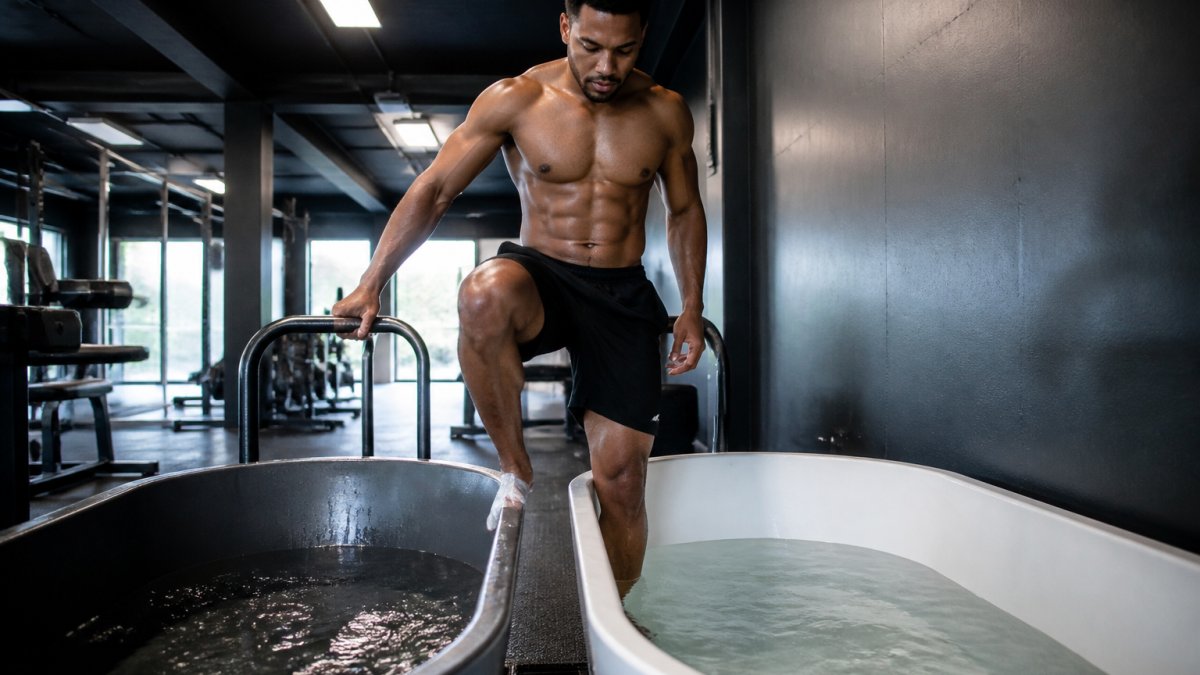
Contrast therapy doesn't require expensive equipment. You need hot water and cold water, that's it. Most athletes use a bathtub, shower, or dedicated contrast therapy tubs.
Water Temperature and Duration Guidelines
The standard protocol uses these temperatures:
- Hot water: 104-110°F (40-43°C)
- Cold water: 50-60°F (10-15°C)
- Hot duration: 3-4 minutes per cycle
- Cold duration: 1-2 minutes per cycle
Start with these baseline temperatures. If cold water feels too shocking, begin at 60-65°F and gradually lower it over weeks. Your tolerance builds quickly. The contrast matters more than extreme temperatures, a 50-degree difference works better than trying to hit exact numbers.
Duration is flexible. Some athletes prefer longer hot phases (4 minutes) with shorter cold phases (1 minute). Others do equal time (3 minutes each). Experiment to find what feels effective and sustainable for you.
Alternating Intervals and Repeated Cycles
A typical session includes 3-5 complete cycles. Here's the structure:
- Cycle 1: Hot (3-4 min) → Cold (1-2 min)
- Cycle 2: Hot (3-4 min) → Cold (1-2 min)
- Cycle 3: Hot (3-4 min) → Cold (1-2 min)
- Cycle 4: Hot (3-4 min) → Cold (1-2 min)
- End with: Cold (1-2 min) to finish
Ending on cold is important. It leaves your blood vessels in a constricted state, which locks in the anti-inflammatory effect.
Most athletes complete a full session in 20-30 minutes. Timing isn't strict, the key is completing the cycles consistently. If you're short on time, 3 cycles (15 minutes total) still delivers benefit.
How Long to Do Contrast Therapy for Best Results
The research on frequency isn't definitive, but practical experience suggests this timeline:
First 2 weeks: Use contrast therapy 2-3 times per week after hard training sessions. You'll notice reduced soreness and improved movement quality within 3-5 days.
Weeks 3-8: Continue 2-3 times per week. This is where cumulative benefits emerge. Your baseline soreness decreases. Recovery between sessions improves. Training consistency increases because you're not fighting residual DOMS.
Beyond 8 weeks: Maintenance is 1-2 times per week. At this point, your vascular system has adapted, and you're maintaining the benefit rather than building it. You can scale up frequency during heavy training blocks or reduce it during easier weeks.
Individual response varies. Some athletes see benefit from one session per week. Others need three. Track your own soreness scores and training performance, that's your feedback system. If soreness is still high after one session per week, increase frequency. If you're recovering well, maintain your current schedule.
The timing of sessions matters. Do contrast therapy in the hours after training when soreness is beginning to set in, not the day after when DOMS has already peaked. Immediate post-workout (within 2-4 hours) is optimal.
Ice Bath vs. Contrast Therapy: Which Is More Effective
Ice baths (cold-only exposure) have dominated athlete recovery for years. Contrast therapy is newer but gaining ground. Here's the practical difference:
Ice baths:
- Reduce inflammation quickly
- Numb soreness immediately
- Require 10-15 minutes in very cold water (45-55°F)
- Can feel psychologically difficult for new users
- May slow muscle protein synthesis if used immediately post-workout
Contrast therapy:
- Modulates inflammation without blocking it entirely
- Improves circulation throughout the session
- Takes 20-30 minutes but feels less intense
- Easier to tolerate for beginners
- Supports muscle repair through improved blood flow
For most plant-based athletes seeking relief, contrast therapy muscle soreness management wins on practicality. You get inflammation control without the extreme cold shock. You improve circulation, which accelerates nutrient delivery to support muscle protein synthesis.
Ice baths excel for acute injuries or extreme inflammation. If you've tweaked something and need immediate swelling reduction, 10 minutes in an ice bath works fast. For routine DOMS management after training, contrast therapy delivers better overall recovery support.
The real answer: use both strategically. Ice bath immediately after acute injury. Contrast therapy for routine post-workout recovery. This combination covers all recovery scenarios.
Contrast Therapy Risks and Precautions
Contrast therapy is generally safe, but it's not for everyone. The rapid temperature changes stress your cardiovascular system slightly. For healthy athletes, this is fine. For certain populations, it requires caution.
CBD Muscle Cream (4oz) 500mg →
Who Should Avoid Contrast Therapy
Contraindications:
- Cardiovascular disease: Cold water triggers vasoconstriction, which increases blood pressure temporarily. Anyone with hypertension, heart disease, or arrhythmias should consult a doctor first.
- Raynaud's syndrome: Repeated cold exposure can trigger severe vasospasm in people with Raynaud's.
- Pregnancy: The safety of contrast therapy during pregnancy isn't well-established. Pregnant athletes should avoid it.
- Acute inflammation or infection: If you have a fever, active infection, or acute inflammatory condition, contrast therapy may worsen it.
- Neuropathy or reduced sensation: If you can't feel temperature changes properly, you risk burns or cold injury.
- Recent surgery or open wounds: Never apply contrast therapy to healing wounds or surgical sites.
If you fall into any of these categories, talk to your doctor before trying contrast therapy. The risk isn't huge, but it's real enough to warrant professional guidance.
Cautions (not contraindications):
- First-time users: Start with milder temperatures (104°F hot, 65°F cold) and build tolerance over weeks
- Medication interactions: Some medications affect temperature regulation. Check with your pharmacist.
- Extreme athletes: If you're pushing contrast therapy to extremes (very cold, very hot, very frequent), you increase risk. Stick to moderate protocols.
Most plant-based athletes can safely use contrast therapy if they follow guidelines and listen to their body. If something feels wrong, excessive dizziness, chest pain, or extreme discomfort, stop immediately.
Comparing Contrast Therapy With Other Recovery Methods
Contrast therapy isn't your only recovery tool. Here's how it stacks up against alternatives:
| Recovery Method | Best For | Limitation |
|---|---|---|
| Contrast therapy | DOMS, circulation, return to training | Requires 20-30 minutes, needs hot/cold access |
| Ice baths | Acute inflammation, swelling reduction | Intense cold, may slow protein synthesis |
| Heat therapy alone | Muscle tension, relaxation | Doesn't address inflammation |
| Stretching | Mobility, range of motion | Doesn't reduce soreness directly |
| Foam rolling | Muscle tension, trigger points | Requires equipment, skill to avoid injury |
| Sleep | Complete recovery, hormonal balance | Can't replace other methods |
| Nutrition (plant-based protein) | Muscle repair, protein synthesis | Requires proper timing and quantity |
For plant-based athletes using VitaFaze Recovery Carb + Electrolyte formulas, the best approach combines multiple methods. Use contrast therapy for circulation and soreness management. Consume your recovery carbs and electrolytes immediately post-workout to replenish glycogen and support hydration. Get adequate sleep. This combination addresses all recovery pathways.

Contrast therapy isn't a replacement for nutrition or sleep, it's a complement. It accelerates recovery speed, but the foundation is still proper fuel and rest.
Enhancing Recovery Beyond Contrast Therapy
Contrast therapy is one tool in a comprehensive recovery strategy. To maximize results, layer it with other evidence-based practices.
Nutrition timing: Consume carbohydrates and protein within 30-60 minutes post-workout. VitaFaze's Recovery Carb + Electrolyte formulas (available in Summer Punch or Lemon Lime flavors at $42.98-$43.52) deliver 24 grams of fast-digesting carbs plus essential electrolytes. This timing matters more than the total amount, early nutrition accelerates glycogen replenishment and protein synthesis.
Hydration: Contrast therapy causes fluid shifts. Drink water before, during, and after your session. Electrolytes help retain hydration, which is why recovery formulas outperform plain water.
Sleep quality: Growth hormone and protein synthesis peak during deep sleep. If you're not sleeping 7-9 hours, contrast therapy can't compensate. Prioritize sleep as your foundation.
Movement quality: Light activity (walking, easy cycling) in the 24 hours after hard training supports circulation without adding stress. This complements contrast therapy's blood flow benefits.
Stress management: Cortisol (stress hormone) interferes with recovery. Meditation, breathing work, or gentle yoga supports parasympathetic activation, which enhances recovery.
For plant-based athletes, one additional consideration: ensure you're getting adequate micronutrients. Iron, B12, and zinc support recovery and immune function. If you're not supplementing these, deficiency will limit recovery speed regardless of contrast therapy or nutrition timing. According to research from the National Institutes of Health on plant-based nutrition, plant-based athletes benefit from targeted micronutrient support.
The synergy is real. Contrast therapy + proper nutrition + sleep + movement + stress management = optimal recovery. Skip any one piece and the others become less effective.
Contrast therapy for muscle soreness offers a practical, accessible recovery tool for plant-based athletes who want to train hard without getting stuck in soreness cycles. The combination of improved circulation, modulated inflammation, and pain relief creates conditions for faster return to training. At VitaFaze, we've designed our Recovery Carb + Electrolyte formulas to work alongside recovery practices like contrast therapy, delivering the fast-digesting carbs and electrolytes your body needs in the critical post-workout window. When you combine contrast therapy with proper plant-powered nutrition, quality sleep, and consistent training, you create a recovery system that supports your performance goals without compromising your plant-based values. Get started with VitaFaze Recovery Carb + Electrolyte and experience how proper recovery nutrition amplifies your results.
Frequently Asked Questions
Can contrast therapy actually reduce delayed-onset muscle soreness?
Contrast therapy reduces DOMS by managing inflammation and improving blood flow through repeated hot-and-cold cycles. The alternating vasoconstriction and vasodilation helps clear metabolic waste from muscles and reduces swelling. Most athletes report noticeable soreness reduction when contrast therapy is applied within 24 hours post-exercise, though results vary based on training intensity and individual recovery capacity.
How long should you alternate between hot and cold water in a contrast therapy protocol?
A standard contrast therapy protocol alternates 3-5 minutes in hot water (around 104-110°F) with 1-2 minutes in cold water (around 50-59°F), repeating this cycle 5-10 times. Total session time typically ranges from 15-30 minutes. Starting with shorter durations and building tolerance is safer, especially for beginners. Consistency matters more than duration, regular shorter sessions outperform occasional long sessions.
Is ice bath or contrast therapy better for muscle recovery?
Ice baths numb pain, while contrast therapy manages inflammation while maintaining circulation. For plant-based athletes focused on muscle protein synthesis and endurance, contrast therapy paired with proper nutrition, like VitaFaze Recovery Carb + Electrolyte supplements, supports faster glycogen replenishment and soreness reduction.
Who should avoid contrast therapy?
People with cardiovascular conditions, uncontrolled diabetes, or acute injuries should consult a healthcare provider before attempting contrast therapy. Avoid it if you have open wounds, severe inflammation, or active infections. Pregnant individuals and those with extreme cold sensitivity should use caution. Always start with milder temperature differences and shorter durations to assess tolerance. If you experience dizziness, chest pain, or excessive discomfort, stop immediately.