



Vegan Meal Prep Tips for High Protein Diets That Build Muscle
Last Updated: November 5, 2026
Quick Summary
Vegan meal prep is the practice of cooking plant-based meals in batches ahead of time so that daily protein targets are met without daily cooking. Build the week around protein anchors like seitan, tempeh, tofu, and lentils, then portion each container to carry 30 to 40 grams. Season plain and sauce per meal so the base stays flexible.
- Strength athletes commonly work from roughly 1.6 to 2.2 grams of protein per kilogram of body weight daily.
- A 75 kg athlete training four days a week lands at roughly 120 to 165 grams daily.
- Press tofu for at least 20 minutes and roast rather than pan-fry so cubes hold up to reheating.
- Two blocks of tofu, 2 cups dry lentils, and two cans of chickpeas produce roughly 280 to 300 grams of protein.
- Buy the Instant Pot first, since dried legumes are the cheapest protein per gram.
Table of Contents
- Why Vegan Meal Prep Fails on Protein (and What Fixes It)
- How to Calculate Protein Needs for Vegans Before You Cook
- Vegan Protein Sources for Muscle Gain Worth Prepping in Bulk
- Batch-Cooking Legumes, Grains, and Tofu in One Session
- High Protein Vegan Meal Prep Recipes You Can Repeat All Week
- Vegan Meal Prep Containers and Storage Tips That Protect Texture
- Air Fryer vs. Instant Pot: Which Equipment Cuts Prep Time More
- Post-Workout and Travel-Friendly Additions Most Guides Skip
- Build Your First High-Protein Prep Week with VitaFaze
- Frequently Asked Questions
Why Vegan Meal Prep Fails on Protein (and What Fixes It)
Most vegan meal prep fails on protein for one structural reason: people prep the volume foods first and treat protein as an afterthought. Rice, roasted vegetables, and greens fill the containers, and by Wednesday the day's total lands somewhere near 40 grams when it needed to be double that. The fix is not exotic ingredients. It is sequencing.
Vegan meal prep is the practice of cooking plant-based meals in batches ahead of time so that daily protein targets are met without daily cooking. The distinction matters: prep built around protein targets looks different from prep built around vegetables.
Recovery stalls, soreness lingers, and the training log looks fine. The food log usually explains it.
Below, we'll show you exactly how to build a prep week where protein drives the plan instead of trailing it.
How to Calculate Protein Needs for Vegans Before You Cook
Start with body weight in kilograms, not pounds, and multiply. That single number decides how much of everything else you cook.
A Simple Gram-per-Kilogram Starting Point
Strength athletes commonly work from a range of roughly 1.6 to 2.2 grams of protein per kilogram of body weight per day, a range that appears repeatedly in sports nutrition guidance from bodies such as the American College of Sports Medicine. Endurance athletes sit toward the lower end; anyone in a caloric deficit for fat loss should sit toward the upper end, because protein protects lean mass when calories drop.
A 75 kg athlete training four days a week lands at roughly 120 to 165 grams daily. Divide by four meals and every container needs to carry 30 to 40 grams. That is the number to prep against.
For a full walkthrough of the math, including adjustments for body composition goals, see how to calculate protein for vegans.
Splitting Protein Across Meals for Better Absorption
Spread protein across three to five eating occasions rather than loading it into dinner. Pairing legumes with grains covers the gaps: lentils with rice, chickpeas with quinoa, tofu with whole-grain bread. Our guide to improving vegan protein absorption covers pairing and preparation in more depth.
Vegan Protein Sources for Muscle Gain Worth Prepping in Bulk
The protein sources worth your batch-cooking time are the ones that hold texture in the fridge, carry a strong amino acid profile, and deliver enough grams per serving to move the daily total. Build the week around these, and use the macro figures below to portion against your target rather than guessing.
| Source | Protein per 100 g cooked | Carbs | Fats | Prep note |
|---|---|---|---|---|
| Seitan | ~25 g | ~14 g | ~2 g | Highest density; not suitable if you avoid gluten |
| Tempeh | ~19 g | ~9 g | ~11 g | Fermented soy; firm texture, holds up to reheating |
| Tofu, firm | ~17 g | ~2 g | ~9 g | Press, marinate, roast; absorbs batch flavor |
| Edamame | ~11 g | ~9 g | ~5 g | Whole soy beans; works cold in containers |
| Lentils, cooked | ~9 g | ~20 g | ~0.4 g | Cook fast, keep well, cheap per gram of protein |
| Chickpeas, cooked | ~9 g | ~27 g | ~3 g | Roast or keep cooked for bowls |
| Nutritional yeast | ~50 g per 100 g dry | ~20 g | ~5 g | Stir into sauces for protein and savory depth |
Those numbers are approximate cooked-weight figures; label variances run a few grams either way, so weigh once and lock your portion size. A 75 kg athlete targeting 120 to 165 grams daily needs roughly 30 to 40 grams per meal, which means a 150 g portion of tempeh plus a half-cup of lentils covers a container before any sauce or grain is added.
Amino acid coverage matters as much as the gram count. Soy foods (tofu, tempeh, edamame) are complete proteins on their own. Seitan is low in lysine, so pair it with legumes across the day rather than relying on it as the sole anchor. Lentils and chickpeas are low in methionine, which grains supply; that is why the lentil-and-rice and chickpea-and-quinoa combinations recur in every credible plan. Our guide to improving vegan protein absorption covers pairing and preparation in more depth.
Digestibility is the variable most lists ignore.
Soy-free eaters lean on seitan, lentils, and chickpeas. Gluten-free eaters lean on tofu, tempeh, and legumes. Both groups should keep a protein powder in rotation to close the gap, and both should weigh portions for the first two weeks until the visual portion matches the macro target.
Batch-Cooking Legumes, Grains, and Tofu in One Session
One session, three pots, one sheet pan. That is the whole system, and it takes about an hour once you stop treating each component as a separate project. The difference between a session that works and one that wastes an afternoon is knowing the yield of each batch before you start, so you cook the right volume once.
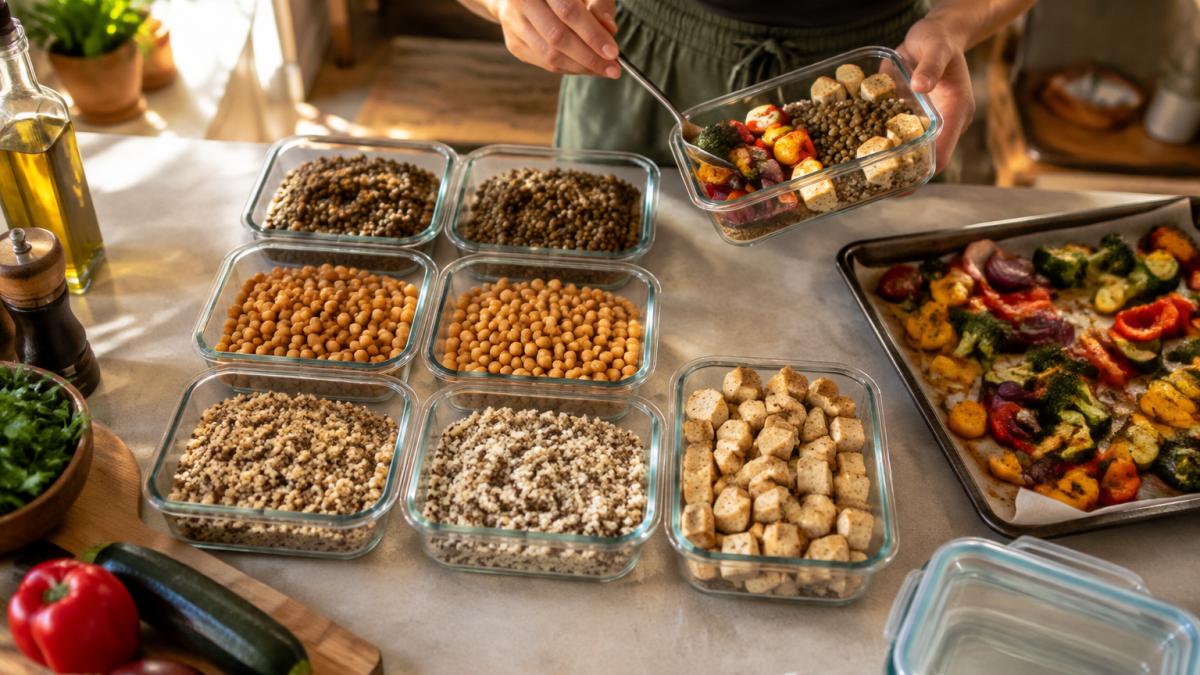
Here is the session with yields, times, and protein totals for a five-day prep:
- Start the oven first. Press and cube two blocks of tofu (about 400 g each), toss with oil and seasoning, and get them roasting at 425°F for 25 to 30 minutes. Two blocks yield roughly 8 portions at about 17 g protein each, or about 136 g total.
- Pot one: lentils. Rinse 2 cups dry, simmer in 5 cups water for 20 to 25 minutes, drain. That yields about 6 cups cooked, roughly 12 half-cup portions at about 9 g protein each, or about 108 g total.
- Pot two: grains. Cook 2 cups dry quinoa or brown rice in bulk; quinoa takes about 15 minutes, brown rice 35 to 40. Two cups dry yields about 6 cups cooked, enough for 12 half-cup portions.
- Pot three: chickpeas if using dried (1 cup dry, soaked, simmered 60 to 90 minutes) or open two cans and roast them alongside the tofu for the last 20 minutes. Two cans yield about 3 cups, roughly 6 half-cup portions at about 9 g protein each.
- Cool everything completely before it goes into containers. Trapped steam turns roasted tofu soft and makes grains clump.
Add the totals: two blocks of tofu, 2 cups dry lentils, and two cans of chickpeas produce roughly 280 to 300 grams of protein across the week's containers before grains, edamame, or powder. That is the number to check against your daily target times five. If the batch falls short, add a third tofu block or a pot of edamame rather than improvising during the week.
A common mistake is seasoning each component separately for the whole week. Season plain, then sauce per meal. Wednesday's palate is not Monday's, and a neutral base accepts a different sauce each day without a second cook.
Watch out: cooking lentils and grains in the same pot to save time produces uneven texture, because lentils finish well before brown rice and turn to mush while the rice catches up. Keep them separate even when the sink is full.
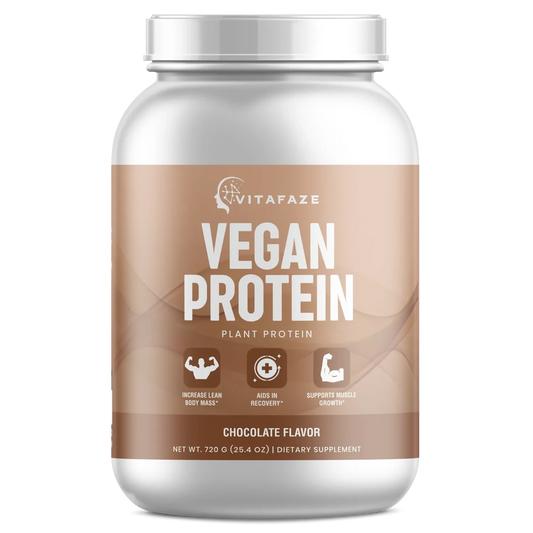
Vegan Protein Chocolate Shake - 1.5lb Pure Plant-Based Nutrition for Optimal →
High Protein Vegan Meal Prep Recipes You Can Repeat All Week
Repeatable recipes beat variety here. Three base bowls, rotated with different sauces, cover a week without anyone dreading lunch.
The workhorses: a lentil and quinoa bowl with roasted vegetables, a tempeh stir-fry over rice, and a tofu scramble with chickpeas. Each one scales to a full batch and reheats without turning to mush. For a full set of high protein vegan meal prep recipes, the muscle-building guide covers the wider rotation.
Tofu and Tempeh Preparation Techniques That Hold Up in the Fridge
Press tofu for at least 20 minutes before cooking, then roast rather than pan-fry. Roasted cubes keep their edges through reheating; pan-fried cubes release water and go spongy. Tempeh benefits from a quick steam before marinating, which removes its bitterness and lets the marinade actually penetrate. Slice it thin for containers so it reheats evenly.
Protein Powder Integration Strategies for Shakes and Overnight Oats
Powder is where most people close the last 30 grams of the day. Stir it into overnight oats the night before, blend it into a shake post-training, or whisk it into a smoothie base for breakfast containers. Chocolate powder in oats with soy milk and chia holds four days in the fridge.
Choosing a powder is its own decision. Before adding powder to prepped meals, read how to choose the best vegan protein powder. If you want a plant-based option ready to use now, the Vegan Protein Chocolate Shake carries 22 grams of complete protein per scoop from organic pea and brown rice protein, with 3 grams of sugar and 140 calories.

Vegan Meal Prep Containers and Storage Tips That Protect Texture
Texture is what separates prep that gets eaten from prep that gets thrown out. Storage decisions are texture decisions.
Use glass containers with divided compartments: wet components like sauces and dressings stay separate from grains until eating. Store roasted tofu and tempeh in a single layer where possible, or layer them above vegetables so they do not sit in moisture. Keep leafy greens in a separate container with a paper towel. Cooked grains keep several days refrigerated; dress them with a little oil before storing so they reheat loose rather than clumped. Label containers with the cook date.
Watch out: freezing tofu-based bowls without pressing the tofu first produces a watery, spongy result on thaw, and the whole batch gets written off.
Air Fryer vs. Instant Pot: Which Equipment Cuts Prep Time More
The Instant Pot wins for legumes and grains; the air fryer wins for tofu, tempeh, and roasted chickpeas. They solve different halves of the prep session, which is why serious preppers tend to own both.
| Equipment | Best For | Time Saved | Limitation |
|---|---|---|---|
| Instant Pot | Dried lentils, chickpeas, grains | Skips soaking and stovetop watching | No crisping; tofu comes out soft |
| Air fryer | Tofu, tempeh, roasted chickpeas | Cuts roasting time and oil | Small batches only |
| Sheet pan oven | Large vegetable batches | Handles volume | Longer cook time |
| Rice cooker | Grains only | Set-and-forget | Single function |
If you buy one, buy the Instant Pot first. Dried legumes are the cheapest protein per gram, and the Instant Pot is what makes them practical on a weeknight schedule.
Post-Workout and Travel-Friendly Additions Most Guides Skip
Two gaps show up in nearly every vegan meal prep guide. Post-workout timing and food that survives a bag.
For post-workout, prep a dedicated container separate from lunch: a shake with powder and a banana, or a small tub of edamame and roasted chickpeas. Having the container already built removes the decision. The 2.9lb Essential Meal Replacement Protein delivers 24 grams of protein across seven protein sources with 5 grams of fiber and digestive enzymes. Mix two scoops with 4-6 oz. of water, milk, or your favorite beverage.
For travel, pack shelf-stable protein: roasted chickpeas, dry-roasted edamame, single-serve powder packets, and nut-based bars. Skip anything that needs refrigeration for more than a few hours.
Build Your First High-Protein Prep Week with VitaFaze
Here is the first week, in checklist form. Run it once and the second week takes half the time.
- Calculate your daily protein target in grams and divide by four
- Choose three protein anchors: one soy, one legume, one grain-based
- Shop for dried lentils, chickpeas, tofu, tempeh, and a grain
- Block one hour for the batch session
- Portion into divided glass containers and label with dates
- Build four post-workout containers separately
- Keep a protein powder on hand for the daily gap
VitaFaze exists for the part meal prep cannot fully solve: clean, plant-based protein for active athletes. Our Vegan Protein Chocolate Shake at $32.97 gives you 22 grams of protein per scoop, and the meal replacement line at $33.32 adds a 24-gram option with digestive enzymes. Both fit a prep week without adding a cooking step.
Browse VitaFaze products and build a prep week where protein leads and everything else follows.
Frequently Asked Questions
How do you get enough protein on a vegan meal prep diet?
Start with a daily target, then build each meal around one anchor protein: tofu, tempeh, seitan, lentils, or chickpeas. A 22-gram plant protein shake can cover a gap quickly. Spread protein across four meals instead of loading it at dinner, and prep two protein sources in bulk each week so you always have one ready. Track intake for a week to see where you actually land before adjusting portions.
How long can you keep vegan meal prep in the refrigerator?
Most cooked legumes, grains, and roasted vegetables keep three to four days in sealed containers. Tofu and tempeh dishes are best within three days. Keep dressings and sauces separate until serving so textures hold. Freeze anything you will not finish by day four, and label containers with the prep date. A refrigerator thermometer set to 40°F or below matters more than the container brand for food safety.
Can you build muscle with vegan meal prep?
Yes, provided total protein and calories support training. Muscle hypertrophy depends on hitting roughly 1.6 to 2.2 grams of protein per kilogram of body weight daily, plus a modest caloric surplus. Aim toward the upper end of that range. Combining sources such as pea and brown rice is one way to vary the protein you eat, and prepping those combinations in advance can help make consistency realistic.
What are the best plant-based protein sources for meal prepping?
Tofu, tempeh, seitan, lentils, chickpeas, edamame, and split peas hold up best through cooking and reheating. Nutritional yeast adds flavor and a few grams of protein per serving. For muscle gain, pair these with a complete protein powder: VitaFaze's Vegan Protein Chocolate Shake provides 22 grams of protein per scoop from organic pea and brown rice protein for $32.97.
The challenge is not knowing what to cook. It is hitting the number every day for a month. VitaFaze makes that easier with plant-powered nutrition built for athletes: complete amino acid profiles from organic pea and brown rice protein, digestive enzymes for absorption, and formulas designed around recovery and endurance rather than general wellness. Get started with VitaFaze and give your prep week the protein floor it needs.
