



How to Store Plant Protein Powder for Maximum Freshness
Last Updated: November 5, 2026
Quick Summary
Store protein powder after opening by keeping it sealed, cool, dry, and away from light. Reseal the original pouch or move the powder to an airtight container, keep it in a pantry, and always use a dry scoop.
- Reseal the pouch right after scooping and press out extra air before closing.
- An unopened package stays fresh until its best-by date; opened powder is best used within a few months.
- Hard clumps that stay solid, a bad smell, or discoloration mean the powder has spoiled.
- Split a bulk bag into smaller airtight containers and open only one at a time.
- Skip the fridge and freezer; keep powder at room temperature to avoid condensation.
Table of Contents
- Why Plant Protein Powder Spoils Faster Than You Think
- How to Store Protein Powder After Opening
- The Best Container to Store Protein Powder
- Plant Protein Powder Shelf Life: Opened vs. Unopened
- Signs Protein Powder Has Gone Bad
- Humidity, Heat, and Light: The Three Enemies of Freshness
- Bulk Buying and Portioning Without Losing Freshness
- Should You Refrigerate or Freeze Plant Protein Powder?
- Stock Your Pantry with a Shake That Rewards Good Storage
- Frequently Asked Questions
Why Plant Protein Powder Spoils Faster Than You Think
Plant protein powder is a ground, low-moisture food, and that texture is exactly what makes it fragile. The moment you open the pouch, air and moisture start working on it. Athletes often lose part of a tub to clumping before they finish it. That is money and recovery both wasted.
Here is the core problem. Every time you open the lid, humid kitchen air moves in.
Most guides treat storage as an afterthought. It is not. Storage decides whether your powder stays fresh for months or turns into a brick in weeks.
Below, you can see how to store plant protein powder for freshness, from the first scoop to the last. We also cover the mistakes that quietly ruin a good tub.
How to Store Protein Powder After Opening
Store protein powder after opening by keeping it sealed, cool, dry, and away from light. Reseal the original pouch or move the powder to an airtight container, keep it in a pantry, and always use a dry scoop.
That is the short version. The details are where people slip up.
The First 24 Hours Matter Most
The first day after opening sets the pattern. Moisture gets in early if you leave the pouch open while you mix a shake.
- Reseal the pouch right after you scoop
- Press out extra air before closing a resealable bag
- Wipe the rim dry if powder collects there
- Store the tub away from the stove and sink
A common mistake is scooping over a steaming pot or a wet counter. Steam rises. Powder grabs it.
Sealing and Scooping Rules That Prevent Contamination
A clean, dry scoop is your best defense against spoilage. Never scoop with a wet spoon, and never dig into the powder with damp hands.
Follow these rules:
- Keep one dedicated dry scoop inside the container
- Shake powder off the scoop before resealing
- Do not leave the scoop sitting in a wet sink
- Wash and fully dry the scoop if it gets dirty
Cross-contamination is real. A wet scoop introduces moisture and bacteria. That is how a fresh tub starts to turn. If you also deal with digestive discomfort, learn how to avoid bloating with plant based protein.
The Best Container to Store Protein Powder
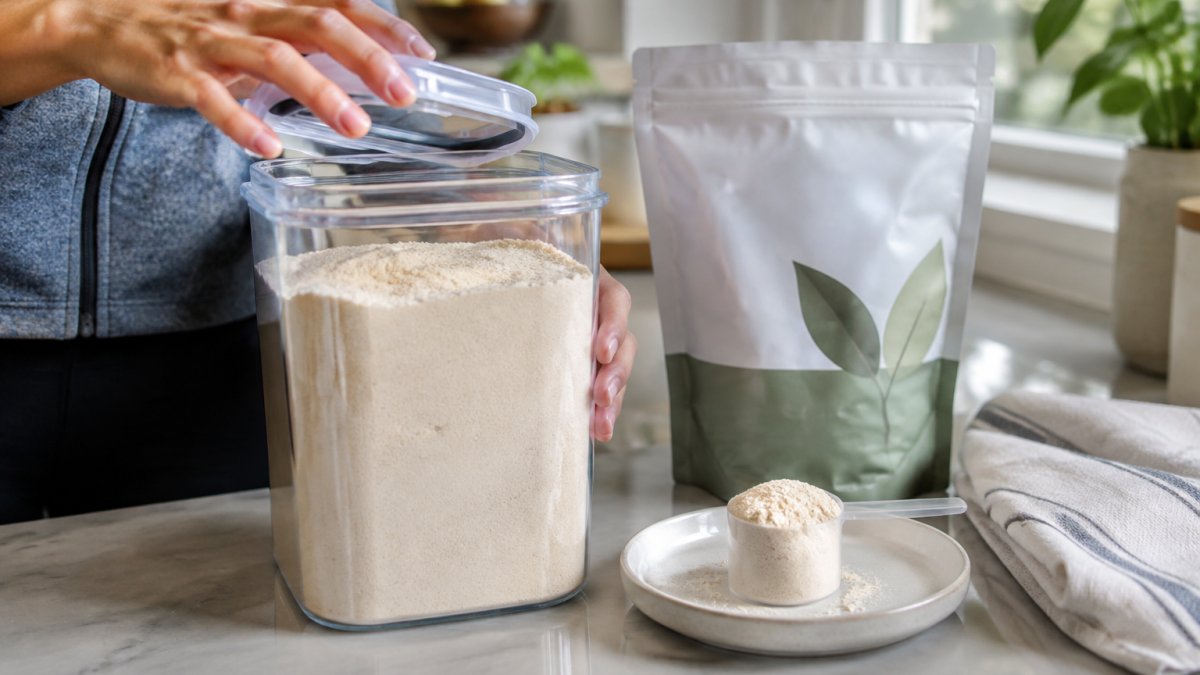
The best container to store protein powder is an airtight, food-safe container that blocks light and seals tightly. A dark, opaque canister with a rubber gasket works better than a clear jar left on the counter. For plant protein specifically, the container has to do three jobs at once: keep humid air out, keep light out, and keep the fine powder from caking against the walls where it picks up moisture first.
Clear containers look nice. They also let light in, and light speeds up oxidation. If you want to see how much powder is left, use a container with a small window or keep it in a dark cupboard. An opaque canister with a gasket-sealed lid is a practical choice for storing powder. For guidance on buying clean vegan protein powder that stores well, see our buying guide.
Keep the Original Packaging or Transfer It?
Keep the original packaging if it reseals well and blocks light. Transfer the powder to an airtight container if the bag is flimsy, tears easily, or lets in air. The decision matters more for plant protein than for a whey blend because pea and rice powders are finer and more hygroscopic, they pull moisture from the air faster, and a bag that has lost its zip seal is an open door.
Here is how to decide:
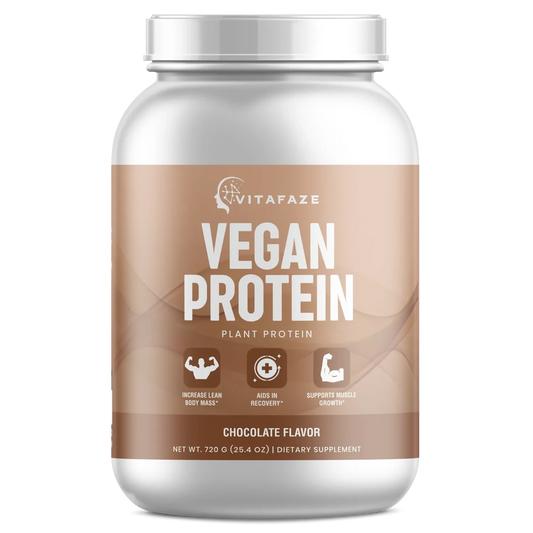
Vegan Protein Chocolate Shake - 1.5lb Pure Plant-Based Nutrition for Optimal →
| Situation | Best Choice | Why |
|---|---|---|
| Sturdy, resealable, opaque pouch | Keep original packaging | Already blocks light and air; the factory seal is often tighter than a home container |
| Thin bag that tears or won't seal | Transfer to airtight container | Protects against moisture and pests |
| Bulk bag too big for the shelf | Split into smaller containers | Limits air exposure per opening |
| Clear jar on a sunny counter | Move to a dark cupboard | Light speeds oxidation |
| Bag with a broken zip track | Transfer and label immediately | A failed seal is the fastest route to clumping |
If you transfer the powder, keep the label. Write the best-by date on the new container so you never lose track. Add the date you opened it, too, that second date is what tells you when the practical window closes. Leave an inch or two of headspace at the top rather than filling the container to the rim; powder that sits against the lid seam wicks moisture from the gasket and cakes there first.
Watch out: never top off an old container with a new bag of powder. The older powder on the bottom carries the older moisture load and the older oxidation state, and mixing them hides the age of what you are scooping. Finish or discard the old batch first.
For readers choosing a powder worth storing well, our vegan protein chocolate shake comes in a resealable format built for pantry storage.

Plant Protein Powder Shelf Life: Opened vs. Unopened
Plant protein powder shelf life depends on whether the package is open. An unopened package stays fresh until its best-by date. An opened package is best used within a few months, kept sealed and cool.
The expiration date on the label assumes the package is unopened and stored correctly. Once you break the seal, the clock speeds up.
- Unopened: follow the best-by date on the package
- Opened: aim to finish within a few months
- Opened and poorly stored: can spoil in weeks
Always check the best-by date first. Then mark the date you opened it. That simple habit tells you when to use it up.
Signs Protein Powder Has Gone Bad
Signs protein powder has gone bad include an off odor, discoloration, mold, pests, and clumping that will not break apart. Trust your senses. If it smells sour, musty, or wrong, throw it out.
Fresh plant protein powder smells mild and slightly sweet. Spoiled powder does not.
Watch for these red flags:
- A sour, musty, or rancid smell
- Color that has darkened or changed
- Visible mold or fuzz
- Ants, weevils, or other pests
- Hard clumps that will not crumble
- Powder that feels damp or sticky
Watch out: mold and pests mean the whole tub is contaminated. Do not scoop around them. Toss it.
Clumping vs. Spoilage: How to Tell the Difference
Some clumping is normal. Plant protein powder can form soft lumps from humidity or settling. Press a lump between your fingers. If it crumbles easily and smells fine, the powder is likely okay.
Spoilage is different. Hard clumps that stay solid, a bad smell, or any discoloration point to a real problem. If the texture seems off but the smell is fine, poor mixing may be the cause rather than spoilage. Our guide on how to mix plant protein powder shows how to get a smooth shake every time.
Humidity, Heat, and Light: The Three Enemies of Freshness
Heat, humidity, and light are the three fastest ways to ruin plant protein powder. Store it in a cool, dry, dark place, and keep it away from the stove, dishwasher, and sunny windows.
Each one does damage in its own way:
- Heat breaks down the powder and speeds up spoilage
- Humidity adds moisture that causes clumping and mold
- Light drives oxidation and dulls flavor
The pantry or a closed cupboard is ideal. Room temperature is fine. Skip the shelf above the stove and the windowsill.
If you live in a humid climate, be extra careful. Keep the container sealed tightly between uses, and consider a smaller container you open less often. A common mistake is leaving the lid off while you prep a shake. Close it every time.
Vegan Protein Chocolate Shake - 1.5lb Pure Plant-Based Nutrition for Optimal →
Bulk Buying and Portioning Without Losing Freshness
Bulk buying saves money, but a giant bag exposes more powder to air every time you open it. The fix is portioning. Split a large bag into smaller airtight containers and open only one at a time. This keeps most of your powder sealed while you work through a smaller batch.
Every time a bulk bag is opened, the entire headspace exchanges air. Portioning shrinks the volume that sees that exchange.
A Safe Portioning Method
The goal is to divide the bulk bag once, cleanly, and then leave the sealed portions alone until you need them.
- Work on a clean, dry counter with dry hands and a dry scoop or funnel.
- Divide the bulk bag into week-sized or month-sized portions, roughly what you will use in that window, not a guess at the whole bag.
- Seal each portion in an airtight, food-safe container or a heavy-duty resealable bag with the air pressed out.
- Label each one with the best-by date and the date you divided it.
- Store the unopened portions in a cool, dark cupboard, not on an open shelf.
- Refill your daily container from one portion at a time, and reseal that portion immediately.
Leave a little headspace in each container rather than packing powder against the lid. A full-to-the-rim container forces powder into the seal, where it cakes and breaks the airtight closure over time.
Watch out: do not portion over a sink, a steaming pot, or a wet counter. Steam and splash introduce moisture at the exact moment the powder is most exposed, and a single damp scoop can start a clump in a portion you meant to keep sealed for weeks.
Why Portioning Beats One Big Tub
A single large container is opened dozens of times. Each opening exchanges the headspace air, and in a humid kitchen that air carries water vapor. A smaller portion is opened fewer times and holds less air to exchange, so the powder inside stays closer to its factory condition. The trade-off is counter and shelf space plus a few extra containers, worth it if you buy in bulk and live somewhere humid.
If you are weighing a bulk purchase, our 6lb bulk mass gainer is a large-format option that fits this portioning approach. Buy big, store smart.

Should You Refrigerate or Freeze Plant Protein Powder?
A cool, dry pantry is a practical place to store plant protein powder.
Here is why the fridge backfires. Every time you pull the tub out, warm air hits the cold powder. Condensation forms inside the container. That moisture is exactly what you are trying to avoid.
Freezing has the same problem, plus repeated thawing. Keep powder at room temperature instead. Once you mix a shake, refrigerate the prepared shake and drink it within 24 hours.
Stock Your Pantry with a Shake That Rewards Good Storage
Good storage protects good powder. If you are going to seal, portion, and shield your tub from heat and humidity, start with a plant protein worth the effort. That is where we come in.
Our vegan protein chocolate shake packs 22 grams of plant protein per scoop, blending organic pea and brown rice protein. It has 3 grams of sugar and 140 calories, with 4 grams of dietary fiber.
Frequently Asked Questions
Should plant protein powder be stored in the refrigerator?
Most plant protein powder should stay in a cool, dry pantry rather than the refrigerator. Moving powder between cold and warm air causes condensation inside the container, and that moisture leads to clumping and faster spoilage. Refrigeration only makes sense if your kitchen regularly climbs above 80°F or humidity is extreme. Even then, use an airtight container and let the powder come to room temperature before opening it.
How long does plant protein powder stay fresh after opening?
Once you open a package, it is best to use the powder within a reasonable time for best flavor and mixability. The best-by date on the label applies to unopened packages stored properly. After opening, air exposure and humidity start degrading the powder even if it stays safe to eat longer. Write the open date on the container with a marker so you are not guessing. Buying smaller sizes you will actually finish beats saving a few dollars per pound on a bulk tub that sits half-used for six months.
Can you freeze plant protein powder to extend its shelf life?
Freezing is not recommended for everyday storage. Every time you pull the container out, condensation forms on the cold powder, and that moisture causes clumping and off flavors. Freezing can work for long-term bulk storage if you portion powder into individual airtight bags, squeeze out the air, and thaw a portion fully before opening it. For regular use, a sealed container in a cool, dark cupboard is simpler and keeps the powder fresher. Rotate stock so older powder gets used first.
How can you tell if plant protein powder has gone bad?
Check for an off odor, discoloration, mold, or a texture that stays clumpy after shaking. A sour or rancid smell is the clearest warning sign, and any visible mold means the whole container goes in the trash. Ordinary clumping from humidity is usually fine if the powder breaks apart easily and smells normal. Pests are another red flag: ants or weevils mean contamination. When in doubt, throw it out.
