



How to Avoid Bloating With Plant Based Protein
Table of Contents
- Why Plant-Based Protein Can Cause Bloating
- Common Digestive Symptoms From Vegan Protein Powder
- Plant Protein Powder Ingredients to Avoid
- Step 1: Start With a Smaller Plant-Based Protein Powder Serving Size
- Step 2: How to Make Vegan Protein Powder Easier to Digest
- Step 3: Increase Fiber and Plant Foods Gradually
- Step 4: Hydration and Timing Matter
- Best Vegan Protein Powder for Sensitive Stomach
- When to Seek Medical Advice
- Frequently Asked Questions
Last Updated: October 10, 2026
Why Plant-Based Protein Can Cause Bloating
Plant-based protein powders trigger bloating because your gut bacteria must adapt to breaking down new fiber sources and plant compounds, causing gas and abdominal discomfort during the adjustment period. Understanding how to avoid bloating with plant based protein starts with recognizing these triggers.
Fiber content is a primary culprit. Plant proteins like pea, rice, and hemp are packed with dietary fiber that your gut bacteria ferment, producing gas as a byproduct.
Sugar alcohols and artificial sweeteners like erythritol ferment in your digestive tract and cause bloating, gas, and cramping in sensitive individuals.
Oligosaccharides in legume-based proteins pass undigested to your colon where bacteria ferment them, creating gas and discomfort.
The good news: bloating from plant-based protein is usually temporary. Your digestive system adapts within 1-3 weeks as your gut bacteria adjust to the new food sources.
Common Digestive Symptoms From Vegan Protein Powder
Common symptoms include gas and flatulence (from fermentation), abdominal discomfort (peaking 1-2 hours after consumption), constipation or loose stools (from rapid fiber increases), nausea (from specific ingredients), and acid reflux (from rapid consumption or empty stomach consumption). All typically resolve within 2-4 weeks.
These symptoms are signs your body is adjusting, not that plant-based protein is wrong for you. Most people find these issues resolve within 2-4 weeks as their digestive system adapts to plant-based nutrition.
Plant Protein Powder Ingredients to Avoid
The challenge is identifying which ingredient triggers your bloating. Rather than avoid ingredients blindly, read labels strategically and test one variable at a time.
Understanding the three main culprit categories:
1. The Protein Source Itself
Different plant proteins have different digestibility profiles:
- Pea protein isolate is a complete protein but harder to digest than pea protein concentrate because isolate processing strips away fiber and nutrients.
- Soy protein isolate is highly processed and may trigger bloating in soy-sensitive individuals, though rarely.
- Rice protein is gentler but incomplete (low in lysine), so it's often blended with other proteins.
- Hemp protein is complete and contains omega-3s but has higher fat content that can slow digestion.
- Blended proteins (pea + rice + hemp, for example) are often easier to digest than single-source isolates because they distribute the digestive load across different protein types.
Action step: If you suspect the protein source is your trigger, try a powder with a different primary protein for 3-5 days and track symptoms. For example, if pea protein causes bloating, test a rice-and-hemp blend next.
2. Sweeteners and Sugar Alcohols
This is where label reading becomes critical. Sweeteners are fermentable, meaning your gut bacteria break them down and produce gas:
- Erythritol is a sugar alcohol that ferments less than others but still causes bloating in 10-15% of people. It's often listed as the first sweetener in "keto-friendly" or "zero-sugar" powders.
- Xylitol, maltitol, and sorbitol ferment more readily and are common triggers. Check the ingredient list, if any of these appear in the first five ingredients, they're a significant source of sweetener.
- Stevia and monk fruit are non-fermentable and rarely cause bloating, but they often have a bitter aftertaste, so brands sometimes blend them with erythritol.
- Sucralose and aspartame are artificial sweeteners that don't ferment, but some people report digestive upset from them unrelated to fermentation.
- No added sweetener powders exist but are less common and often taste less appealing.
How to decode the label: Check the "Nutrition Facts" panel for "Sugar Alcohols." Compare two powders: one with 3g erythritol and one with 10g will likely produce very different bloating responses.
Action step: If you suspect sweeteners, try a powder sweetened with stevia or monk fruit alone for 3-5 days. If bloating resolves, you've identified your trigger.
3. Added Fiber, Gums, and Thickeners
This is where many people get confused: some fiber is natural to the protein source, and some is added artificially. Both ferment, but added fiber is often the culprit:
- Inulin and chicory root fiber are prebiotic fibers that ferment readily and are major bloating triggers.
- Guar gum, xanthan gum, and acacia gum are fermentable thickeners; powders with multiple gums are more likely to cause bloating.
- Natural fiber from the protein source (e.g., 2g fiber from pea protein concentrate) is usually well-tolerated because it's part of the whole plant structure.
- Added fiber beyond the source (e.g., a pea protein powder with 8g total fiber, where only 2g comes from the pea) is the red flag.
How to spot added fiber: Pea protein concentrate naturally contains 2-3g fiber per serving. If a powder lists 8g fiber with only pea protein as the source, inulin or chicory root has been added.
Action step: Choose a powder with less than 5g total fiber per serving and no inulin, chicory root, or multiple gums. After 3-5 days, assess whether bloating improves.
Building Your Troubleshooting Log
Instead of avoiding ingredients broadly, use this framework to isolate your specific trigger:
| Variable | Current Powder | Test Powder | Symptom Change | Conclusion |
|---|---|---|---|---|
| Protein source | Pea isolate | Rice + hemp blend | Bloating reduced by 50% | Pea isolate may be the trigger |
| Sweetener | Erythritol (10g) | Stevia only | Bloating resolved | Erythritol is your trigger |
| Added fiber | Inulin present | No added fiber | Gas reduced | Inulin was the culprit |
| Gums | 3 gums listed | 0 gums | No change | Gums are not your trigger |
Change only one variable at a time, test for 3-5 days, and document your symptoms. This approach is far more reliable than generic "avoid" lists because it accounts for individual variation.
When to Seek a Different Powder
Vegan Protein Chocolate Shake - 1.5lb Pure Plant-Based Nutrition for Optimal →
If you've tested multiple variables and bloating persists, the powder may simply not be right for you. Look for these characteristics in your next choice:
- Simple ingredient list (fewer than 10 ingredients)
- Single or dual protein sources rather than isolates
- No added fiber, inulin, or chicory root
- Sweetened with stevia, monk fruit, or no sweetener
- Minimal gums (0-1 rather than 3+)
- Third-party tested for purity (NSF Certified for Sport or Informed Choice labels indicate testing)
Step 1: Start With a Smaller Plant-Based Protein Powder Serving Size
The biggest mistake people make is consuming a full serving (usually 1-2 scoops) from day one. Your digestive system needs time to adapt.
Start with half a scoop. This gives your gut bacteria a manageable amount of plant compounds to process. You'll get 10-12 grams of protein instead of 22 grams, but that's fine for the first week.
Track how you feel. Monitor bloating, gas, and digestive comfort for 3-5 days at this reduced serving size. If you feel fine, increase to three-quarters of a scoop.
Increase gradually. After another 3-5 days of no bloating, move to a full serving. This slow progression allows your digestive enzymes and gut bacteria to adapt without overwhelming your system.
Listen to your body. If bloating returns at the larger serving, drop back down and increase more slowly. Everyone's digestive system is different.
This gradual approach prevents the shock to your system that causes severe bloating. Your gut has time to build up the enzymes and bacteria needed to process plant protein efficiently.
| Progression Phase | Serving Size | Duration | Expected Symptoms |
|---|---|---|---|
| Phase 1 | 1/2 scoop | 3-5 days | Minimal to none |
| Phase 2 | 3/4 scoop | 3-5 days | Mild gas possible |
| Phase 3 | Full serving | Ongoing | Bloating typically resolved |
Step 2: How to Make Vegan Protein Powder Easier to Digest
Once you've started with smaller servings, the way you prepare, consume, and time your shake significantly impacts whether bloating occurs, these factors are essential to learning how to avoid bloating with plant based protein. This isn't just about blending technique, it's about giving your digestive system the conditions it needs to process plant protein efficiently.
Preparation and Consumption Method
Blend thoroughly for 45-60 seconds. A well-blended shake reduces fermentation time and gas production. Use a high-speed blender rather than a shaker bottle.
Use warm or room-temperature liquid instead of cold. Cold liquid slows gastric emptying and can delay protein breakdown by 20-30 minutes, extending fermentation time.
Drink slowly over 10-15 minutes. Rapid consumption causes stomach distention and bloating; sipping slowly allows digestive enzymes time to work.
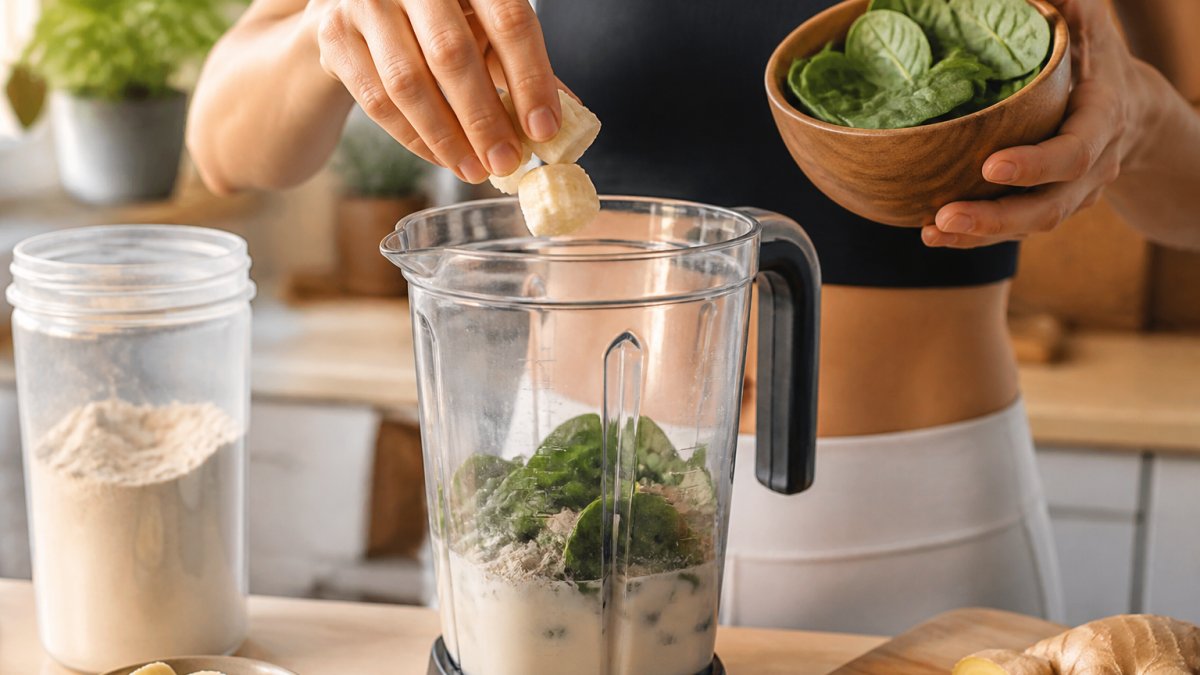
Add digestive-friendly ingredients strategically. Include foods that support digestion without adding fermentable compounds:
- Half a banana provides resistant starch and pectin, a soluble fiber gentler than added inulin.
- Leafy greens support enzyme function with minimal fermentable fiber.
- Ginger (1/4 teaspoon fresh or 1/8 teaspoon ground) speeds gastric emptying and reduces bloating sensation.
- Chia seeds (1 tablespoon) provide soluble fiber that slows digestion in a controlled way.
- Avoid high-FODMAP additions like onion, garlic, apple, or pear, which ferment readily and can worsen bloating during the adjustment phase.
Timing: When You Consume Your Shake Matters
With a meal, not on an empty stomach. Consuming protein powder with food slows digestion and reduces bloating by buffering the protein and slowing gastric emptying.
Post-workout shakes (within 30-60 minutes of exercise) are absorbed faster. After a workout, your digestive system is already active and blood flow to your gut is elevated. A post-workout shake is absorbed more efficiently than one consumed at rest, reducing bloating risk. This is one of the few times a shake on an empty stomach is actually beneficial.
Pre-workout shakes should be consumed 1.5-2 hours before exercise. This allows time for initial digestion before your workout diverts blood flow away from your digestive system. A shake consumed 30 minutes before a workout may cause cramping or bloating during exercise.
Space multiple shakes 4-6 hours apart. If you consume two protein shakes in a day, separate them by at least 4-6 hours. This gives your digestive system time to fully process the first shake before introducing another dose of plant compounds. Consuming two shakes within 2 hours compounds fermentation and bloating.
Avoid shakes 2-3 hours before bed. Your digestive system slows significantly during sleep. A shake consumed right before bed sits in your stomach longer, increasing fermentation overnight and causing morning bloating or gas. Consume your evening shake at least 2-3 hours before sleep.
Avoid combining with high-fat meals. Fat slows gastric emptying. If you're consuming a protein shake, avoid eating high-fat foods (nuts, oils, fatty meats, full-fat dairy) within 1-2 hours before or after. This combination can slow digestion by 30-45 minutes, increasing fermentation time and bloating.
Hydration and Digestive Support
Drink at least half your body weight in ounces of water daily, plus 16-20 ounces extra on protein-powder days. Dehydration slows digestion and increases bloating.
Consider a plant-based digestive enzyme supplement. Enzymes help your digestive system process plant protein more efficiently. Take with your first bite or sip of the shake, especially if you have a history of digestive issues or are over 40.
Add a probiotic if symptoms persist beyond 2 weeks. Choose a multi-strain probiotic (at least 5 strains) with 10+ billion CFU. Take it separately from your shake (at least 2 hours apart) to protect the bacteria.
Tracking Your Progress: The Symptom and Intake Log
Vegan Protein Chocolate Shake - 1.5lb Pure Plant-Based Nutrition for Optimal →
Instead of relying on vague feelings of "better" or "worse," use a simple log to measure changes objectively. This is one of the most underutilized tools for identifying what actually works for your body.
| Date | Serving Size | Ingredients Added | Timing (with/without meal) | Bloating (1-10 scale) | Gas (yes/no) | Other Symptoms | Notes |
|---|---|---|---|---|---|---|---|
| Day 1 | 1/2 scoop | Banana, spinach | With breakfast | 3 | No | Mild cramping | Felt fine overall |
| Day 2 | 1/2 scoop | Banana, spinach | With breakfast | 2 | No | None | Better than Day 1 |
| Day 3 | 1/2 scoop | Banana, spinach | On empty stomach | 6 | Yes | Nausea | Empty stomach made it worse |
| Day 4 | 3/4 scoop | Banana, spinach | With breakfast | 4 | No | Mild gas | Larger serving caused more bloating |
Track for at least 7-10 days. Look for patterns: Does bloating worsen with larger servings? Does it improve when you eat a meal first? Does adding ginger reduce symptoms? These patterns reveal your personal triggers far better than generic advice.
When Preparation Changes Aren't Enough
If you've optimized timing, hydration, and preparation and bloating persists after 2 weeks, the issue is likely the protein powder itself (see the ingredient troubleshooting section) or a broader digestive issue that warrants professional evaluation.
Step 3: Increase Fiber and Plant Foods Gradually
Bloating often worsens when you jump into a high-fiber diet too quickly. Your gut bacteria need time to adapt to processing more plant material.
Start with 15-20 grams of fiber daily and increase by 2-3 grams per week. Your digestive system isn't ready for 30+ grams immediately.
Spread plant foods throughout the day to give your digestive system time to process each portion.
Eat soluble and insoluble fiber. Soluble fiber (oats, beans, apples) dissolves and feeds good bacteria. Insoluble fiber (leafy greens, whole grains) adds bulk. A mix of both supports better digestion than too much of either.
Cook vegetables when possible. Steaming, roasting, or sautéing breaks down plant cell walls, making them easier to digest.
Include fermented foods. Sauerkraut, kimchi, tempeh, and miso contain beneficial bacteria that support digestion. These foods help your gut adapt to plant-based eating faster.
Avoid high-FODMAP foods initially. FODMAPs are fermentable carbohydrates that cause bloating. Onions, garlic, wheat, and certain fruits are high in FODMAPs. Once your digestive system adapts (after 4-6 weeks), you can reintroduce these.
This gradual approach prevents the bloating spike that happens when people switch to plant-based eating overnight.
Step 4: Hydration and Timing Matter
Drink plenty of water (half your body weight in ounces daily, plus extra on workout days). Space protein shakes 4-6 hours apart. Avoid shakes 2-3 hours before bed. Don't combine with high-fat meals. Time post-workout shakes within 30-60 minutes for faster absorption. Sip slowly over 10-15 minutes rather than chugging.
Proper hydration and timing work together to support smooth digestion and minimize bloating.
Best Vegan Protein Powder for Sensitive Stomach
If bloating persists, the protein powder itself may be the issue. Look for simple ingredient lists with minimal additives. Choose blended proteins (pea, rice, hemp) over single-source isolates. Avoid heavily-processed isolates. Check for added digestive support like probiotics or enzymes. Test with a small purchase first before committing to a large container.
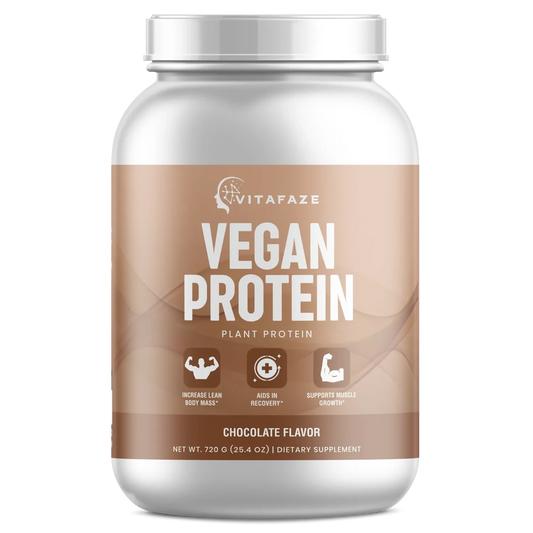
VitaFaze's Vegan Protein Chocolate Shake combines organic pea and brown rice protein for a complete amino acid profile. With 4g dietary fiber and natural sweeteners, it delivers 22g protein per serving. At $32.97 per 1.5lb container, it supports digestive health.

When to Seek Medical Advice
Most bloating resolves within 2-4 weeks. Seek medical advice if bloating persists beyond 4 weeks, you experience severe pain, have blood in stool, develop persistent diarrhea/constipation, experience unexplained weight loss, have difficulty swallowing, or symptoms worsen.
Consider consulting a gastroenterologist if:
- You suspect food intolerance or allergy (beyond normal adjustment)
- You have a history of digestive issues like IBS or Crohn's disease
- You're taking medications that affect digestion
- You have chronic bloating unrelated to protein powder
Talk to a registered dietitian if:
- You're unsure how to balance plant-based protein with your overall diet
- You need personalized guidance on fiber intake
- You want to optimize your plant-based nutrition for athletic performance
Normal adjustment bloating is uncomfortable but temporary. Persistent or severe symptoms deserve professional evaluation to rule out underlying digestive issues.
Bloating from plant-based protein doesn't mean you can't thrive on a vegan diet. The key is starting small, choosing the right powder, and giving your digestive system time to adapt. VitaFaze's Vegan Protein Chocolate Shake provides 22g complete plant-based protein with clean ingredients designed to support muscle recovery. Follow the gradual progression approach outlined here, and bloating typically resolves within a few weeks. Shop All Products.
Frequently Asked Questions
Can vegan protein powder cause bloating?
Yes, plant-based protein powder can cause bloating, especially when you first introduce it or consume too much at once. Pea protein, rice protein, and hemp protein contain oligosaccharides and fiber that your gut bacteria need time to adjust to. Starting with a smaller serving size (10-15 grams instead of 22 grams) and gradually increasing your intake over 2-3 weeks helps your digestive system adapt. If bloating persists after a month, check the ingredient label for sugar alcohols like sorbitol or xylitol, which commonly trigger gas and abdominal discomfort.
Which ingredients in plant-based protein powder may cause gas or bloating?
Sugar alcohols (sorbitol, xylitol, maltitol), excess insoluble fiber, and certain legume-based proteins trigger gas and bloating. Pea protein is high in resistant starch; rice protein is gentler. Acacia gum and guar gum, used as thickeners, can ferment in your gut if you're not accustomed to them. Added sweeteners and artificial flavors may also cause sensitivity. Read the ingredient label carefully and avoid powders with multiple sugar alcohols or more than 5g of added fiber per serving if you have a sensitive stomach.
How long does bloating from protein powder usually last?
Mild bloating typically subsides within 2-4 hours after consuming plant-based protein. If you're new to plant protein, expect 1-2 weeks of adjustment as your gut bacteria adapt to increased fiber and plant compounds. Severe bloating lasting more than 4 hours, accompanied by pain or changes in bowel habits, warrants a conversation with your doctor. Most people report significant improvement after 2-3 weeks of consistent use at a steady serving size.
Should I take plant-based protein powder with food or water?
Mixing your vegan protein powder with water is fine, but consuming it with food, especially carbohydrates and healthy fats, slows digestion and reduces bloating. Pairing your shake with a banana, chia seeds, or nut butter gives your digestive system more time to process the protein and fiber. Avoid consuming protein powder on a completely empty stomach if you have a sensitive stomach; eating a light meal or snack 30-60 minutes before or after your shake helps prevent gas and discomfort.