



Natural Alternatives to Stevia in Protein Powder
Table of Contents
- Why Stevia's Aftertaste Sends Athletes Searching for Natural Alternatives
- Monk Fruit vs Stevia in Protein Powder: How the Two Sweeteners Compare
- Allulose and Reb M: The Next Generation of Low-Calorie Sweeteners
- Coconut Sugar, Cane Sugar, and Other Sweetener Blends That Actually Work
- Protein Powder Without Stevia or Artificial Sweeteners: What to Look For
- Digestive Tolerance: How Sugar Alcohols Like Erythritol and Xylitol Affect Your Gut
- How to Sweeten Protein Shakes Naturally: DIY Flavor Masking Techniques
- Reading the Label: How to Spot Hidden Sweeteners and Verify Clean Claims
- Unflavored Protein Powder: The Ultimate Blank Canvas for Natural Sweeteners
- Matching Sweeteners to Your Training Goals
- Frequently Asked Questions
Last Updated: October 3, 2026
Why Stevia's Aftertaste Sends Athletes Searching for Natural Alternatives
If you have ever gagged on a protein shake that tasted like sweetened lawn clippings, you are not imagining it. The bitterness comes from steviol glycosides, the compounds that give stevia its sweetness, and some people taste them far more intensely than others. That is why so many athletes are now hunting for natural alternatives to stevia in protein powder.
Natural alternatives to stevia in protein powder are sweeteners derived from plants or fermented sugars that deliver sweetness without the lingering bitter, licorice-like finish stevia can leave behind. The most common options include monk fruit extract, allulose, erythritol, and small amounts of coconut sugar or cane sugar in blends.
Here is the part most guides skip: stevia is not "bad." It is simply a poor fit for certain palates and certain protein bases. A common mistake is blaming the protein itself when the real culprit is the sweetener system.
This guide breaks down how each alternative actually tastes, how it behaves in your gut, and how to pick the right one for your training goals.
FDA guidance on high-intensity sweeteners
Monk Fruit vs Stevia in Protein Powder: How the Two Sweeteners Compare
Monk fruit extract wins on aftertaste for most people, while stevia wins on cost and availability. That is the short answer. The longer answer involves how each one is processed and what it does to the flavor of whey isolate or plant-based protein.

Monk fruit gets its sweetness from mogrosides, compounds that taste clean and rounded without the metallic edge stevia can carry. It is roughly 150 to 200 times sweeter than cane sugar, so a tiny amount goes a long way. The drawback? It can read as slightly fruity or "cooling" in high doses, which clashes with chocolate or vanilla.
Stevia, by contrast, is cheap, widely used, and easy to blend. But steviol glycosides bind to bitter receptors on the tongue, and for roughly a third of people, that translates to an unpleasant finish.
| Factor | Monk Fruit | Stevia |
|---|---|---|
| Aftertaste | Minimal, slightly fruity | Bitter, licorice-like for some |
| Cost | Higher | Lower |
| Sweetness vs. sugar | 150-200x | 200-300x |
| Best for | Chocolate, vanilla, unflavored | Budget formulas, citrus flavors |
If you are coming from a stevia-heavy powder, expect monk fruit to taste noticeably cleaner. Just do not expect it to taste like sugar.
Allulose and Reb M: The Next Generation of Low-Calorie Sweeteners
Allulose and Reb M are the two sweeteners most likely to replace stevia in the next wave of protein powders. Both are relatively new to the mainstream, and both solve problems that older sweeteners could not.
Allulose is a rare sugar found naturally in small amounts in figs and raisins. Your body absorbs it but does not metabolize it, so it contributes almost no calories. It browns like sugar, dissolves cleanly, and tastes remarkably close to the real thing. For protein powders, it adds body and mouthfeel that monk fruit alone cannot.
Reb M is a specific steviol glycoside, one of the compounds inside the stevia leaf. Here is the twist: Reb M does not carry the bitter, licorice notes that older stevia extracts do. It is often produced through fermentation rather than leaf extraction, which gives it a cleaner flavor profile. If you hated stevia five years ago, Reb M is genuinely worth a second look.
Coconut Sugar, Cane Sugar, and Other Sweetener Blends That Actually Work
Coconut sugar and cane sugar are the honest options: they are real sugars with real calories, and they taste like it. For athletes who are not chasing a zero-calorie label, a small amount of cane sugar can round out a protein shake better than any non-nutritive sweetener. But the more interesting story is what happens when you blend sweeteners, and why the best modern formulas do exactly that.
Why Blending Works (The Mechanism)
No single high-intensity sweetener hits the same receptor profile as sucrose. Sugar activates sweetness receptors across a broad curve and adds body, while monk fruit, allulose, and steviol glycosides each hit different receptor subtypes with different onset and linger times. When you blend two or three, you cover more of that curve.
The practical result: you can hit a target sweetness level with less total sweetener, which reduces the aftertaste and digestive load of any single ingredient. This is the same logic behind the sweetener blends in diet sodas, it is not marketing, it is receptor science.
The Blends That Actually Work in Protein Powder
- Monk fruit + allulose (roughly 1:4 to 1:6 by weight): clean sweetness with the mouthfeel allulose provides. Allulose browns and dissolves like sugar, so it carries body that monk fruit alone lacks. This is the closest thing to a sugar-like experience without sugar.
- Allulose + a touch of cane sugar (roughly 9:1): the cane sugar rounds off allulose's slight cooling note and adds the Maillard browning that makes chocolate and vanilla flavors read as "real." You pay a small carb cost, usually 1-2 g per serving, for a big flavor gain.
- Reb M + monk fruit: both are non-caloric and non-polyol, so this blend is gut-friendly by default. Reb M provides the upfront sweetness, monk fruit extends the finish. This is the blend to look for if you want zero sugar alcohols and zero aftertaste.
- Erythritol + monk fruit: the classic low-calorie pairing, but erythritol's cooling effect is noticeable at higher ratios. Watch the total erythritol per serving if you are gut-sensitive.
- Coconut sugar + monk fruit: deeper, slightly caramel flavor with lower total sugar than cane sugar alone. Works well in chocolate and coffee profiles, less well in fruit flavors.
The Reb M and Allulose Science, Briefly
Most guides mention Reb M and allulose and move on. Here is what is actually happening.
Reb M is a specific steviol glycoside, one of dozens in the stevia leaf, with a sweetness profile that does not activate the bitter receptors that Reb A does. It is often produced via fermentation (using engineered yeast) rather than leaf extraction, which yields a purer compound with fewer of the off-note glycosides. Same plant family, very different taste experience. If you hated stevia five years ago, Reb M is genuinely worth a second look.
Allulose is a rare sugar (a C-3 epimer of fructose) found in small amounts in figs, raisins, and maple syrup. Your body absorbs it but does not metabolize it for energy, so it contributes roughly 0.4 kcal per gram, about a tenth of table sugar. It also does not raise blood glucose or trigger the insulin response the way sucrose does, which is why it has become a favorite in low-carb and keto formulations. In a protein shake, its main job is mouthfeel: it makes the shake taste thicker and more "finished" than monk fruit alone.
Unflavored Whey Isolate Protein - 1lb of Pure Nutrition for Your Fitness Goals →
Reading the Blend on the Label
The ingredient list tells you the order of predominance. If cane sugar appears first, the product is not low-calorie, no matter what the front of the tub says. If erythritol appears first and you are gut-sensitive, expect a larger digestive load per serving. The best blends for most people put monk fruit, allulose, or Reb M first, and keep total sugar alcohols low or absent.
Protein Powder Without Stevia or Artificial Sweeteners: What to Look For
A protein powder without stevia or artificial sweeteners should list its sweetener by name, not hide behind "natural flavors." If you cannot identify what makes it sweet, that is a red flag.
Start with the ingredient panel, not the marketing. Look for a short list. Whey isolate or a named plant protein should be first. Then a sweetener you recognize: monk fruit extract, allulose, or a small amount of cane sugar. If the label says "natural flavoring" with no further detail, you have no way to know whether stevia is hiding inside that catch-all term.
Next, check the protein source. Whey isolate is filtered to remove most lactose and fat, which makes it easier on digestion and cleaner-tasting. Plant-based blends vary widely, and some carry their own bitter notes that a sweetener has to fight.
Finally, verify the "clean label" claim. Certifications and third-party testing matter more than front-panel adjectives. A product that is genuinely free of artificial sweeteners will usually say so plainly and back it up.
Digestive Tolerance: How Sugar Alcohols Like Erythritol and Xylitol Affect Your Gut
Erythritol and xylitol are sugar alcohols, and they are the most common cause of protein-shake bloating. They taste sweet, carry few calories, and pass through your system largely undigested. That last part is the problem, and the reason a gut-friendly sweetener guide matters more than a generic "best alternatives" list.
Here is the mechanism most articles skip. Sugar alcohols are poorly absorbed in the small intestine. What is not absorbed continues into the large intestine, where two things happen:
- Osmotic draw. Unabsorbed polyols pull water into the colon, which can cause loose stools and cramping at higher doses.
- Fermentation. Gut bacteria ferment the remaining polyols, producing gas (hydrogen, methane, carbon dioxide). That gas is what causes bloating and distension.
This is why sugar alcohols are classified as FODMAPs (Fermentable Oligosaccharides, Disaccharides, Monosaccharides, And Polyols) in digestive-health research. If you already follow a low-FODMAP protocol for IBS, most sugar alcohols are on the "avoid" list for a reason.
How the Common Sugar Alcohols Compare
| Sweetener | Relative sweetness vs. sugar | Typical tolerance threshold | Fermentation risk |
|---|---|---|---|
| Erythritol | ~70% | Higher, most people tolerate 0.5-0.8 g per kg body weight in a single sitting | Low (most is absorbed and excreted in urine) |
| Xylitol | ~100% | Lower, GI symptoms commonly reported above ~20-30 g/day | Moderate to high |
| Maltitol | ~75-90% | Lowest, symptoms reported at 10-20 g | High |
| Sorbitol | ~60% | Low | High |
| Allulose | ~70% | Generally high, most is excreted unchanged | Very low (technically a monosaccharide, not a polyol) |
Those thresholds are population-level patterns, not personal prescriptions. A common pattern is that someone who handles 5 g of erythritol fine will feel 15 g in a single shake. Serving size on the label is the number that matters most.
Why Erythritol Is Usually the Safer Sugar Alcohol
Erythritol is absorbed into the bloodstream before it reaches the colon, then excreted unchanged in urine. That means less substrate for gut bacteria to ferment, which is why it shows up in more protein powders than xylitol or maltitol. It is not zero-risk, large single doses can still cause an osmotic effect, but it is the best-tolerated polyol for most people.
The Gut-Friendly Ranking for Protein Powders
If your goal is sweetness without bloating, the practical order from gentlest to harshest is:
- Monk fruit extract, mogrosides are not fermented by gut bacteria in the same way polyols are; minimal GI reports
- Allulose, absorbed and excreted largely unchanged; usually well tolerated even at 10-15 g
- Reb M, a steviol glycoside, not a polyol; no sugar-alcohol fermentation pathway
- Erythritol, best of the true sugar alcohols, but dose-sensitive
- Xylitol, sweeter, but more likely to cause gas and cramping
- Maltitol and sorbitol, highest risk; common in "sugar-free" bars and candies, not ideal in a daily shake
How to Test Your Own Tolerance
A simple approach: pick one sweetener, use it in a single shake on an empty-ish stomach, and note how you feel over the next two hours. If you are fine, repeat for a few days before adding a second variable. If you bloat within thirty minutes, that is your signal, not the protein. Most people find their personal threshold is lower than the label's "per serving" number suggests, especially when they stack a sweetened shake with a sweetened bar or yogurt later in the day.
How to Sweeten Protein Shakes Naturally: DIY Flavor Masking Techniques
You can fix a bitter protein powder without buying a new tub. Flavor masking works by pairing the offending note with something that cancels or distracts from it. Here is how we would approach it.
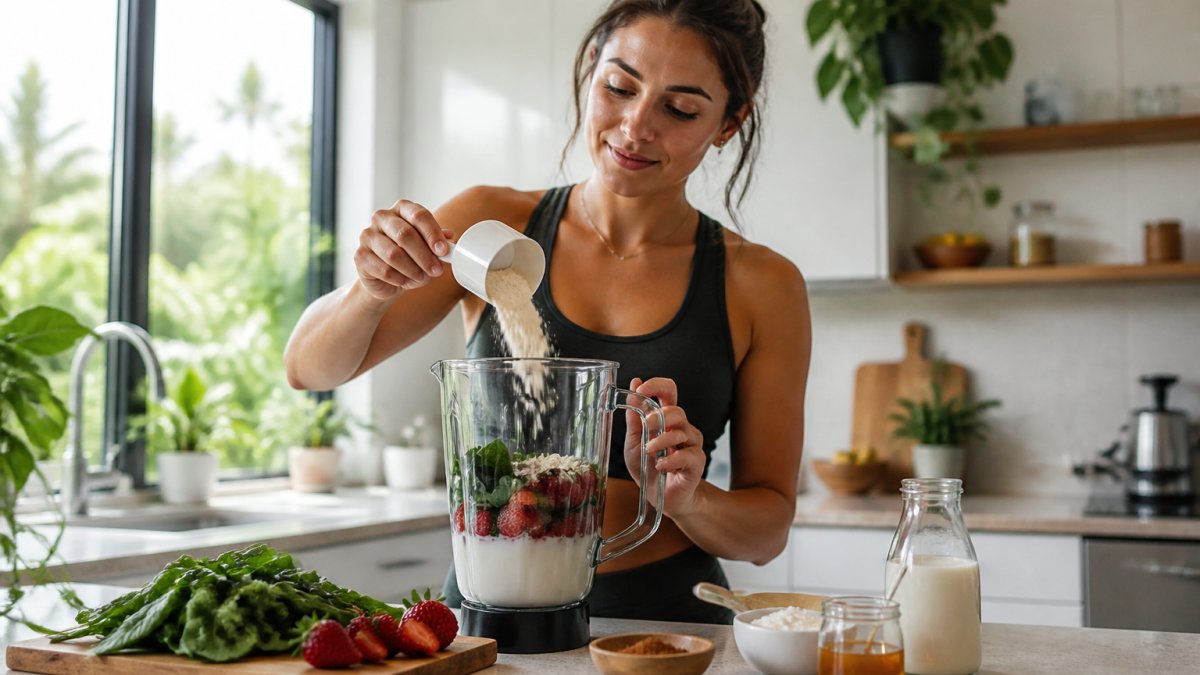
Start with fat and salt. A pinch of salt suppresses bitterness more effectively than extra sweetener. A spoon of nut butter or a splash of coconut milk adds richness that coats the tongue and mutes harsh notes.
Then layer flavor. Vanilla extract, cinnamon, cocoa powder, and instant coffee all mask stevia's finish well. Frozen banana and berries add natural sweetness plus texture. If you want a clean boost, a small amount of monk fruit extract lets you dial sweetness up without reintroducing the bitterness.
Here is a simple masking formula to try:
- One scoop protein powder
- 8 oz almond milk or water
- Pinch of sea salt
- Half teaspoon vanilla extract or cocoa powder
- Half a frozen banana or a handful of berries
- Optional: a few drops of monk fruit extract
Blend, taste, and adjust. Most people find they need far less added sweetener once salt and fat are in the mix.
Reading the Label: How to Spot Hidden Sweeteners and Verify Clean Claims
Label transparency is where most "clean" protein powders quietly fail. The front of the tub says "no artificial sweeteners." The back panel tells a more complicated story.
Unflavored Whey Isolate Protein - 1lb of Pure Nutrition for Your Fitness Goals →
Sweeteners hide under several names. Stevia appears as steviol glycosides, Reb A, Reb M, or simply "stevia leaf extract." Sugar alcohols show up as erythritol, xylitol, maltitol, or sorbitol. Artificial sweeteners masquerade as sucralose, aspartame, acesulfame potassium, or saccharin. And "natural flavors" can contain any of the above without naming them.
To verify a clean claim, do three things:
- Read the full ingredient list, not the front panel
- Check the serving size against the sweetener position in the list
- Look for third-party testing or certification
A sweetener listed first or second means it is a major component. If that sweetener is a sugar alcohol, expect a larger digestive load per serving.
USDA FoodData Central database
Unflavored Protein Powder: The Ultimate Blank Canvas for Natural Sweeteners
Unflavored protein powder is the simplest solution to the stevia problem: it has no sweetener to complain about. You control everything that goes into the shaker.
Unflavored whey isolate is the most versatile option. It mixes into smoothies, oatmeal, coffee, and baked goods without fighting whatever flavor you are building. Because it has no added sweetener, there is no aftertaste to mask in the first place. Our Unflavored Whey Isolate Protein delivers 25g of protein per serving with 0g added sugar and only 1g of carbohydrates, and it includes digestive enzymes like papain and protease to support absorption. At $22.71 for a 1lb tub, it is a low-risk way to test whether unflavored works for you.
If you want flavor without stevia, our Whey Protein Isolate Cappuccino offers 25g of protein and 0g added sugar with a rich coffee profile. And for days when you need more than protein, the Essential Meal Replacement Protein in chocolate or vanilla milkshake brings 24g of protein, 5g of fiber, and seven protein sources, all with zero added sugar.


The trade-off with unflavored is real: you have to do the work. But for anyone sensitive to stevia, that control is the whole point.
Matching Sweeteners to Your Training Goals
The right sweetener depends on what you are training for, not on which one is trending. A marathoner and a powerlifter have different priorities in the shaker.
Endurance athletes usually want fast-absorbing protein with minimal digestive load, since they are often drinking shakes around long efforts. Monk fruit and allulose fit here because they add sweetness without the gut risk of sugar alcohols. If you are fueling long sessions, a small amount of real sugar can also help, since your body needs quick carbohydrate anyway.
Strength and hypertrophy athletes tend to prioritize total protein and recovery. Sweetener choice matters less, so pick the one you will actually drink consistently. A shake you dread is a shake you skip.
For keto-friendly or low-carb goals, allulose and monk fruit keep carbs near zero. For clean-label shoppers, fewer ingredients beats a long blend every time.
- Endurance: monk fruit, allulose, small amounts of cane sugar
- Strength training: any well-tolerated option; consistency wins
- Keto or low-carb: allulose, monk fruit, erythritol in moderation
- Sensitive gut: monk fruit and allulose over sugar alcohols
Frequently Asked Questions
What is the cleanest protein powder without stevia?
The cleanest option is an unflavored protein powder with no added sweeteners at all, letting you control what goes in. Look for a short ingredient list with no artificial flavors, sugar alcohols, or non-nutritive sweeteners. VitaFaze's Unflavored Whey Isolate Protein contains 25g of protein per serving, 0g added sugar, and only 1g of carbohydrates, with digestive enzymes like Papain and Protease. You can then add natural alternatives to stevia yourself, such as monk fruit extract or a small amount of coconut sugar.
Are monk fruit and erythritol better alternatives to stevia?
Monk fruit extract and erythritol are popular natural alternatives to stevia because they have a different sweetness profile. Monk fruit brings sweetness without the bitter notes some people taste with steviol glycosides. Erythritol is a sugar alcohol with almost no calories and a high digestive tolerance for most people. However, some individuals experience bloating with erythritol when consumed in large amounts. A blend of monk fruit and allulose often provides a more rounded taste without the cooling effect of erythritol alone.
Why do some people experience an aftertaste with stevia?
The aftertaste comes from steviol glycosides, the compounds that give stevia its sweetness. Some people perceive a bitter or licorice-like note because of genetic differences in taste receptors. This is more noticeable in unflavored or lightly flavored protein powders where there's nothing to mask it. If you're sensitive to stevia, trying monk fruit extract, allulose, or a sweetener blend can eliminate that aftertaste while keeping your shake low-calorie and keto-friendly.
How to identify hidden artificial sweeteners in protein powder labels?
Scan the ingredients list for terms like sucralose, acesulfame potassium, aspartame, and saccharin. These are artificial sweeteners often listed under 'natural and artificial flavors.' Also watch for sugar alcohols ending in '-ol' such as maltitol, sorbitol, and xylitol, which can cause digestive discomfort. If the label says 'no added sugar' but tastes very sweet, check for non-nutritive sweeteners. Look for products with label transparency that clearly state 0g added sugar and list every ingredient.
Can I use natural sweeteners in a meal replacement protein shake?
Yes. If you start with an unflavored or lightly sweetened meal replacement, you can add your own natural sweetener. VitaFaze's Essential Meal Replacement Protein in chocolate or vanilla milkshake flavor contains 24g of protein, 5g of fiber, and 0g added sugar, so it's already clean. You can enhance it with a dash of cinnamon, a teaspoon of monk fruit extract, or half a frozen banana for natural sweetness. This gives you control over the sweetness profile and avoids artificial aftertaste.