



Plant-Based Nutrition for Ultra Endurance: 2026 Guide
Table of Contents
- Why Plant-Based Nutrition for Ultra Endurance Works
- How to Increase Endurance Naturally with Plant Foods
- Plant-Based Recovery Supplements for Athletes: What Actually Helps
- Reducing Inflammation and Oxidative Stress After Long Runs
- Optimizing Carbohydrate Intake and Glycogen Stores
- Protein Requirements and Fat-Free Mass for Ultra Runners
- Gut Health and GI Distress: The Ultra Runner's Hidden Challenge
- Vegan Ultra Runner Meal Plan: A Sample Training Week
- Conclusion: Building Your Plant-Based Ultra Endurance Strategy
- Frequently Asked Questions
Last Updated: October 2, 2026
Why Plant-Based Nutrition for Ultra Endurance Works
Plant-based nutrition for ultra endurance works because it fuels the two systems that decide whether you finish strong or fade at mile 60: fat oxidation and glycogen management.
Ultra running is a fueling problem before it is a fitness problem. Most athletes don't bonk because their legs quit; they bonk because their gut quits absorbing, or because they ran out of glycogen with no fat-adaptation to fall back on. A plant-forward approach addresses both, provided you get the details right.
Below, we'll show you exactly how to structure carbohydrate intake, protein timing, and recovery nutrition so the diet supports the training instead of fighting it.
Metabolic Efficiency and Fat Oxidation
Metabolic efficiency is the body's ability to shift between carbohydrate and fat as fuel sources without a performance drop. Ultra runners who train this shift can spare glycogen stores for later in a race, which is often the difference between a strong finish and a death march.
The mechanism is straightforward: mitochondria adapt to burn fat more readily when training volume is high and carbohydrate availability during easy sessions is moderate.
What most guides miss is that fat adaptation is not a substitute for carbohydrate. It's a supplement to it. Runners who try to go fully fat-adapted for a 100-mile race usually underperform because the intensity required on climbs demands glycogen. The goal is flexibility, not replacement.
How to Increase Endurance Naturally with Plant Foods
You increase endurance naturally with plant foods by prioritizing four things: carbohydrate timing, nitrate-rich vegetables, hydration with electrolytes, and consistent protein intake across the day. None of these require exotic ingredients.
Here's the practical sequence:
- Build your plate around whole-food carbohydrates. Oats, sweet potatoes, brown rice, quinoa, and legumes should anchor most meals.
- Add nitrate-rich vegetables daily. Beets, spinach, arugula, and celery support nitric oxide production, which improves blood flow and oxygen delivery to working muscle.
- Time carbohydrate around training. Eat 1-3 hours before long runs and within 30-60 minutes after.
- Hydrate with electrolytes, not just water. Sodium, potassium, and magnesium matter more the longer you go.
- Keep protein steady. Spread plant-based protein across 3-4 meals rather than loading it all at dinner.

Plant-Based Recovery Supplements for Athletes: What Actually Helps
Plant-based recovery supplements for athletes help most when they close a specific gap the diet isn't covering, not when they're stacked indiscriminately. But before you reach for a powder, the bigger recovery question for a plant-based ultra runner is whether you're eating enough, and that's the topic most guides skip entirely.
Energy Availability and RED-S Risk
Relative Energy Deficiency in Sport (RED-S) is a syndrome that develops when an athlete's energy intake doesn't cover the cost of training plus basic body functions.
The downstream effects are not subtle. Low energy availability suppresses thyroid function, disrupts sex hormones (low testosterone in men, menstrual dysfunction in women), weakens bone density, and blunts the training adaptation you're chasing.
Warning signs worth taking seriously:
- Persistent fatigue that doesn't resolve with rest days
- Loss of menstrual cycle in female athletes, or low libido and morning erections in male athletes
- Recurrent stress injuries, especially in the foot or shin
- Cold hands and feet, low resting heart rate that keeps dropping
- Obsessive food tracking or rigid food rules
If two or more of these are present during a heavy training block, the fix is not a supplement. It's more calories, more carbohydrate, and a conversation with a sports medicine physician or registered dietitian who works with endurance athletes.
The Supplements That Actually Close Gaps
Once energy availability is handled, three supplements earn their place for most plant-based ultra runners.
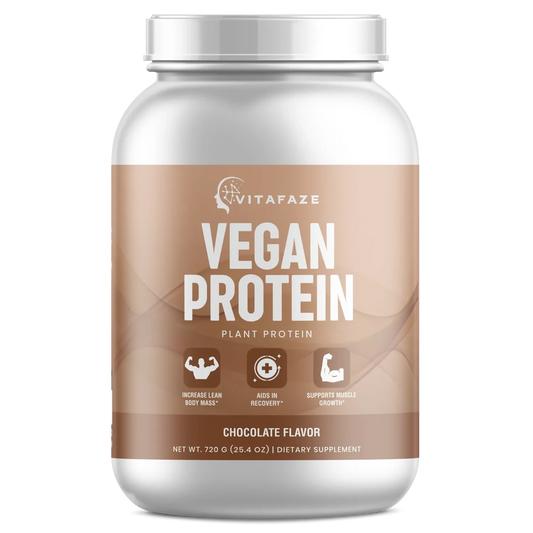
Plant protein is the workhorse. A shake with 22 grams of complete plant protein, like VitaFaze's Vegan Protein Chocolate Shake, covers the post-run window when solid food is unappealing. It blends organic pea and brown rice protein for a fuller amino acid profile than either source alone, and at 140 calories with 3g of sugar, it's easy to tolerate even when appetite is suppressed.

Glutamine is the one most runners overlook. It supports gut health and immune function during heavy training blocks, which matters because the gut is often the first system to fail in an ultra. A micronized glutamine powder mixes cleanly into a carbohydrate drink.
Vegan Protein Chocolate Shake - 1.5lb Pure Plant-Based Nutrition for Optimal →
Beetroot sits in a different category. It's a blood-flow supplement, not a recovery one, and it earns its place in the training week rather than the post-run window.
| Supplement | Primary Role | When to Take | Best For |
|---|---|---|---|
| Plant protein | Muscle repair, amino acid delivery | Within 60 min post-run | Daily recovery |
| Glutamine | Gut and immune support | With carbohydrate drink | High-volume blocks |
| Beetroot | Blood flow, oxygen delivery | 2-3 hours pre-session | Hard efforts, races |
| Electrolytes | Hydration, cramp prevention | During and after long runs | Sessions over 90 min |
Micronutrients That Matter Most
Three micronutrients deserve specific attention on a plant-based ultra plan, because deficiency is common and symptoms overlap with overtraining.
- Vitamin B12: Not present in plant foods in reliable amounts. Fortified foods and a supplement are non-negotiable. Typical maintenance dose is 25-100 mcg daily or 1,000-2,000 mcg weekly. Deficiency causes fatigue, numbness, and anemia that can mimic overtraining.
- Iron: Plant iron (non-heme) is absorbed less efficiently than animal iron. Pair iron-rich foods (lentils, spinach, tofu, fortified cereals) with vitamin C, and avoid taking them with coffee or tea. Get ferritin checked at least once a year, low ferritin without anemia still tanks endurance performance.
- Zinc: Plant foods contain phytates that reduce zinc absorption. Whole grains, legumes, nuts, and seeds are good sources; soaking and sprouting improve bioavailability. Deficiency shows up as poor recovery and impaired immune function.
Reducing Inflammation and Oxidative Stress After Long Runs
Long runs generate oxidative stress, and the body's response to that stress is inflammation. Some inflammation is the signal that drives training adaptation. Too much, sustained over weeks, is what breaks athletes down.
Plant-based diets are naturally high in antioxidants and polyphenols, which is one reason they show up so often in recovery discussions. The catch is that more antioxidants is not automatically better. High-dose antioxidant supplementation can blunt the very adaptation signal you're training for.
The smarter approach is food-first: berries, dark leafy greens, tart cherries, turmeric, and green tea deliver polyphenols in doses the body handles well. Save concentrated antioxidant supplements for periods of unusually heavy load or when your diet has been poor for several days.
Antioxidants, Polyphenols, and Recovery Kinetics
Recovery kinetics describes how quickly your body returns to baseline after a hard effort, measured through markers like creatine kinase, heart rate variability, and subjective soreness. Faster kinetics means you can absorb more training.
Polyphenols from whole plant foods appear to support this process by moderating the inflammatory response rather than suppressing it. Tart cherry and beetroot are the two most studied in endurance contexts, and both fit easily into a plant-based framework.
Optimizing Carbohydrate Intake and Glycogen Stores
Glycogen stores are the limiting factor in most ultra performances, and plant-based athletes have a structural advantage here: whole-food carbohydrate sources are the backbone of the diet. The work is in the timing and the quantity.
For training days under 90 minutes, normal meals usually cover glycogen needs. For long runs and back-to-back sessions, you need deliberate loading. A common approach is 8-10 grams of carbohydrate per kilogram of body weight in the 24-36 hours before a key session, drawn from rice, potatoes, oats, fruit, and legumes.
During the race itself, the target most athletes work toward is 60-90 grams of carbohydrate per hour, though tolerance varies widely and needs to be trained. This is where gut training becomes as important as leg training.
| Session Type | Carb Target | Timing | Example Foods |
|---|---|---|---|
| Easy run (<60 min) | Normal meals | No special timing | Oats, fruit, rice |
| Long run (2-4 hrs) | 30-60g/hr during | Start at 45 min | Dates, bananas, gels |
| Ultra race day | 60-90g/hr during | Start at 30 min | Gels, chews, real food |
| Post-long run | 1-1.2g/kg | Within 60 min | Rice, potato, shake |
Protein Requirements and Fat-Free Mass for Ultra Runners
Ultra runners need more protein than most people assume, and the target is higher than the general population guidance. A reasonable range is 1.4-1.8 grams per kilogram of body weight per day, with higher intakes during peak training blocks or when recovering from injury.
Fat-free mass is everything in your body that isn't fat: muscle, bone, organs, and water. Preserving it matters in ultra running because muscle is metabolically expensive to rebuild and losing it during a heavy block leaves you weaker for the next one.
The plant-based athlete's challenge is not quantity but quality. Most plant proteins are lower in one or more essential amino acids, so the fix is variety and volume rather than a single perfect source.
Plant-Based Protein and Amino Acid Profile
Amino acid profile refers to the specific mix of essential amino acids a protein source delivers. Complete proteins contain all nine in adequate amounts; incomplete proteins are low in one or more.
The practical answer for plant-based athletes is combining sources. Pea and rice together cover each other's gaps, which is why blends are so common. Soy, quinoa, buckwheat, and hemp are also strong standalone options. If you eat a varied diet across the day, you're almost certainly hitting a complete profile without thinking about it.
Gut Health and GI Distress: The Ultra Runner's Hidden Challenge
Gastrointestinal distress is the most common reason ultra runners DNF, and it's the problem most training plans ignore entirely. The gut is a trainable system, but only if you train it.
Two things drive GI distress in ultras: reduced blood flow to the gut during prolonged effort, and mechanical irritation from concentrated carbohydrate intake. Both get worse as intensity and duration climb.
Vegan Protein Chocolate Shake - 1.5lb Pure Plant-Based Nutrition for Optimal →
Plant-based diets can help or hurt here, depending on execution. High fiber intake is great for daily gut health but a liability on race day. The fix is to reduce fiber in the 24-48 hours before a race while keeping it high during normal training.
Fermented foods, cooked vegetables, and adequate glutamine intake support the gut lining during heavy training. Many athletes find that a glutamine supplement, like VitaFaze's Glutamine Powder, helps during peak weeks when gut symptoms tend to appear.
Vegan Ultra Runner Meal Plan: A Sample Training Week
A vegan ultra runner meal plan should be built around three anchors: carbohydrate at every meal, protein spread across the day, and nitrate-rich vegetables before hard sessions. The sample below is a template, not a prescription. Adjust portions to your body weight and training load.
Before the week itself, the framing that matters most: a training-week meal plan and a race-week meal plan are not the same plan. During normal training you want high fiber, high volume, and lots of whole foods. In the 24-48 hours before a race, you deliberately strip fiber down while keeping carbohydrate high. Most plant-based ultra runners who blow up on race day did everything right in training and then ate the same way on race morning.
Race-Week Fiber Taper
The single highest-leverage adjustment in a plant-based ultra plan is the fiber taper. Fiber is your friend for 50 weeks of the year and a liability in the 48 hours before a 50-miler. Here's how most experienced plant-based ultra runners structure it:
- 7 days out: Normal high-fiber eating. Keep legumes, cruciferous vegetables, and whole grains in every meal.
- 3 days out: Cut raw vegetables, beans, and bran. Shift carbohydrate toward white rice, white bread, peeled potatoes, and low-fiber fruit like bananas.
- 24 hours out: Low-residue, high-carb. White rice, white pasta, refined bread, fruit juice, and smoothies with no seeds or skins. Roughly 8-10 grams of carbohydrate per kilogram of body weight across the day.
- Race morning: 2-3 hours before the gun, 1-2 grams of carbohydrate per kilogram from low-fiber sources, white rice, a banana, a sports drink, or a plain bagel with jam. Skip the chia, skip the flax, skip the kale smoothie.
Portable Plant-Based Race-Day Fueling
This is where most plant-based ultra guides stop at "eat plants" and leave you to figure out the logistics. The reality is that ultra aid stations are built around gels, chews, and broth, and a lot of that is not plant-based or not well tolerated. You need a plan that fits in a vest pocket.
A workable portable kit for a 50-miler:
- Homemade date-and-salt gels: Blend medjool dates with a pinch of sodium citrate and enough water to make a paste. Roughly 25 grams of carbohydrate per 1-ounce flask. Cheaper than commercial gels and easier on the gut for many athletes.
- Boiled salted potatoes: A classic ultra food that happens to be vegan and low-fiber. Quarter them, salt them, carry them in a zip bag. About 30 grams of carbohydrate per medium potato.
- White rice cakes: Cook short-grain rice, press into a pan, cut into squares, wrap in foil. Roughly 20-25 grams of carbohydrate per square.
- Bananas and dried mango: Easy carbohydrate, easy on the stomach, available at most aid stations.
- Electrolyte capsules or a concentrated electrolyte mix: Sodium losses in a hot 50-miler can run 800-1,500 mg per hour for heavy sweaters. Water alone will not replace that.
Aim for 60-90 grams of carbohydrate per hour during the race, and train that intake on long runs so your gut adapts. The gut is a trainable system, the athletes who tolerate 90 grams per hour in a race are the ones who practiced 90 grams per hour in training.
Electrolyte Balance on a Plant-Based Plan
Plant-based diets are naturally high in potassium and magnesium, which is a genuine advantage. Sodium is the gap. Whole plant foods are low in sodium compared to processed foods and animal products, so a plant-based ultra runner often needs to add sodium deliberately, especially in heat or at altitude.
A practical starting point is 300-600 mg of sodium per hour for moderate conditions, scaling up toward 800-1,500 mg per hour for heavy sweaters in heat. Test this in training, not on race day. Signs you're underdoing sodium include headache, nausea, and a swollen, puffy feeling in the hands, not just cramping.
Pair hard sessions with a beetroot supplement like VitaFaze's Organic Beetroot taken 2-3 hours beforehand. On long training days, an electrolyte formula such as ION + Select Electrolyte Formula covers sodium losses that water alone won't replace.


Conclusion: Building Your Plant-Based Ultra Endurance Strategy
The tension in plant-based ultra fueling is real: the same high-fiber, high-volume diet that supports long-term health can sabotage race day if you don't periodize it. The athletes who get this right treat their nutrition the way they treat their training, with a base phase, a build phase, and a taper.
VitaFaze builds supplements for exactly this problem. Our plant-powered line focuses on clean, bioavailable ingredients that close the gaps a whole-food diet sometimes leaves, from faster muscle recovery to improved endurance to enhanced cellular energy. If you're ready to stop guessing whether your fueling plan is working, shop all products and build the strategy your training deserves.
Frequently Asked Questions
Do vegan athletes recover faster than meat-eating athletes?
Recovery speed depends on total nutrient intake, not just diet type. Plant-based nutrition for ultra endurance can support faster recovery when it delivers enough protein, carbohydrates, and anti-inflammatory compounds. A 2021 review in Nutrients found that plant-based diets rich in polyphenols and antioxidants may reduce oxidative stress and systemic inflammation, both of which slow physiological recovery. The key is hitting your protein and calorie targets consistently. Vegan athletes who under-eat or skimp on plant-based protein often report slower recovery, not because of the diet itself but because of gaps in energy availability.
What are the best plant-based protein sources for ultra endurance?
Combining complementary plant proteins gives you a complete amino acid profile. Organic pea protein and brown rice protein together cover all essential amino acids, which is why many plant-based recovery supplements for athletes use this blend. Other strong options include hemp, soy, and quinoa. For ultra endurance specifically, aim for 1.2 to 1.6 grams of protein per kilogram of body weight daily. A chocolate vegan protein shake with 22 grams of organic pea and brown rice protein per scoop can help close the gap after long training sessions without adding heavy fiber that triggers gastrointestinal distress.
Can a plant-based diet provide enough energy for 50+ mile races?
Yes, provided you periodize carbohydrate intake and practice race-day fueling. Ultra-endurance events demand 60 to 90 grams of carbohydrates per hour during racing, and plant foods like dates, sweet potatoes, oats, and sports drinks deliver that easily. The bigger challenge is training your gut to absorb that volume without GI distress. Start practicing your race-day nutrition 12 to 16 weeks out, gradually increasing carbohydrate density during long runs. Whole-food nutrition combined with electrolytes and a hydration strategy keeps energy availability stable across 50-plus miles.
How do plant-based diets impact inflammation in endurance athletes?
Plant-based diets tend to be higher in antioxidants, polyphenols, and fiber, all of which support a balanced inflammatory response after heavy training. A 2019 study in Sports Medicine found that vegan and vegetarian athletes often show lower markers of systemic inflammation compared to omnivores. However, intense ultra-endurance training generates oxidative stress regardless of diet. The benefit comes from consistently eating colorful plant foods, plant-derived nitrates from beetroot, and omega-3 sources like flax and walnuts. These support recovery kinetics and help manage soreness between sessions.