



Pea Protein vs Soy Protein for Recovery: 2026 Guide
Table of Contents
- Pea Protein vs Soy Protein for Recovery: A Quick Comparison
- The Amino Acid Profile of Pea vs Soy Protein
- Digestibility of Vegan Protein Powders: Which Is Easier on Your Gut?
- Hormonal Impact: Do Phytoestrogens in Soy Affect Recovery?
- Gut Microbiome Interaction: How Pea and Soy Protein Shape Digestion
- Mixing and Solubility: Taste, Texture, and Real-World Use
- Best Plant-Based Protein for Muscle Repair: Matching Protein to Your Training
- How to Choose Your Recovery Protein: A Decision Framework
- Frequently Asked Questions
Last Updated: September 24, 2026
Pea Protein vs Soy Protein for Recovery: A Quick Comparison
Pea protein vs soy protein for recovery comes down to one practical question: which one gets amino acids into your muscles faster after hard training? Both are complete plant proteins, but they differ in leucine content, digestibility, and how they sit in your gut. This guide from VitaFaze breaks down the science so you can pick the right one for your training.
Here is the short answer. Soy protein has a slight edge on leucine and absorption speed. Pea protein wins on gut comfort and allergen safety. For most plant-based athletes, the smartest move is combining both, or choosing a blend that already does it for you.
| Factor | Pea Protein | Soy Protein | Edge |
|---|---|---|---|
| Leucine per serving | Moderate | Higher | Soy |
| Digestibility | Gentle, low FODMAP | Fast, occasional bloat | Pea |
| Allergen risk | Very low | Soy is a top allergen | Pea |
| Complete protein | Yes, with rice | Yes, alone | Soy |
| Taste and texture | Earthy, thicker | Neutral, thinner | Soy |
| Best for | Sensitive stomachs | Faster absorption | Depends |
The Amino Acid Profile of Pea vs Soy Protein
The amino acid profile of pea vs soy protein is where soy pulls ahead on paper, and the gap comes down to two specific amino acids: leucine and methionine. Soy delivers more leucine per gram and stands alone as a complete protein. Pea runs light on methionine, which is why most pea powders blend in a complementary grain like rice to fill the gap.
Soy's profile closely mirrors animal protein. It carries all nine essential amino acids in amounts your body can use for muscle repair, and it does so without a blending partner. Pea is close, but its limiting amino acid is methionine, with cysteine also running low. That is not a dealbreaker, it just means the pairing matters.
Leucine Content and Muscle Protein Synthesis
Leucine is the amino acid that flips the switch on muscle protein synthesis (MPS), the process your body uses to rebuild damaged muscle fibers after training. Soy protein generally contains more leucine per gram than pea protein, which matters when you are chasing the threshold that triggers an anabolic response.
Here is the practical version. Most research points to roughly 2.5 to 3 grams of leucine in a single serving as the trigger for MPS in healthy adults. Soy gets you there with less total powder because its leucine density is higher. Pea needs a slightly larger scoop, or a blend, to reach the same trigger. That is the mechanism behind the common advice to pair pea with rice, the blend raises the leucine and methionine floor so a normal serving clears the threshold.
That said, total daily protein still matters more than any single serving. Examine.com's research on protein intake and muscle notes that hitting your daily target consistently beats obsessing over one amino acid at one meal.
Complete Protein Status and PDCAAS/DIAAS Scores
Complete protein status means a food supplies all nine essential amino acids in adequate amounts. Soy earns that label on its own. Pea does too, but only when paired with a complementary grain like rice.
The two scoring systems that matter are PDCAAS (Protein Digestibility Corrected Amino Acid Score) and DIAAS (Digestible Indispensable Amino Acid Score). Both rate a protein on how well it supplies essential amino acids and how much of it your body actually absorbs. Soy scores near the top of both scales, it is one of the few plant proteins that regulators and researchers treat as a high-quality, standalone protein. Pea scores well but trails soy, largely because of that methionine gap and slightly lower digestibility.
A blend of pea and rice protein closes the gap. Rice is high in methionine and low in lysine; pea is the reverse. Together they cover each other's weak spots, which is exactly why so many plant-based recovery powders combine the two instead of relying on pea alone.
Digestibility of Vegan Protein Powders: Which Is Easier on Your Gut?
The digestibility of vegan protein powders often decides which one you actually stick with. Soy absorbs faster. Pea tends to cause less bloating and gas. If your stomach is sensitive, pea usually wins the day-to-day battle, and the reason comes down to specific carbohydrates, not the protein itself.

Soy protein isolate digests quickly, which is great for post-workout timing. The tradeoff is that some people report bloating or heaviness, especially with concentrates that still carry oligosaccharides, fermentable carbs that gut bacteria break down into gas. Pea protein isolate skips most of those fermentable carbs, so it lands gentler.
Gastrointestinal Tolerance and Absorption Rates
Gastrointestinal tolerance is about how your gut reacts, not just how fast protein hits your bloodstream. Pea isolate is naturally low in FODMAPs, the fermentable carbs that trigger gas in sensitive people. That makes it a common pick for anyone who has struggled with whey or soy.
Absorption rate is a different measure. Soy edges ahead here, moving amino acids into circulation a bit faster. For recovery, that speed can matter in the first hour after training, when your muscles are most receptive to amino acids.
The honest trade-off: faster absorption with soy, calmer digestion with pea. NIH overview of protein digestion and absorption explains how protein breakdown and uptake work, which helps you see why isolate forms beat concentrates for gut comfort.
Vegan Protein Chocolate Shake - 1.5lb →
How Pea and Soy Protein Shape Your Gut Microbiome
Here is the angle most comparisons skip: pea and soy protein each feed your gut bacteria differently, and that shapes how you feel day to day. Your gut microbiome is the community of bacteria living in your digestive tract. It influences digestion, immunity, and even how well you absorb nutrients. The protein you choose nudges that community over time.
Soy contains fibers and isoflavones that some gut bacteria convert into active forms, which is one reason soy gets attention in nutrition research. Pea brings its own fiber, which feeds a broad range of bacteria without the FODMAP load that bothers sensitive stomachs. For athletes with a reactive gut, that difference is often the deciding factor between a shake you tolerate and one you dread.
A common pattern is that people who react badly to soy concentrates do fine with pea isolate, and people who find pea gritty or heavy do fine with soy isolate. The base protein matters, but so does the form.
Hormonal Impact: Do Phytoestrogens in Soy Affect Recovery?
Phytoestrogens in soy do not blunt recovery or muscle growth in any meaningful way for most people. This is one of the most persistent myths in plant-based fitness. The isoflavones in soy are far weaker than human estrogen and have not been shown to lower testosterone at normal dietary intakes.
Here is what the concern actually rests on. Soy contains isoflavones, a class of phytoestrogens that can weakly bind estrogen receptors. In theory, that sounds alarming. In practice, research on men eating soy protein consistently finds no drop in testosterone or strength gains.
Where this gets misread: people confuse a weak plant compound with a hormone. They are not the same thing. If you are training hard and eating enough total protein, soy will not hold back your recovery.
That said, anyone with a specific medical reason to limit soy should follow their doctor's guidance, not a gym rumor. For everyone else, the phytoestrogen fear is overblown.
Gut Microbiome Interaction: How Pea and Soy Protein Shape Digestion
Pea and soy protein each feed your gut bacteria differently, and that shapes how you feel day to day. Soy's fibers and isoflavones can support certain beneficial bacteria. Pea's fiber and resistant starch tend to ferment more gently for people who react to soy.
Your gut microbiome is the community of bacteria living in your digestive tract. It influences digestion, immunity, and even how well you absorb nutrients. The protein you choose nudges that community over time.
Soy contains compounds that some gut bacteria convert into active forms, which is one reason soy gets attention in nutrition research. Pea brings its own fiber, which feeds a broad range of bacteria without the FODMAP load that bothers sensitive stomachs.
The takeaway is simple. If soy leaves you gassy, pea is the friendlier daily choice. If soy sits well, its interaction with gut bacteria is a mild bonus, not a problem.
Mixing and Solubility: Taste, Texture, and Real-World Use
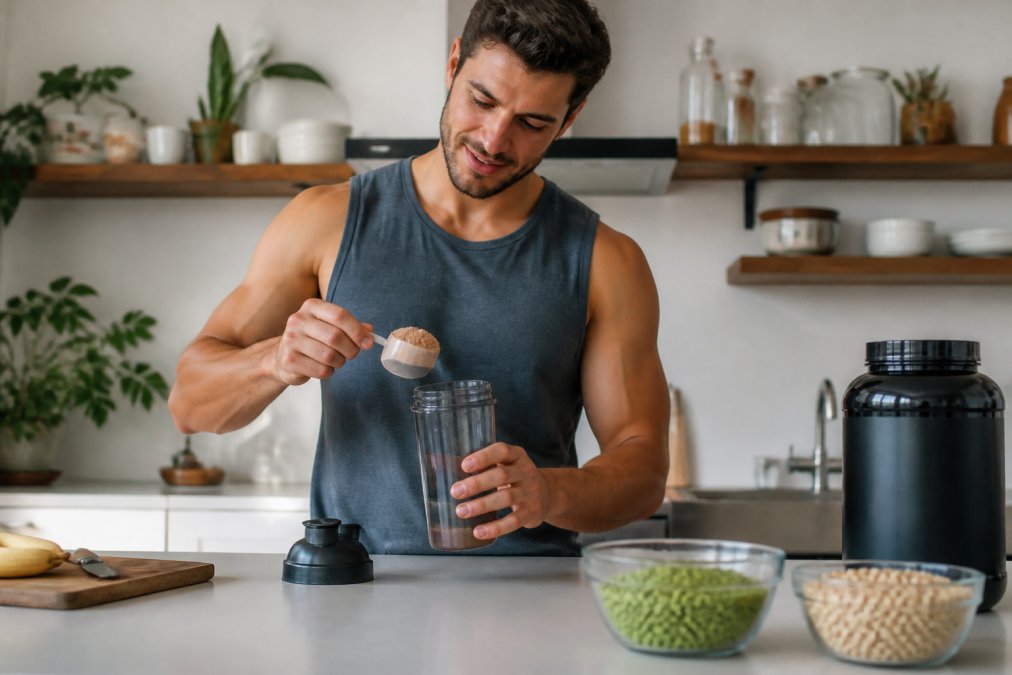
Solubility and taste decide whether you actually drink your recovery shake. Soy protein mixes thinner and tastes more neutral. Pea protein is thicker, can taste earthy, and clumps more if you just stir it. A shaker ball or blender fixes most of that.
Grittiness is the most common complaint with pea. Modern isolates have cut it down a lot, but pea still runs thicker than soy. If texture bothers you, soy or a pea-rice blend will go down easier.
Flavor is where brands earn their keep. A well-made chocolate or vanilla covers the earthy notes that plain pea carries. That is why unflavored pea is the hardest to drink and flavored blends are the easiest.
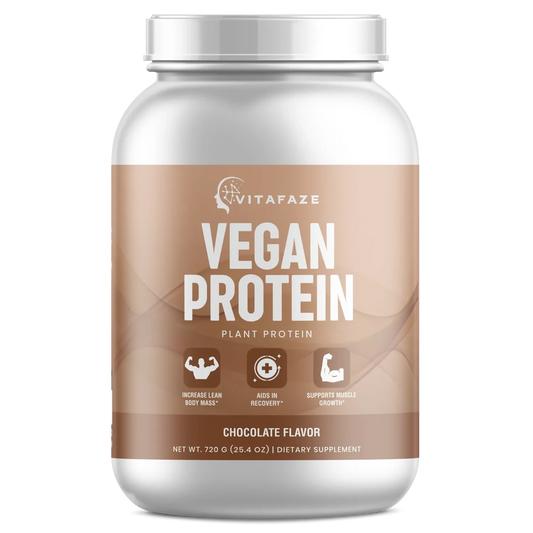
For a plant-based option built around this exact problem, the Vegan Protein Chocolate Shake combines organic pea protein with organic brown rice protein for a complete amino acid profile, 22 grams of protein per scoop, and a smooth chocolate taste that masks pea's natural earthiness. It also brings 4 grams of fiber and 155 mg of calcium per serving.
Vegan Protein Chocolate Shake - 1.5lb →
Best Plant-Based Protein for Muscle Repair: Matching Protein to Your Training
The best plant-based protein for muscle repair depends on your training style, not a single winner. Strength athletes chasing hypertrophy lean toward soy or a pea-rice blend for the leucine hit. Endurance athletes often do better with pea for gut comfort on long training blocks.
Muscle hypertrophy is the growth of muscle fibers in response to training and adequate protein. Recovery is the process of repairing the damage that training causes. Both depend on getting enough complete protein, spread across the day, not just after a workout.
Strength training creates a strong anabolic signal, so hitting leucine and total protein matters more. Endurance training stresses the gut and drains glycogen, so a protein that digests easily and pairs with carbs usually serves you better.
Short-Term vs. Long-Term Recovery Outcomes
Short-term recovery is what you feel in the 24 to 48 hours after a session, soreness and stiffness. Long-term recovery is how you adapt over weeks and months, building strength and endurance without breaking down.
Most protein debates focus only on the short term. The bigger wins come from consistency. Hitting your daily protein target with either pea or soy, day after day, drives long-term adaptation more than any single post-workout choice.
For a convenient daily option, the Essential Meal Replacement Protein delivers 24 grams of protein from seven diverse sources, plus 5 grams of fiber and digestive enzymes for absorption. It is a practical way to keep protein steady on busy training days without added sugar.

How to Choose Your Recovery Protein: A Decision Framework
Use this framework to pick in under a minute. Answer the two questions that actually change the decision: how does your gut handle soy, and how fast do you need amino acids after training?
- Gut check: If soy causes bloating or gas, choose pea or a pea-rice blend.
- Speed check: If you want the fastest absorption window, soy has the edge.
- Leucine check: If you are chasing hypertrophy, prioritize soy or a blend that hits the leucine threshold.
- Allergen check: If you avoid soy for allergy reasons, pea is the safer base.
- Taste check: If texture and flavor decide whether you drink it, pick a flavored blend over plain pea.
- Consistency check: Whichever you will actually drink daily wins, because total protein beats perfect timing.
If you want one product that covers the blend approach, the Vegan Protein Chocolate Shake pairs pea and rice protein for a complete profile at $32.97.
USDA FoodData Central nutrient database is a useful tool for checking the amino acid and protein content of foods if you want to verify any of this for yourself.
Choosing a recovery protein is not about crowning one winner. It is about matching the powder to your gut, your training, and your daily consistency. Pea protein brings gut comfort and allergen safety, while soy brings a leucine and absorption edge. VitaFaze builds plant-powered options for athletes who want both: clean, bioavailable ingredients, targeted recovery support, and flavors you will actually look forward to drinking. Explore the Vegan Protein Chocolate Shake and the Essential Meal Replacement Protein to fuel faster recovery and steadier endurance. Get started with VitaFaze and give your plant-based training the recovery it deserves.
Frequently Asked Questions
Is soy or pea protein better for muscle growth?
Soy protein has a higher leucine content and a more complete amino acid profile, which supports muscle protein synthesis effectively. Pea protein is lower in methionine but can be blended with rice protein to fill that gap. For muscle growth, soy edges ahead slightly on paper, but total daily protein intake and training consistency matter more than the specific source. VitaFaze's Vegan Protein Chocolate Shake combines organic pea and brown rice protein to deliver a complete amino acid profile with 22 grams of plant-based protein per scoop.
Which protein is best for recovery after intense training?
Both pea and soy protein support recovery, but soy's higher digestibility score and leucine content give it a slight edge for fast post-exercise nutrition. Pea protein offers strong gastrointestinal tolerance, which matters if you're sensitive to soy or experience bloating. The best choice depends on your digestion, allergen concerns, and whether you need a hypoallergenic option. A blend like VitaFaze's Vegan Protein Chocolate Shake provides 22g of complete plant-based protein to support muscle repair without dairy or soy.
Is pea protein easier to digest than soy protein?
Pea protein is generally easier on the stomach for people with soy sensitivities, and its hypoallergenic profile makes it a common choice for those with digestive issues. Soy protein has a high PDCAAS score and absorbs well, but some athletes report bloating. The digestibility of vegan protein powders varies by brand and processing method. Look for products with added digestive enzymes, like VitaFaze's Essential Meal Replacement Protein, which includes enzymes and 5g of fiber to support nutrient absorption.
Are there hormonal concerns with soy protein for athletes?
Research on soy's phytoestrogens, specifically isoflavones, shows no consistent negative impact on testosterone or muscle hypertrophy in athletes. Most studies find that soy protein supports strength training adaptations similarly to whey. If you're still concerned, pea protein is a phytoestrogen-free alternative. Both options can support recovery when total protein intake is adequate. VitaFaze offers plant-based options that avoid soy entirely if that's your preference.
Does pea protein provide a complete amino acid profile for recovery?
Pea protein is low in methionine, so it's not a complete protein on its own. However, blending pea with brown rice protein creates a complete amino acid profile with all nine essential amino acids. VitaFaze's Vegan Protein Chocolate Shake uses this exact combination, delivering 22g of complete plant-based protein per scoop. This blend supports muscle protein synthesis and recovery without relying on animal-derived ingredients.