



How to Choose Omega-3 Supplements for Vegans
Last Updated: November 1, 2026
Quick Summary
Vegans need omega-3 supplements because plant foods supply ALA but rarely enough of the long-chain EPA and DHA your heart, brain, and eyes use. A vegan omega-3 supplement made from algae oil delivers EPA and DHA directly, skipping the limited ALA conversion. Aim for at least 250 mg of combined EPA and DHA daily.
- Your body converts only a small share of ALA into EPA and an even smaller share into DHA.
- The National Academies set ALA Adequate Intake at 1.6 g daily for men and 1.1 g for women.
- Many clinicians use 250-500 mg per day of combined EPA and DHA as a maintenance target.
- Check the supplement facts panel for EPA and DHA per serving, not total oil weight.
- Talk to a clinician before high doses near 1 g per day if you take blood thinners.
Table of Contents
- Why Vegans Need Omega-3 Supplements
- The Gap Between Plant Diets and Long-Chain Omega-3
- ALA to EPA and DHA Conversion: Why Plant Sources Fall Short
- Vegan Omega-3 Food Sources: What They Cover and What They Miss
- Algae Oil EPA DHA: The Plant-Based Route to Long-Chain Omega-3
- How Much Omega-3 Should Vegans Take?
- How to Read an Omega-3 Label and Pick a Supplement
- Safety, Medication Interactions, and Omega-6 Balance
- How to Assess Your Omega-3 Status
- Choosing Your Vegan Omega-3 Supplement
- Frequently Asked Questions
Why Vegans Need Omega-3 Supplements
Omega-3 fatty acids are essential fats your body cannot make on its own. That single fact explains why vegans need omega-3 supplements: a plant-based diet can supply the short-chain omega-3 called ALA, but it rarely supplies enough of the long-chain forms, EPA and DHA, that your heart, brain, and eyes actually use.
The gap is real, and it is not a knock on vegan eating. It is a matter of chemistry and food sources.
Here is the part most guides skip: "getting omega-3" and "getting enough EPA and DHA" are two different goals. Plant foods handle the first. They struggle with the second. Below, we break down what vegan omega-3 sources actually deliver, how much you need, and how to pick a supplement that earns its place in your routine.
The Gap Between Plant Diets and Long-Chain Omega-3
Omega-3 status on a vegan diet depends on which omega-3 you mean. ALA is easy to get from plants. EPA and DHA are the long-chain omega-3 fats tied to heart, brain, and eye health, and they come mostly from marine sources.
Plants do not make EPA or DHA directly. They make ALA, and your body must convert ALA into EPA and DHA. That conversion is slow and limited. Many vegans and vegetarians therefore run lower blood levels of long-chain omega-3 than people who eat fish (ncbi.nlm.nih.gov).
This is the core tension. A vegan diet can be nutrient-adequate in almost every respect and still leave a quiet gap in marine omega-3. Supplements exist to close that specific gap, not to fix a "bad" diet.
ALA to EPA and DHA Conversion: Why Plant Sources Fall Short
ALA to EPA and DHA conversion is the bottleneck. Your body turns only a small share of the ALA you eat into EPA, and an even smaller share into DHA (Can adults adequately convert alpha-linolenic acid (18:3n-3) to eicosapentaenoic acid...). The rest is used for energy or stored.
Several things make conversion worse:
- Genetics: enzyme activity varies a lot from person to person.
- Omega-6 intake: high omega-6 from processed oils competes for the same enzymes.
- Age and sex: conversion tends to be less efficient with age.
- Overall diet quality: a calorie-restricted diet or low fat intake can limit it further.
So a handful of flaxseed does not equal a serving of algae oil. It supplies the raw material, but your body decides how much long-chain omega-3 you actually get. That variability is why relying on ALA alone is a gamble for anyone who wants reliable EPA and DHA.
Vegan Omega-3 Food Sources: What They Cover and What They Miss
Plant-based omega-3 food sources are excellent for ALA. They are weak on EPA and DHA. That is the honest summary.
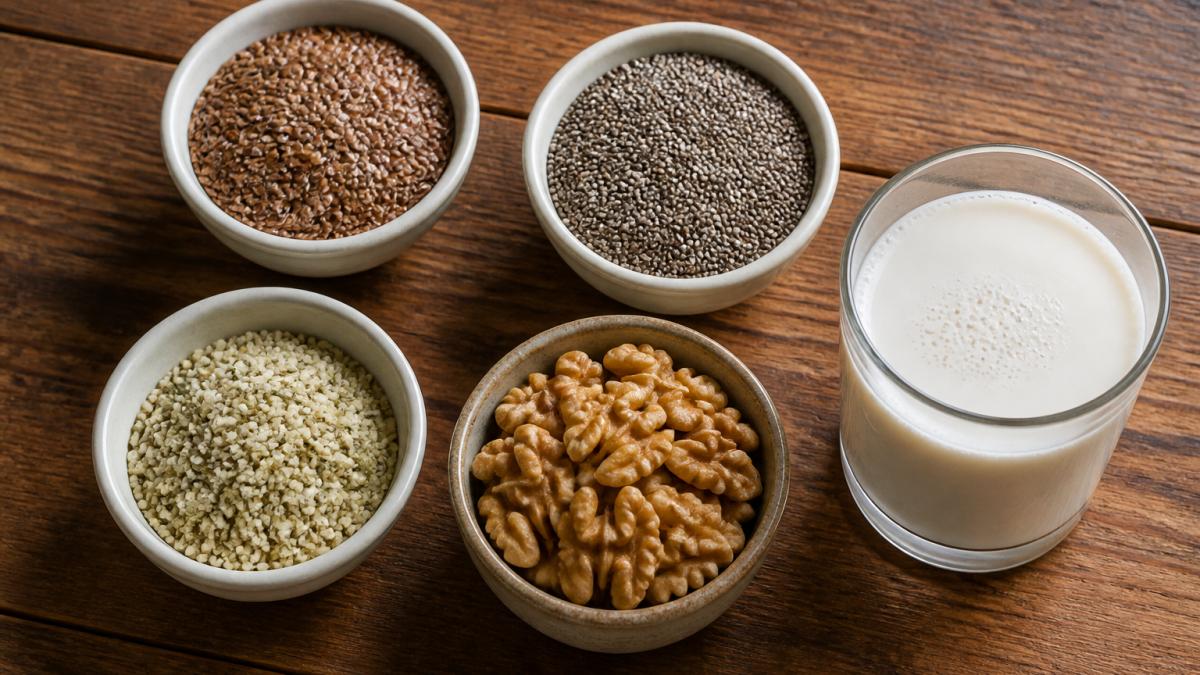
Strong ALA sources include:
- Flaxseed and flaxseed oil
- Chia seeds
- Hemp seeds
- Walnuts
- Rapeseed oil
These foods earn a place in any plant-based diet. They support general health and add fiber and healthy fats. What they do not do is reliably raise your EPA and DHA. For that, you need a direct plant-based source of long-chain omega-3.
Algae Oil EPA DHA: The Plant-Based Route to Long-Chain Omega-3
Algae oil EPA DHA solves the conversion problem by skipping it. Algae oil is made from microalgae, the same organism that fish eat to build their own omega-3. It delivers EPA and DHA directly, so your body does not have to convert anything.
This makes algae oil the cleanest vegan answer to the long-chain gap. It is a true marine omega-3 source without the fish.
One note on label reading: algae oil products vary in how much EPA and DHA they actually contain. Check the back panel, not the front. The front says "omega-3." The back tells you whether it is worth your money.
How Much Omega-3 Should Vegans Take?
How much omega-3 should vegans take? There is no single official vegan-specific number, but there are well-established reference points you can build a personal target around. The key is to separate ALA from EPA and DHA, because they have different roles and different intake recommendations.
ALA: The Established Adequate Intake
The National Academies (through the Institute of Medicine) set an Adequate Intake (AI) for ALA at 1.6 g per day for adult men and 1.1 g per day for adult women. This is the amount associated with general essential-fatty-acid needs, and it is easy to hit with flaxseed, chia, hemp, walnuts, and rapeseed oil. Meeting the ALA AI is necessary but not sufficient for long-chain omega-3 status.
EPA and DHA: No Official U.S. AI, but Clear Reference Ranges
The National Academies have not set a formal Recommended Dietary Allowance for EPA and DHA. However, several authoritative bodies converge on practical ranges:
- The 2015-2020 Dietary Guidelines for Americans recommend eating about 8 ounces of seafood per week (roughly 250 mg per day of EPA and DHA combined) for the general population.
- The American Heart Association recommends two servings of fish per week for heart-healthy eating, which lands in a similar range.
- Many clinicians and researchers use 250-500 mg per day of combined EPA and DHA as a reasonable maintenance target for healthy adults.
Life Stages and Higher-Needs Groups
One dose does not fit everyone. Consider these adjustments:
-
Pregnancy and breastfeeding: Pregnant and breastfeeding vegans should discuss omega-3 dosing with their clinician.
-
Older adults: Conversion efficiency tends to decline with age, so older vegans may benefit from the higher end of the EPA+DHA range.
-
People with cardiovascular risk factors: Higher omega-3 doses for people with heart disease should be decided with a clinician.
Consistency Beats Dose Size
Pick a daily EPA+DHA amount you will actually keep up with, and take it with a meal that contains some fat to support absorption.
If you are still deciding whether a supplement is necessary at all, the next section on label reading and product selection will help you compare options on the numbers that matter.
Here are the intake reference points the article cites for ALA and EPA plus DHA.
| Item | Value | Note |
|---|---|---|
| ALA Adequate Intake, adult men | 1.6 g per day | Set by the National Academies |
| ALA Adequate Intake, adult women | 1.1 g per day | Set by the National Academies |
| Dietary Guidelines for Americans | About 8 ounces seafood per week | Roughly 250 mg per day EPA and DHA combined |
| American Heart Association | Two servings of fish per week | Similar range for heart-healthy eating |
| Common clinical maintenance target | 250-500 mg per day | Combined EPA and DHA for healthy adults |
| Higher-dose caution threshold | About 1 g per day or more | Clinician-guided; interactions more relevant |
How to Read an Omega-3 Label and Pick a Supplement
Read the supplement facts panel first. The front label is marketing; the panel is the truth. Look for the EPA and DHA amounts per serving, not the total "fish oil" or "algae oil" weight.
What to Check Before You Buy
- EPA and DHA per serving listed clearly, not just total oil
- Source named (algae oil for a vegan product)
- Third-party testing for heavy metals and impurities
- Vegan certification if that matters to you
- Serving size you can stick with daily
- Freshness date and storage instructions
If you are still comparing formats, it helps to browse the gummy supplement range to see how a daily gummy fits into your routine before you commit.
Watch out: a label that lists a big total oil number but a tiny EPA and DHA number is mostly filler. You are paying for the long-chain fats, so that is the number that counts.
Safety, Medication Interactions, and Omega-6 Balance
Still, a few concrete cautions matter, especially if you take medication or manage a health condition.
Common Side Effects
Most side effects are mild and digestive:
- Fishy aftertaste or burping, less common with algae oil than fish oil, but possible.
- Mild nausea or loose stools, especially when starting a higher dose.
- Headache in some people at higher intakes.
Taking your supplement with a meal that contains some fat usually reduces these effects. If side effects persist, lower the dose or split it across two meals.
Medication Interactions to Discuss With a Clinician
Talk to your doctor or pharmacist before starting an omega-3 supplement if you:
- Take anticoagulants or antiplatelet medications, for example, warfarin, apixaban, rivaroxaban, clopidogrel, or daily aspirin. High-dose EPA+DHA can have a mild blood-thinning effect, and the combination should be managed by a clinician.
- Have a bleeding disorder or a history of easy bruising or bleeding.
- Have surgery scheduled, some clinicians recommend pausing high-dose omega-3 supplements for a period before elective procedures; follow your surgeon's instructions.
- Take blood pressure medication, omega-3 can modestly lower blood pressure, so the combination may need monitoring.
- Take medication for high triglycerides, prescription omega-3 products are used for this purpose, and combining them with supplements should be coordinated with your prescriber.
This is not a reason to avoid omega-3. It is a reason to have the conversation, especially at doses above about 1 g per day of combined EPA+DHA.
Food vs. High-Dose Supplements
The safety picture differs by dose. Higher doses, roughly 1 g per day or more, are where medication interactions and bleeding risk become more relevant, and those doses should be clinician-guided.
Omega-6 Balance: Keep It Reasonable, Not Extreme
Omega-6 balance matters, but the goal is not to eliminate omega-6. Omega-6 fats are essential, and the real issue is the overall dietary pattern. Many U.S. diets are heavy on omega-6 from refined seed oils and processed foods, which can crowd out omega-3-rich foods.
A reasonable approach:
- Favor whole foods, nuts, seeds, whole grains, vegetables, and legumes, over heavily processed foods.
- Use flaxseed, chia, hemp, walnuts, and rapeseed oil as your main fat sources where possible.
- Keep a steady daily omega-3 intake rather than trying to "correct" a high omega-6 intake with a single large dose.
The bigger lever for most vegans is simply getting enough direct EPA and DHA from algae oil.
If you are mapping your overall nutrient gaps, it also helps to review guidance on the best vegan iron and B12 supplements, since those are the other nutrients plant-based eaters most often watch.
How to Assess Your Omega-3 Status
You cannot feel low omega-3 status directly, so testing is the honest way to know. An omega-3 blood test measures the fatty acid profile of your red blood cells and reports your omega-3 index.
A simple self-check can guide you:
- Do you eat oily fish? If not, your long-chain intake depends on algae oil or conversion.
- Do you rely only on flax and chia? Conversion may be limiting you.
- Do you train hard and recover slowly? Long-chain omega-3 supports recovery and inflammation control.
If you want certainty, ask your clinician about an omega-3 index test. It turns guesswork into a number you can track. Skeptical about plant-based supplements in general? It helps to understand whether plant based supplements are effective before you build a stack.
Choosing Your Vegan Omega-3 Supplement
The right vegan omega-3 supplement delivers EPA and DHA directly, is tested for purity, and fits a daily habit you will keep. That is the whole checklist. Everything else is detail.
A few final decisions to make:
- Algae oil vs. ALA foods: use both. Foods for general nutrition, algae oil for reliable long-chain omega-3.
- Dose: pick a daily EPA plus DHA total you can maintain.
- Format: capsules, softgels, or gummies, whichever you will actually take.
When you are ready to buy, you can shop the Omega 3, 6, 9 Gummies to see a plant-friendly option built for daily use.

The hardest part of vegan nutrition is not cutting out animal products. It is closing the quiet gaps that a plant-based diet can leave behind, and long-chain omega-3 is one of the most common. VitaFaze builds plant-powered formulas to help you close those gaps without compromising your values. Our products focus on clean, bioavailable ingredients, targeted performance support, and formulas made for plant-based athletes. Get started with VitaFaze and give your recovery and endurance the nutritional backup they deserve.
Frequently Asked Questions
Do vegans need omega-3 supplements?
Most vegans benefit from one. Plant foods supply alpha-linolenic acid (ALA) from flaxseed, chia, hemp, and walnuts, but the body converts only a small share of ALA into EPA and DHA.
Is algae oil a good vegan source of EPA and DHA?
Yes. Algae oil is made from microalgae, the same organisms fish get their omega-3 from, so it delivers preformed EPA and DHA rather than ALA your body has to convert. Look for a supplement that states the EPA and DHA amounts per serving on the label, not just total oil weight, and check that it is third-party tested for heavy metals and impurities.
How much omega-3 should vegans take each day?
Read the supplement facts panel to confirm the EPA plus DHA total per serving, and discuss dosing with a doctor. Read the supplement facts panel to confirm the EPA plus DHA total per serving, not the total fish or algae oil weight.
Can the body convert plant-based ALA into EPA and DHA?
It can, but not efficiently. Only a small share of ALA converts to EPA and an even smaller share to DHA, and conversion varies between people.
