



How to Reduce Soreness After Training: A Recovery Guide
Table of Contents
- How to Reduce Soreness After Training: A Step-by-Step Recovery Plan
- A Practical Recovery Timeline: What to Do in the First 72 Hours
- Step 1: Move Gently - Active Recovery vs Passive Recovery
- Step 2: Stretch, Foam Roll, and Use Self-Massage Techniques
- Step 3: Apply Heat or Cold Therapy the Right Way
- Step 4: Hydrate and Eat for Recovery: Fluids, Protein, and Anti-Inflammatory Foods
- Step 5: Prioritize Sleep and Rest for Muscle Repair
- Best Supplements for Muscle Recovery: What the Evidence Says
- Is It Okay to Workout With Sore Muscles? How to Tell Soreness From Injury
- How to Prevent Soreness: Training Load, Progression, and Consistency
- Frequently Asked Questions
Last Updated: October 6, 2026
How to Reduce Soreness After Training: A Step-by-Step Recovery Plan
Soreness after training is a normal response to hard work, and the fastest way to reduce soreness is a mix of gentle movement, sleep, fluids, and smart nutrition.
This guide breaks recovery into five simple steps you can start today.
Below, we will show you exactly how to reduce soreness after training, hour by hour, over the first three days. We will also cover how to tell normal soreness from a real injury, which supplements are worth your money, and how to prevent soreness before it starts.
Why Soreness Happens and When It Peaks
Soreness happens because hard training creates tiny tears in muscle fibers, and your body responds with inflammation and repair. That repair process is what makes you stronger.
The soreness you feel a day or two later has a name: delayed-onset muscle soreness, or DOMS. It usually shows up 12 to 24 hours after training, peaks between 24 and 72 hours, and fades within a few days.
A few things make DOMS worse:
- New exercises your muscles have not seen before
- A sudden jump in volume or intensity
- Lots of lowering motions, like downhill running or slow squats
- Long gaps between training sessions
What most guides miss is that DOMS is not caused by lactic acid. Lactate clears your system within about an hour of finishing. The soreness you feel the next day is inflammation and tissue repair, which is why ice baths and "flushing" tricks do not fix it.
A Practical Recovery Timeline: What to Do in the First 72 Hours
Recovery is not one action. It is a sequence, and the timing matters more than most people think.
| Time Window | What To Do | Why It Helps |
|---|---|---|
| 0-2 hours | Fluids, carbs, protein, light walk | Refills energy stores, starts repair |
| 2-24 hours | Sleep, gentle movement, protein at meals | Peak repair window |
| 24-72 hours | Foam rolling, stretching, heat, light sessions | Eases stiffness at its worst |
| 72+ hours | Return to normal training | Soreness should be fading |
The first 24 hours matter most. Get fluids and protein in early, then let sleep do the heavy lifting.
Step 1: Move Gently - Active Recovery vs Passive Recovery
Active recovery means light movement that raises blood flow without adding training stress. Passive recovery means doing nothing: rest, sleep, and time.
Both have a place, but active recovery usually wins for soreness relief. A slow walk, an easy spin on a bike, or a gentle swim all push blood through tired muscles without tearing them further.
Here is how to pick:
- Sore but able to move normally? Go for a 20-30 minute walk or easy cycle.
- Very sore and stiff? Choose passive rest plus light stretching.
- Sore after a race or a very hard session? Take one full rest day, then move gently.
The rule is simple: movement should feel easier at the end than at the start. If it does not, you did too much.
Step 2: Stretch, Foam Roll, and Use Self-Massage Techniques
Stretching and self-massage will not erase soreness, but they reliably take the edge off stiffness. The goal is comfort, not intensity.
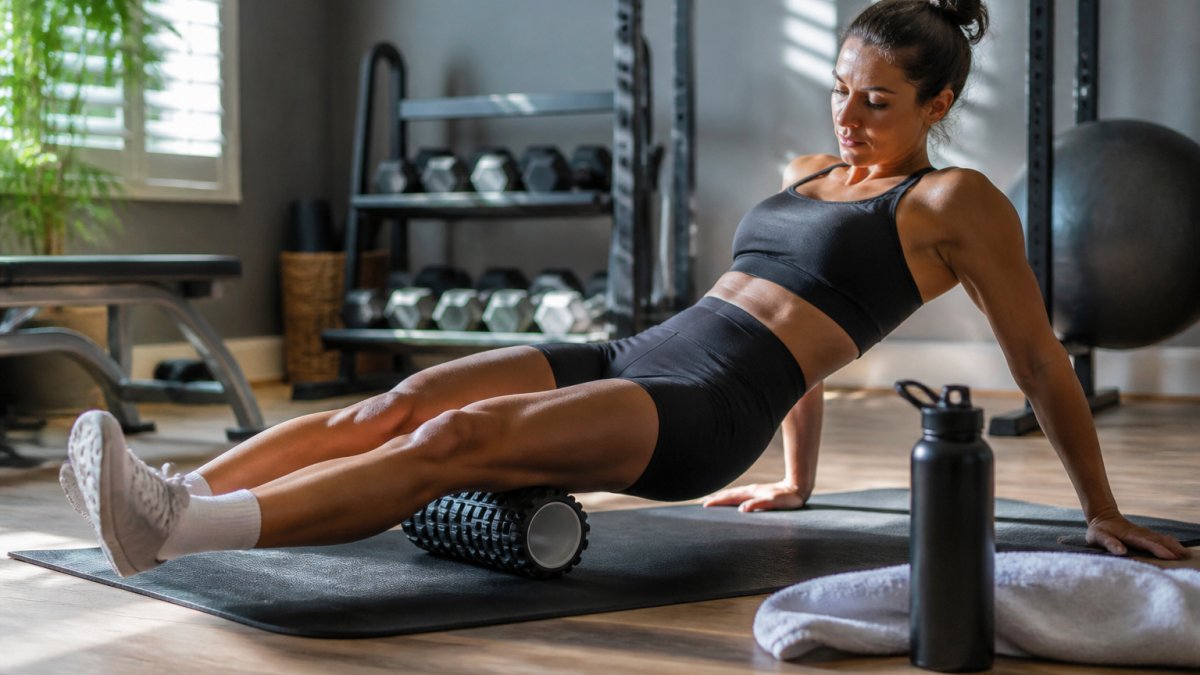
Keep these guidelines in mind:
- Hold static stretches for 30-45 seconds, two rounds per muscle group
- Roll slowly over sore areas, pausing on tight spots for 20-30 seconds
- Use a percussive massage gun on low settings, not high
- Stop if pain sharpens. Soreness should feel dull, not stabbing
A common mistake is treating foam rolling like a workout. Hard rolling on inflamed tissue can make soreness worse for a day. Keep the pressure moderate and the pace slow.
For targeted relief on a specific area, a topical option like our CBD Muscle Cream can be massaged into the muscle after rolling. It combines 500mg of potent CBD for effective pain relief with a refreshing peppermint scent for a cooling effect, and it absorbs quickly without leaving any sticky residue.

Step 3: Apply Heat or Cold Therapy the Right Way
Heat and cold are the two most misunderstood tools in recovery. They both change how soreness feels, but neither one repairs muscle. Understanding what each actually does will keep you from using the wrong one at the wrong time.
What cold therapy does. Cold narrows blood vessels (vasoconstriction), slows nerve conduction, and reduces blood flow to the area. That is why it numbs pain and can limit swelling after an acute injury. The trade-off: that same reduced blood flow and blunted inflammation may also dampen some of the signaling your body uses to build new muscle. A common pattern is athletes who ice aggressively after every lifting session and then wonder why their gains stall.
What heat therapy does. Heat opens blood vessels (vasodilation), increases blood flow, and relaxes tight tissue. It feels good on stiff, achy muscles and can improve range of motion temporarily. What it does not do is speed tissue repair. Think of heat as a comfort tool, not a recovery accelerator.
Here is how to choose:
| Situation | Best Choice | Why |
|---|---|---|
| Acute strain, sprain, or a joint that is hot and swollen | Cold | Limits swelling and numbs sharp pain |
| Ordinary DOMS on days 2-3, muscles stiff but not swollen | Heat | Relaxes tight tissue, eases stiffness |
| Right after a hard lifting session, no injury | Skip both, or use brief cold only if pain is limiting | Aggressive cold may blunt adaptation signals |
| Chronic tightness between sessions | Heat before activity, light movement after | Prepares tissue without suppressing repair |
Practical rules:
- Ice for 10-15 minutes at a time, with a barrier between the cold pack and skin. Longer is not better and can cause tissue damage.
- Never ice a muscle for hours on end. Prolonged cold can blunt the repair signals you actually want.
- Use a warm bath, heating pad, or sauna for 10-20 minutes on days 2-3 when muscles feel stiff but not swollen.
- Do not use heat on a fresh injury or on an area that is swollen, hot, or bruised. Heat can worsen swelling.
- If you have poor circulation, diabetes, or nerve damage, be extra cautious with both and check with a clinician first.
A simple way to remember it: cold is for damage control, heat is for comfort. Neither one replaces sleep, food, and smart training load.
Step 4: Hydrate and Eat for Recovery: Fluids, Protein, and Anti-Inflammatory Foods
Fluids and food do more for soreness than any gadget. Muscle repair needs water, protein, and carbohydrates, and most athletes fall short on at least one.
Start with hydration. Sweat losses vary widely, so check your urine color: pale yellow means you are on track. If you train hard or long, replace electrolytes too, not just water.
Next, protein. Aim for a protein source within a couple of hours of training, and spread protein across the day. Plant-based athletes should pay extra attention here, since many plant proteins are lower in leucine, the amino acid that triggers muscle repair.
CBD Muscle Cream (4oz) 500mg →
Carbohydrates refill glycogen, the fuel your muscles burned. Do not skip them, even if your goal is fat loss.
Anti-inflammatory foods can help too:
- Colorful berries and cherries
- Fatty fish or algae-based omega-3s
- Turmeric with black pepper
- Leafy greens and citrus
Our Recovery Carb + Electrolyte Summer Punch delivers 24 grams of fast-digesting carbs plus four key electrolytes per scoop, which makes the post-session window easier to hit.

Step 5: Prioritize Sleep and Rest for Muscle Repair
Sleep is the single most underrated recovery tool. Most muscle repair happens while you sleep, and short sleep slows it down.
What to do:
- Aim for 7-9 hours per night
- Keep a consistent sleep and wake time
- Avoid heavy training within 2-3 hours of bed
- Keep the room cool and dark
If you are sore and sleeping five hours a night, no supplement will fix that. Fix sleep first.
Best Supplements for Muscle Recovery: What the Evidence Says
Most supplement lists treat every option as equally helpful. They are not. A more honest way to read the evidence is to split supplements into two groups: those that may temporarily ease how sore you feel, and those with a clearer role in supporting recovery and adaptation. That distinction is the one most guides skip.
Group 1: May ease discomfort (comfort, not repair)
- Tart cherry and other polyphenol-rich juices. Some athletes report less soreness and better perceived recovery. The effect is modest and inconsistent across studies, and much of the research uses concentrated juice, not the sweetened blends on most shelves.
- Turmeric (curcumin). May reduce soreness slightly. Absorption is poor on its own, which is why many formulas pair it with black pepper or a lipid carrier. Evidence is promising but not definitive.
- Omega-3s (fish or algae-based). May ease inflammation and soreness at higher doses. The trade-off: very high anti-inflammatory doses could theoretically blunt some training adaptations, so more is not automatically better.
Group 2: Supports recovery and adaptation
- Protein powder. Not a soreness fix, but it helps you hit daily protein targets, which matters for repair. Plant-based athletes should pay extra attention because many plant proteins are lower in leucine, the amino acid that triggers muscle protein synthesis. Blending sources (pea plus rice, for example) helps close that gap.
- Creatine monohydrate. One of the most studied sports supplements. It supports strength and between-session recovery. The commonly used maintenance dose is around 3-5 grams per day; a loading phase is optional, not required.
- Electrolytes. Replace sodium, potassium, magnesium, and calcium lost in sweat. Most useful for long or hot sessions, heavy sweaters, and anyone training more than about an hour.
What the evidence does not support
- Antioxidant megadoses (high-dose vitamin C and E). Once promoted for soreness, high doses may interfere with the adaptive stress response your muscles need. Food sources are fine; megadoses are not clearly helpful.
- Magnesium for soreness. Many people are low in magnesium, and correcting a deficiency matters for general health. But magnesium has not been shown to reliably reduce DOMS in people who already eat enough.
- "Flushing" or lactate-clearing products. Lactate clears on its own within about an hour of training. It is not the cause of next-day soreness, so products claiming to flush it are solving a problem that does not exist.
Safety, dosing, and interactions
- Follow the label dose unless a clinician tells you otherwise. More is not better, and some supplements cause GI upset, sleep disruption, or liver stress at high doses.
- Anti-inflammatory medications (like ibuprofen) can ease soreness, but routine use around training may blunt adaptation and carries GI and kidney risks with long-term use. Use them for genuine pain, not as a default recovery habit.
- Check for interactions. Omega-3s and turmeric can interact with blood thinners. Creatine is generally well tolerated but worth discussing if you have kidney concerns. If you take prescription drugs, are pregnant, or have a health condition, talk to a doctor before adding anything new.
- Buy from brands that use third-party testing. Contamination and mislabeling are real problems in this category.
You can browse the full range on our Shop All Products page.
Is It Okay to Workout With Sore Muscles? How to Tell Soreness From Injury
You can usually train with sore muscles, as long as the soreness is mild and even. Light sessions can even speed recovery.
Train if:
- Soreness is spread across both sides of the body
- It fades as you warm up
- You can complete normal daily movements without pain
Rest and get checked if you notice:
- Sharp or one-sided pain
- Swelling, bruising, or a joint that will not bear weight
- Dark urine, severe weakness, or extreme swelling after a very hard session
That last set of signs matters. Dark cola-colored urine, severe muscle pain, and weakness after extreme effort can point to rhabdomyolysis, a rare but serious condition where muscle breaks down faster than the body can handle. It needs urgent medical care. If you see those signs, stop training and seek help right away.
If you are unsure, treat it as an injury until proven otherwise. One missed session costs you nothing. A missed month costs you a lot.
How to Prevent Soreness: Training Load, Progression, and Consistency
The best way to reduce soreness is to prevent it in the first place, and that comes down to how you manage training load.
Three habits matter most:
- Progress slowly. Add volume or intensity in small steps, not big jumps.
- Stay consistent. Training three or four times a week beats one brutal session followed by six days off.
- Rotate muscle groups. Give each group 48 hours before you hit it hard again.
New exercises are the biggest trigger of DOMS, so introduce them at low volume first. If you are returning from a break, cut your usual load by about half for the first week.
Recovery is a skill, and like any skill, it improves with practice. The athletes who feel good week after week are not lucky. They manage load, sleep well, eat enough protein, and stay hydrated.
Frequently Asked Questions
Does active recovery actually help reduce muscle soreness?
Yes, active recovery such as light walking, cycling, or swimming can help reduce soreness by increasing blood flow and reducing stiffness. A 2021 review in Sports Medicine found that active recovery modestly reduces DOMS compared to complete rest. Aim for 10-20 minutes of low-intensity movement on sore days. This approach is more effective than passive recovery for most people, though it won't eliminate soreness entirely.
Is it okay to workout with sore muscles?
You can often train with mild to moderate soreness if the discomfort doesn't limit your range of motion or cause sharp pain. Stick to lighter sessions, different muscle groups, or low-impact activities like walking or cycling. If soreness is severe, lasts more than 72 hours, or comes with swelling or dark urine, rest and see a doctor. Distinguishing DOMS from injury is key: DOMS is symmetrical, dull, and eases with movement; injury pain is sharp and localized.
What are the best supplements for muscle recovery?
Evidence supports a few options: protein (especially plant-based blends) to support muscle protein synthesis, tart cherry juice for antioxidants, and electrolytes for hydration. Always check dosing and interactions, and choose third-party tested products. For plant-based athletes, a carb and electrolyte drink like VitaFaze Recovery Carb + Electrolyte can help replenish glycogen and fluids after training.
Why is day 2 soreness worse than day 1?
Delayed-onset muscle soreness (DOMS) typically peaks 24 to 72 hours after exercise, with day 2 often being the worst. This is due to the inflammatory response and muscle repair processes that ramp up in the hours following training. The exact mechanisms involve microdamage to muscle fibers and connective tissue. Soreness usually subsides within 3 to 5 days as recovery completes.
Soreness is a normal part of getting stronger, but it does not have to run your week. Build the habits above, and you will bounce back faster and train more consistently. When you want plant-based support that fits those habits, VitaFaze offers clean, bioavailable formulas designed for recovery, endurance, and cellular energy. Get started with VitaFaze and give your muscles the support they need to recover faster and perform again sooner.