



Buy Vegan Performance Nutrition Online: 2026 Guide
Table of Contents
- Why Vegan Performance Nutrition Matters for Plant-Based Athletes
- Essential Nutrients for Vegan Performance: What Your Body Actually Needs
- Best Tasting Plant Protein Powder Reviews: Finding Flavor That Works
- Cleanest Vegan Protein Powder for Athletes: Bioavailability and Ingredient Transparency
- How to Choose Vegan Sports Nutrition: A Framework for Smart Buying
- Complete Amino Acid Profiles and Muscle Protein Synthesis Support
- Recovery and Endurance: Targeted Vegan Performance Nutrition for Different Goals
- Budget-Friendly Plant-Based Performance Supplements Without Compromise
- Frequently Asked Questions
Last Updated: August 31, 2026
Why Vegan Performance Nutrition Matters for Plant-Based Athletes
Plant-based athletes face a unique challenge: assembling complete amino acid profiles and micronutrient density from non-animal sources requires intentional strategy. Your body needs all nine essential amino acids in the right ratios to support muscle protein synthesis, and most plant sources don't deliver them individually (peer-reviewed research).
Plant-based athletes often struggle with delayed recovery, persistent soreness, and difficulty maintaining lean muscle mass during strength cycles. The reason isn't willpower, it's that plant proteins are less bioavailable than animal proteins, and certain micronutrients (B12, iron, omega-3s) require supplementation or strategic sourcing.

At VitaFaze, we understand the unique needs of plant-based athletes. Vegan performance nutrition addresses a real biological constraint: plant proteins are less bioavailable than animal proteins, and certain micronutrients require supplementation.
Essential Nutrients for Vegan Performance: What Your Body Actually Needs
Your body needs nine essential amino acids in the right proportions. Most plant sources fall short individually: pea protein is low in methionine, rice protein is low in lysine, hemp protein is incomplete across multiple amino acids. Combined, they work.
Beyond amino acids, plant-based athletes need specific micronutrient support:
Vitamin B12: Doesn't occur naturally in plant foods. Deficiency causes persistent fatigue, difficulty concentrating, and elevated homocysteine levels (the NIH). You need 2,000 mcg weekly or 25-100 mcg daily. Cyanocobalamin is the most stable form.
Iron: Non-heme iron from plants absorbs at 2-20% efficiency versus 15-35% for heme iron from meat (peer-reviewed research). A plant-based athlete eating 18mg daily may absorb only 2-4mg. Pair iron-rich foods with vitamin C sources to increase absorption to 20-30%. Request a serum ferritin test to assess actual iron stores. Supplemental iron (18-27mg daily for women, 8mg for men) should be taken on an empty stomach for maximum absorption.
Omega-3 Fatty Acids (EPA and DHA): Crucial for inflammation reduction and recovery. Flax and chia contain ALA, which converts to EPA and DHA at roughly 5-10% efficiency. Most plant-based athletes need direct supplementation. Algae-based EPA/DHA supplements deliver 200-500mg combined per serving; aim for 200-300mg daily minimum.
Calcium: Plant sources often contain oxalates or phytates that reduce absorption. Aim for 1,000-1,200mg daily from food plus supplementation. Calcium citrate absorbs better than calcium carbonate.
Creatine: Modern creatine monohydrate is synthesized in the lab and vegan-friendly. Standard protocol: 5 grams daily. It takes 3-4 weeks to build up in your system; benefits include consistent strength and muscle gains.
Beta-Alanine: Supports endurance capacity by buffering lactate accumulation during high-intensity work. Standard dose is 3-5 grams daily, split into smaller doses to avoid tingling. Takes 2-4 weeks to build up; benefits are most noticeable in efforts lasting 1-4 minutes.
Essential Amino Acids (EAAs): Support muscle protein synthesis and reduce breakdown during training. If you're consuming adequate complete protein (0.7-1g per pound of body weight), standalone supplementation adds minimal benefit. For fasted training or extended endurance efforts (2+ hours), EAA blends provide measurable support. Standard dose: 5-10 grams per serving.
Allergy-Friendly Alternatives: If you have a soy allergy, pea protein isolate and rice protein concentrate are your primary complete-protein options. If you have gluten sensitivity, verify that oat-based products are certified gluten-free. If you have tree nut allergies, avoid almond flour or coconut-derived ingredients; pea and rice proteins are safe alternatives.
The practical reality: you can hit macronutrient targets on a plant-based diet, but you cannot hit all micronutrient and performance targets without supplementation. VitaFaze's vegan performance nutrition products address these gaps with complete amino acid profiles, targeted micronutrients, and ergogenic aids formulated for plant-based athletes.
Best Tasting Plant Protein Powder Reviews: Finding Flavor That Works
Taste is where most plant protein powders fail. They're gritty, chalky, and unpleasant. You can force them for two weeks; by week three, you're skipping shakes.
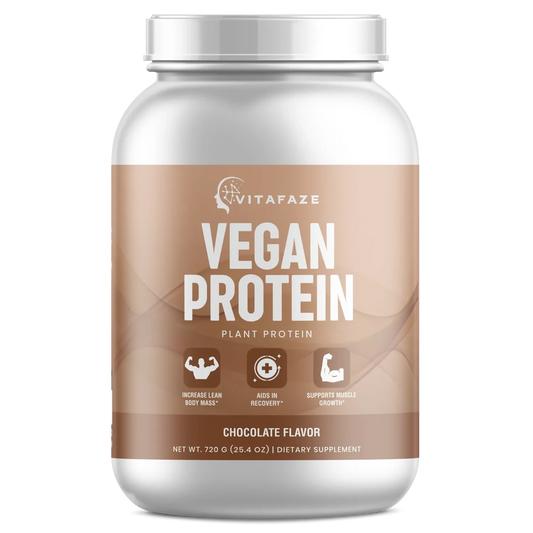
The Vegan Protein Chocolate Shake from VitaFaze solves this through ingredient selection. Twenty-two grams of plant-based protein per scoop comes from organic pea protein and organic brown rice protein, delivering a complete amino acid profile without metallic aftertaste. Chocolate flavor uses organic cocoa powder and organic chocolate flavor, not synthetic derivatives. Sweetening comes from organic erythritol and organic stevia (Reb-A), avoiding chemical aftertaste. Three grams of sugar per serving keeps it lean. Four grams of dietary fiber and organic acacia gum support digestion and prevent bloating. One hundred forty calories per scoop fits any macronutrient target. The product costs $32.97 for 1.5lb, roughly $1.50 per serving.

Cleanest Vegan Protein Powder for Athletes: Bioavailability and Ingredient Transparency
Bioavailability is the percentage of a nutrient your body actually absorbs and uses. A protein powder with impressive amino acid numbers means nothing if your digestive system can't break it down efficiently.
The cleanest vegan protein powders share three characteristics: single-source or dual-source plant proteins (not five-protein blends hiding inferior ingredients), minimal additives, and third-party testing for purity and potency. Single-source proteins are easier for your body to digest than complex blends.
VitaFaze's approach emphasizes ingredient density over ingredient count. The Vegan Protein Chocolate Shake uses organic pea protein and organic brown rice protein, two sources that complement each other's amino acid profiles. No fillers. No proprietary blends. Organic certification eliminates pesticide residues and synthetic additives that can impair nutrient absorption.
Bioavailability also depends on micronutrient cofactors. Calcium (155mg per serving) supports bone density during strength training. Digestive enzymes and fiber support gut health, which directly impacts amino acid absorption. Third-party testing verifies that what's on the label matches what's in the container, and that heavy metals, pathogens, and banned substances are absent. VitaFaze products are independently tested, ensuring verified purity.
How to Choose Vegan Sports Nutrition: A Framework for Smart Buying
Choosing vegan sports nutrition requires matching products to your specific goals, training phase, and budget, and understanding the timing windows where each supplement delivers maximum benefit.
Step 1: Define Your Primary Goal and Training Phase
Start by defining your primary goal: muscle building, endurance improvement, or general recovery. Muscle building prioritizes complete amino acid profiles, creatine, and sufficient total protein intake (0.7-1g per pound of body weight). Endurance prioritizes glycogen replenishment, electrolyte balance, and antioxidant intake to manage inflammation.
Step 2: Map Your Supplement Timing Protocol
Pre-Workout Window (30-60 minutes before training):
- Complete protein or EAA blend: 20-30g amino acids to prime muscle protein synthesis
- Creatine monohydrate: 5g daily (timing doesn't matter since it builds up over weeks)
- Beta-alanine: 1-2g if doing high-intensity intervals (1-4 minute efforts)
- Caffeine: 150-300mg, 30-45 minutes before training
- Carbohydrates: 20-40g fast-digesting carbs 30-45 minutes before training
Intra-Workout Window (during training, for efforts lasting 90+ minutes):
- Electrolytes + carbohydrates: 30-60g carbs per hour plus 500-1,000mg sodium per hour
- EAA or BCAA blend: 5-10g if training fasted or doing extended endurance (2+ hours)
- For training under 90 minutes, intra-workout supplementation is unnecessary if you've fueled properly pre-workout
Post-Workout Window (0-2 hours after training):
- Fast-digesting carbohydrates + protein: 20-40g carbs plus 20-40g complete protein within 30 minutes of finishing
- Electrolytes: If you sweated heavily, consume 500-1,000mg sodium within 30 minutes post-workout
- Creatine: If not consumed pre-workout, take your 5g daily dose post-workout with carbs and protein
General Daily Supplementation:
- Vitamin B12: 2,000 mcg weekly or 25-100 mcg daily
- Omega-3 (EPA/DHA): 200-300mg daily with a meal containing fat
- Iron: 18-27mg daily on an empty stomach, or with food if GI distress occurs
- Calcium: 500-600mg per dose, spaced 4+ hours apart
Step 3: Assess Your Current Diet for Gaps
Use a food tracking app for one week to identify which nutrients you're consistently under-consuming. B12, iron, omega-3s, and calcium are the usual suspects.
Step 4: Evaluate Your Training Frequency and Intensity
Three workouts per week requires different support than six. High-intensity interval training demands different electrolyte and carbohydrate replacement than steady-state endurance work.
Step 5: Build Your Stack by Training Type
| Training Type | Pre-Workout | Intra-Workout | Post-Workout | Daily |
|---|---|---|---|---|
| Strength (3-5x/week, 45-90 min) | Protein 20-30g + Creatine 5g + Carbs 20-40g | None needed | Carbs 30-40g + Protein 20-40g | B12, Omega-3, Iron (if deficient), Calcium |
| Endurance (2-3x/week, 90+ min) | Protein 20-30g + Carbs 30-40g + Beta-alanine 1-2g | Carbs 30-60g/hr + Electrolytes 500-1,000mg Na/hr | Carbs 40-60g + Protein 20-30g + Electrolytes | B12, Omega-3, Iron, Calcium, Creatine 5g |
| Mixed (4-5x/week, varied intensity) | Protein 20-30g + Carbs 20-40g + Creatine 5g | Electrolytes + Carbs (long sessions only) | Carbs 30-40g + Protein 20-40g | B12, Omega-3, Iron, Calcium |
| General Fitness (3x/week, 45-60 min) | Protein 20g + Carbs 20g | None needed | Protein 20-30g + Carbs 20-30g | B12, Omega-3, Iron, Calcium |
Step 6: Consider Bioavailability and Ingredient Quality
Premium formulations may cost more per serving but can deliver higher bioavailability.
The Practical Stack Example:
For a strength athlete training 4 days per week on a $100/month budget:
- Vegan Protein Chocolate Shake ($32.97): 22 servings, rotate with food protein
- Creatine Powder ($38.50): 5g daily, covers 200 days
- Recovery Carb + Electrolyte Lemon Lime ($19.52): 50 servings, 1 post-workout serving per session
- B12 supplement (budget option): $5-10 for 3-month supply
- Omega-3 algae supplement (budget option): $8-12 for monthly supply
Total: ~$105/month for complete supplementation.
Complete Amino Acid Profiles and Muscle Protein Synthesis Support
Muscle protein synthesis is the process your body uses to build and repair muscle tissue. It requires all nine essential amino acids in sufficient quantity and proper ratio. Pea protein is rich in arginine and lysine but low in methionine. Rice protein is rich in methionine but low in lysine. When combined, they create a complete amino acid profile that supports muscle protein synthesis as effectively as animal protein.
Leucine is the primary amino acid trigger for muscle protein synthesis. It activates mTOR signaling, which tells your body to build muscle. Complete plant-based protein powders compensate for bioavailability differences by using leucine-rich sources and optimizing the overall amino acid ratio.
Beyond protein, muscle protein synthesis requires adequate total daily protein (0.7-1g per pound of body weight for athletes), sufficient calories to support training, and recovery time between sessions. VitaFaze's Vegan Protein Chocolate Shake delivers high-protein content per serving with a complete amino acid profile and micronutrient support for efficient protein digestion and use.
Recovery and Endurance: Targeted Vegan Performance Nutrition for Different Goals
Recovery and endurance require different nutritional strategies. Recovery focuses on muscle repair, glycogen replenishment, and inflammation reduction. Endurance focuses on sustained energy, electrolyte balance, and metabolic efficiency.
For recovery, prioritize protein intake within 1-2 hours post-workout and fast-digesting carbohydrates to replenish glycogen stores. VitaFaze's Recovery Carb + Electrolyte formulations deliver 24 grams of fast-digesting carbohydrates from dextrose and glucose polymers, plus essential electrolytes (sodium, potassium, magnesium, calcium) that your body loses through sweat. The Summer Punch and Lemon Lime varieties cost $32.98 and $19.52 respectively. Fifty servings per container means consistent post-workout recovery support for 50 training sessions.


For endurance, prioritize electrolyte replacement during training and sustained carbohydrate availability. The ION + Select Electrolyte Formula ($35.98) includes beet root for cardiovascular support, acerola cherry for immune support, and coconut water powder for enhanced endurance.
Endurance athletes benefit from different macronutrient timing than strength athletes. During training lasting over 90 minutes, consume 30-60 grams of carbohydrates per hour to maintain blood glucose and glycogen availability. A distance runner doing a 2-hour long run benefits from consuming 60-120 grams of carbohydrates during the effort, then 1-1.2 grams per kilogram of body weight within 30 minutes post-run to maximize glycogen replenishment.
Strength athletes benefit from higher protein intake and creatine supplementation. The Pre-Workout w/Creatine ($49.97) delivers 5 grams of creatine monohydrate per serving. Creatine requires consistent daily intake to build up in your system and deliver performance benefits. The Power Surge Gummies ($32.99) offer a convenient alternative with 1,000mg of creatine monohydrate per gummy.
Budget-Friendly Plant-Based Performance Supplements Without Compromise
Cost matters. Many plant-based athletes assume they must choose between quality and affordability. This assumption is wrong.
The most cost-effective vegan performance nutrition strategy prioritizes supplements with the highest return on investment: protein powder, creatine, and recovery carbs. These three products address the biggest nutritional gaps for plant-based athletes at the lowest cost per serving.
VitaFaze's Vegan Protein Chocolate Shake costs $32.97 for 1.5 pounds, yielding roughly 22 servings at $1.50 per serving. A 22-gram serving of complete plant protein with 140 calories and clean ingredients is competitive pricing for this quality tier.
The Recovery Carb + Electrolyte Lemon Lime at $19.52 for 50 servings costs $0.39 per serving. Fifty servings means you can supplement post-workout recovery for 50 training sessions without breaking your budget. Compare this to buying individual electrolyte drinks at $3-5 per serving, and the savings become obvious.
Creatine Powder at $38.50 delivers exceptional value. A standard 5-gram daily dose costs roughly $0.15 per day, making it an affordable ergogenic aid with consistent evidence for performance improvement. The Power Surge Gummies at $32.99 offer convenience at a slightly higher per-serving cost.

Building a functional vegan performance nutrition stack on a budget means prioritizing protein powder, creatine, recovery carbs, and BCAAs/EAAs. Total monthly cost runs $80-120, depending on training frequency.
Building a plant-based athletic career requires bridging the nutritional gaps that plant-based eating creates. Your training is solid. Your discipline is there. What's missing is the targeted supplementation that turns good training into great results. VitaFaze's complete line of vegan performance nutrition products, from our Vegan Protein Chocolate Shake to our Recovery Carb + Electrolyte formulations and targeted amino acid blends, gives you the tools to support muscle protein synthesis, accelerate recovery, and optimize endurance without compromising your plant-based values. Shop all products and build your performance stack today.
Frequently Asked Questions
Q: What ingredients should I look for in plant-based sports supplements?
A: Look for complete amino acid profiles with all nine essential amino acids, bioavailable forms of micronutrients like plant-source vitamin C and fortified B12, and ergogenic aids like creatine monohydrate. Avoid fillers, artificial colors, and unnecessary additives. VitaFaze products feature organic pea and brown rice protein for complete amino acid profiles, plus targeted additions like 5g creatine in pre-workout formulas and electrolyte blends for hydration.
Q: How do I know if vegan performance nutrition will actually improve my recovery and endurance?
A: Vegan performance nutrition supports recovery through muscle protein synthesis when you consume complete proteins with all nine essential amino acids post-workout. For endurance, look for products with fast-digesting carbohydrates (like dextrose and glucose polymers) to replenish glycogen stores, plus electrolytes for hydration. VitaFaze's Recovery Carb + Electrolyte formulas deliver 24g of fast-absorbing carbs per serving, while the Vegan Protein Chocolate Shake provides 22g of complete plant-based protein specifically for muscle repair within the optimal post-workout window.
Q: Are plant-based performance supplements as effective as whey-based alternatives?
A: Yes, when formulated with complete amino acid profiles and bioavailable micronutrients. Plant-based supplements deliver the same amino acids needed for muscle protein synthesis, but you must ensure the formula contains all nine essential amino acids. The key difference is bioavailability, plant sources like pea and brown rice protein, when combined, create a complete profile equivalent to animal sources. VitaFaze's formulations pair complementary plant proteins to match amino acid delivery, while adding targeted micronutrients like iron and B12 that plant-based athletes often need supplementation for.
Q: What's the difference between buying vegan performance nutrition online versus in stores?
A: Online shopping offers wider selection, better pricing on bulk purchases, and direct access to brand-specific formulations. You can verify certifications, read detailed ingredient lists, and compare bioavailability claims before buying. VitaFaze products are available online with transparent labeling, third-party testing verification. Online ordering also allows you to build a complete stack, combining protein powders, pre-workout formulas, recovery carbs, and targeted micronutrients, tailored to your specific training goals without store inventory limitations.
This article was written using GrandRanker