



How to Choose Plant-Based Protein for Women Over 40
Table of Contents
- Why Plant-Based Protein Matters More After 40
- Protein Requirements for Women Over 40: How Much Do You Actually Need?
- Complete vs Incomplete Plant Proteins: What the Difference Means for You
- Best Plant-Based Protein Sources: Pea, Rice, Hemp, and Soy
- How to Build Muscle on a Vegan Diet After 40
- What to Look for on the Label: Certifications, Testing, and Clean Ingredients
- How to Choose Plant-Based Protein for Women Over 40: A Step-by-Step Framework
- VitaFaze Plant-Based Protein Options Worth Considering
- Common Mistakes to Avoid When Switching to Plant Protein
- Conclusion
Last Updated: August 23, 2026
Why Plant-Based Protein Matters More After 40
Knowing how to choose plant-based protein for women over 40 is one of the most practical nutrition decisions you can make during this life stage. Plant-based protein is a dietary protein source derived entirely from plants, legumes, grains, seeds, and vegetables, that supplies the amino acids your body needs to build and repair tissue. What makes this category particularly relevant after 40 is not just the protein itself, but the full nutrient density that comes with it: fiber, phytonutrients, and anti-inflammatory compounds that support metabolic health during a period when your body's needs are changing fast.
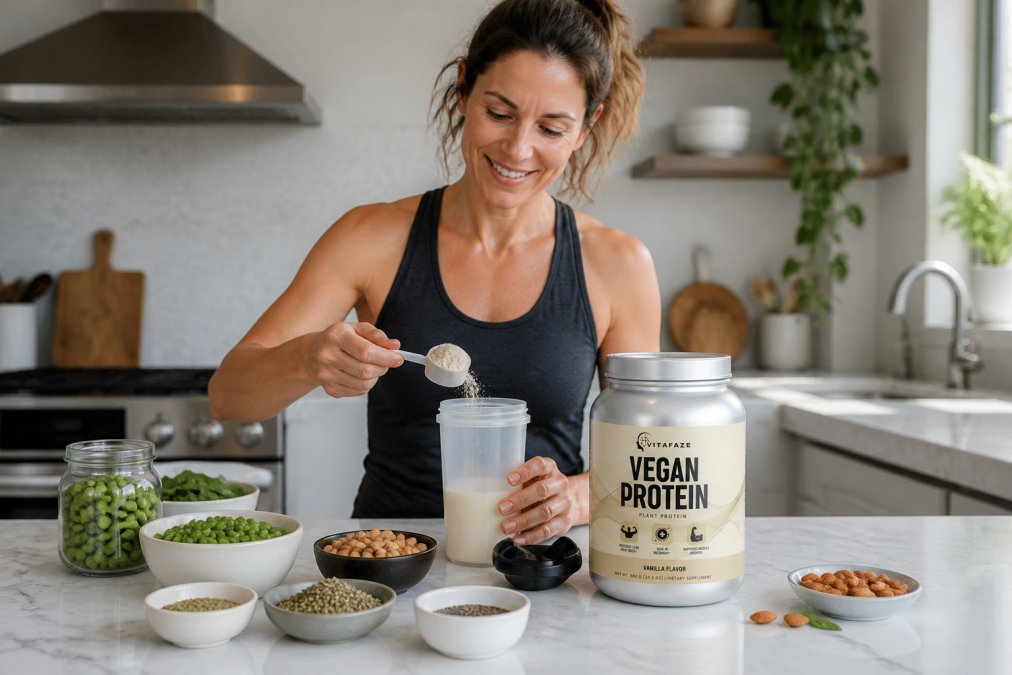
Below, we'll break down exactly what changes in your body after 40, how to calculate your actual protein requirements, which plant sources deliver the best results, and how to read a label without getting misled by marketing language.
Perimenopause, Hormonal Shifts, and Muscle Loss
Perimenopause typically begins in the early-to-mid 40s, and the hormonal changes it triggers have a direct impact on body composition. Declining estrogen levels reduce the anabolic signaling that helps preserve lean muscle mass, making your body less efficient at using dietary protein to build and maintain muscle, even when intake looks adequate on paper.
The practical implication: the protein threshold that worked at 35 may not be enough at 45. Women in this phase often need to increase both the amount and the quality of protein they consume, with particular attention to amino acid profiles that support muscle protein synthesis.
Sarcopenia Risk and Why Protein Timing Changes
Sarcopenia, the age-related loss of muscle mass and strength, can start as early as the 30s and accelerates significantly after 40, particularly in women. According to National Institute on Aging research on muscle loss and aging, less muscle means slower metabolism, reduced bone density, and greater risk of chronic illness.
Protein timing matters more as you age because older muscle tissue is less responsive to protein intake. Spreading protein across three to four meals, rather than loading it into one or two, tends to produce better results for muscle protein synthesis. For plant-based eaters, this requires deliberate planning, since most plant sources are lower in protein per serving than animal-based equivalents.
Protein Requirements for Women Over 40: How Much Do You Actually Need?
The standard dietary reference intake for protein is 0.8 grams per kilogram of body weight per day, but this figure was designed to prevent deficiency, not to support active women managing age-related muscle changes. For women over 40 who exercise regularly, many nutrition practitioners recommend 1.2 to 1.6 grams per kilogram of body weight daily.
Here's a simple way to calculate your starting point:
- Convert your weight from pounds to kilograms (divide by 2.2)
- Multiply by 1.2 for a moderate activity baseline
- Multiply by 1.6 if you strength train three or more times per week
- Distribute across three to four meals for optimal absorption
A woman weighing 150 pounds (approximately 68 kg) training four days per week would target roughly 82 to 109 grams of protein daily. The Dietary Guidelines for Americans from the USDA provide a useful baseline, but active women over 40 should treat those numbers as a floor, not a ceiling.
Complete vs Incomplete Plant Proteins: What the Difference Means for You
Complete protein contains all nine essential amino acids in adequate amounts. Incomplete protein is low in one or more essential amino acids. Most plant proteins fall into the incomplete category, which is why understanding how to combine sources matters. The good news: you don't need to combine complementary proteins at every meal, but you do need to ensure variety across the day.
Amino Acid Profiles and Leucine Thresholds
Leucine is the amino acid most responsible for triggering muscle protein synthesis. It acts as a molecular switch: when leucine concentration in the blood crosses a certain threshold, the body initiates muscle repair and growth. Animal proteins tend to be naturally high in leucine; many plant proteins are not.
For women over 40, aging muscle tissue requires a higher leucine stimulus to achieve the same anabolic response as younger muscle. Pea protein and soy protein isolate are among the better plant sources for leucine content. Hemp and rice protein are lower and typically need to be combined with other sources to hit the threshold. A product that lists total protein without specifying its amino acid profile is giving you incomplete information.
Bioavailability and Digestibility Compared
Bioavailability refers to how much of a nutrient your body can actually absorb and use. A digestibility metric called the Protein Digestibility Corrected Amino Acid Score (PDCAAS) or its updated version, the Digestible Indispensable Amino Acid Score (DIAAS), measures this more accurately than the gram count alone.
Soy protein isolate scores highest among plant proteins on these metrics, approaching the digestibility of animal proteins. Pea protein scores well and is hypoallergenic. Rice protein is lower on its own but improves significantly when blended with pea protein. Hemp protein is the lowest for digestibility but brings valuable fiber content and omega fatty acids.
| Protein Source | Leucine Content | Digestibility (PDCAAS) | Best Combined With |
|---|---|---|---|
| Pea protein | Moderate-High | ~0.89 | Rice protein |
| Soy protein isolate | High | ~1.0 | Standalone or hemp |
| Rice protein | Moderate | ~0.47 | Pea protein |
| Hemp protein | Low-Moderate | ~0.46 | Pea or soy |
Best Plant-Based Protein Sources: Pea, Rice, Hemp, and Soy
The four most common plant-based protein sources in supplements each bring distinct strengths and trade-offs.
Pea protein (derived from yellow split peas) is high in BCAAs relative to other plant sources, easy on the digestive system, and free from the top eight allergens. For women over 40 focused on muscle protein synthesis, pea protein is a reliable anchor for any blend.
Soy protein isolate offers the most complete amino acid profile of any plant source and is the most researched. Some women have concerns about phytoestrogens in soy, but the evidence on moderate soy consumption and hormonal health is more nuanced than headlines suggest.
Rice protein on its own is low in lysine, which limits its muscle-building potential. Blended with pea protein, the two sources complement each other well, with pea covering rice's lysine gap and rice rounding out the overall amino acid profile.
Hemp protein is the most nutrient-dense in terms of micronutrients, bringing omega-3 fatty acids, magnesium, and zinc alongside protein. Its digestibility is lower, but it's a valuable addition to a blend rather than a standalone source.
How to Build Muscle on a Vegan Diet After 40
Building muscle on a plant-based diet after 40 is entirely achievable, but it requires more precision than the same goal at 25. Protein quality, leucine intake, training stimulus, and recovery all need to work together.
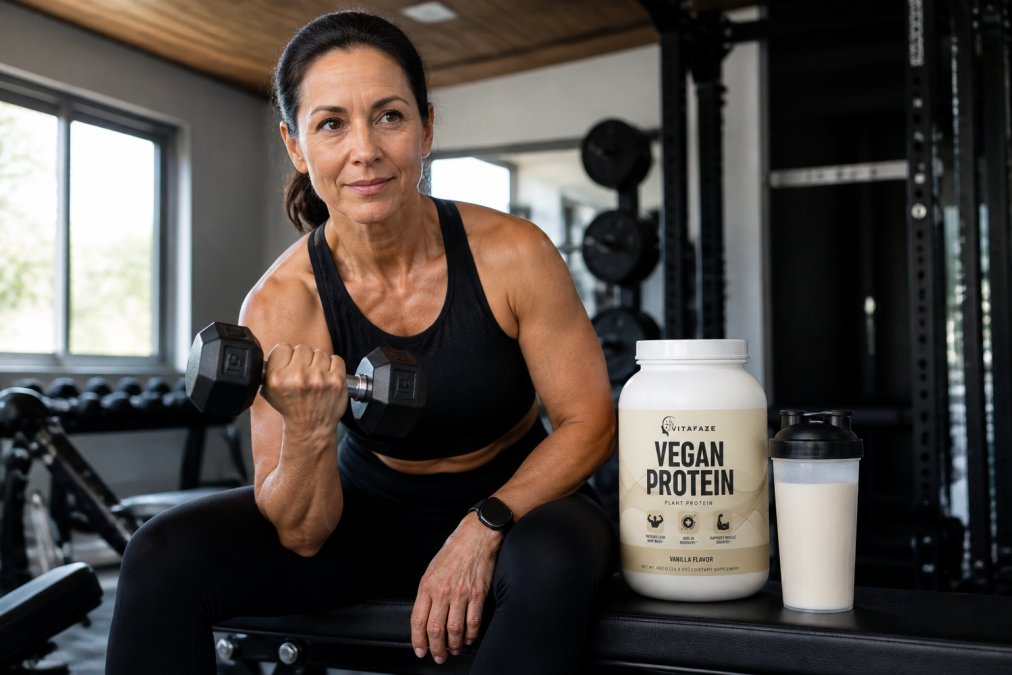
The foundation is resistance training. Muscle protein synthesis is only triggered when muscle fibers are challenged. Three to four sessions per week is a practical minimum for maintaining lean muscle mass during perimenopause. Consuming protein within two hours of a strength session, particularly a source high in leucine, supports the muscle repair process more effectively than leaving protein intake to chance throughout the day.
Synergistic Nutrient Absorption: Pairing Proteins for Better Results
Synergistic nutrient absorption means combining foods or supplements in ways that enhance how well your body uses each individual nutrient. For plant-based eaters over 40, this principle applies directly to protein quality and to the micronutrients that support muscle and bone health.
Vitamin D and calcium are a clear example. Calcium absorption depends heavily on adequate vitamin D status, and both are critical for bone density during perimenopause. Iron absorption from plant sources increases significantly when consumed alongside vitamin C, pairing iron-rich foods like lentils with bell pepper or citrus is a simple practical strategy. For protein specifically, combining incomplete sources to cover amino acid gaps is the most direct form of synergistic nutrition.
What to Look for on the Label: Certifications, Testing, and Clean Ingredients
Most women shopping for plant-based protein spend too much time on the front of the label and not enough on the back. The front tells you what the brand wants you to believe. The back, and third-party certifications, tell you what's actually in the product.
Third-Party Testing and Heavy Metal Contamination
Heavy metal contamination is a documented issue in the plant-based protein category. Certain protein sources, particularly rice protein and hemp protein, can accumulate heavy metals like lead, cadmium, and arsenic from soil. Without independent testing, there's no way to know whether a product is clean.
Third-party testing means an independent laboratory has verified the product's contents, potency, and contaminant levels. Certifications to look for include NSF Certified for Sport, Informed Sport, and USP Verified. According to Clean Label Project's research on heavy metals in protein powders, heavy metal contamination varies significantly across plant-based protein products, making third-party certification a non-negotiable quality signal.
Added Sugars, Artificial Sweeteners, and Digestive Enzymes
A protein powder that delivers 20 grams of protein alongside 15 grams of added sugars is not a clean product. Watch for added sugars listed under names like cane syrup, maltodextrin, or dextrose, especially in flavored products.
Artificial sweeteners are common in "zero sugar" protein powders. Some women tolerate them well; others find that ingredients like sucralose or acesulfame potassium trigger digestive discomfort. If gut health is a concern, look for products sweetened with stevia or monk fruit.
Digestive enzymes, such as protease, amylase, or bromelain, are sometimes added to plant-based protein powders to improve protein digestion and reduce bloating. For women over 40 who find plant proteins harder to digest, a formula that includes digestive enzymes can make a meaningful difference.
How to Choose Plant-Based Protein for Women Over 40: A Step-by-Step Framework
Choosing the right plant-based protein for women over 40 comes down to matching your specific physiological needs with a product that is transparent, tested, and formulated for performance.
Follow this framework:
-
Calculate your protein target. Use the formula above (bodyweight in kg × 1.2 to 1.6). This gives you a daily protein goal to work backward from.
-
Prioritize leucine-rich sources. Look for pea protein, soy protein isolate, or a pea-rice blend as the primary ingredient. Check whether the label lists an amino acid profile or BCAA content.
-
Check for third-party certification. NSF Certified for Sport, Informed Sport, or USP Verified are the marks that matter. No certification means no independent verification of what's in the product.
-
Scan the sweetener and additive list. Avoid products with added sugars in the top five ingredients. Decide whether you prefer natural sweeteners or can tolerate alternatives.
-
Look for digestive support. If you've had issues with bloating from plant proteins in the past, prioritize products that include digestive enzymes.
-
Match the format to your lifestyle. A protein powder is practical post-workout. A meal replacement with a higher calorie count and added micronutrients may serve you better as a breakfast replacement on busy days.

2.9lb Essential Meal Replacement Protein Chocolate Milkshake w/0% Added Sugar -
Assess the full micronutrient picture. Does the product include calcium, vitamin D, or iron? If not, are you covering those gaps elsewhere?
| Step | What to Check | Why It Matters |
|---|---|---|
| Protein target | Bodyweight × 1.2-1.6g/kg | Undereating protein accelerates muscle loss |
| Amino acid profile | Leucine, BCAAs listed | Triggers muscle protein synthesis |
| Third-party testing | NSF, Informed Sport, USP | Confirms no heavy metals or contaminants |
| Sweeteners | No added sugars, natural options | Avoids digestive issues and blood sugar spikes |
| Digestive enzymes | Protease, bromelain | Improves bioavailability, reduces bloating |
| Format | Powder vs. meal replacement | Matches your actual daily routine |
| Micronutrients | Calcium, vitamin D, iron | Supports bone and metabolic health |
VitaFaze Plant-Based Protein Options Worth Considering
VitaFaze formulates plant-based protein specifically for active individuals who need clean, bioavailable nutrition without compromise. For women over 40 working on muscle recovery and metabolic health, two products are worth a close look.
The Pure Vegan Protein Vanilla delivers 20 grams of complete protein from an organic pea and rice blend per serving. This combination covers the leucine gap that either source alone would leave, and the organic sourcing addresses the heavy metal concern that comes with conventionally grown rice protein. It's priced at $35.97 for 1.5 lbs.

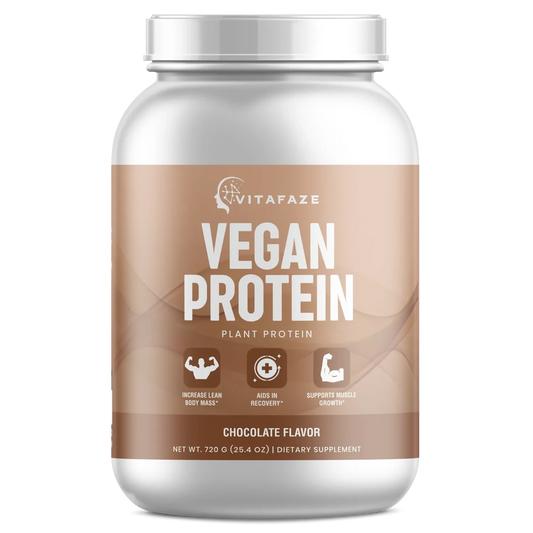
The Vegan Protein Chocolate Shake steps up to 22 grams of complete plant-based protein per serving. For women who train regularly and need a higher protein hit post-workout, the additional protein per serving is meaningful. At $32.97 for 1.5 lbs, it also represents strong value for a clean-ingredient product.
For women who need more than just protein, the Essential Meal Replacement Protein in both vanilla and chocolate milkshake formats delivers 24 grams of protein per serving with zero added sugars at $33.32 for 2.9 lbs. This is the practical choice for busy days when a full meal isn't realistic but you still need to hit your macronutrients and support lean muscle mass.
All VitaFaze products are formulated around clean, bioavailable ingredients designed to support muscle protein synthesis and recovery for plant-based athletes.
Common Mistakes to Avoid When Switching to Plant Protein
The biggest mistake is treating the switch to plant-based protein as a simple one-for-one substitution. Animal proteins and plant proteins behave differently in the body, and ignoring that difference leads to frustrating results.
Relying on a single protein source. Using only pea protein or only hemp protein leaves gaps in your amino acid profile. Variety across the day, or a blended product, is the more reliable approach.
Ignoring leucine specifically. Total protein grams matter, but leucine is the trigger for muscle protein synthesis. A product with 25 grams of protein but very low leucine content will underperform a product with 20 grams and a strong leucine profile.
Choosing taste over quality. A protein powder that mixes well and tastes great but lacks third-party testing is a marketing product, not a nutrition product.
Underestimating fiber content. Plant proteins naturally come with more fiber than animal proteins. For some women, this causes digestive discomfort initially. Starting with smaller servings and increasing gradually gives your gut microbiome time to adjust.
Skipping micronutrient planning. Switching to plant-based protein without auditing your intake of calcium, vitamin D, and iron is a common oversight. These nutrients are harder to obtain on a plant-based diet and directly affect bone density and energy levels during perimenopause. According to Academy of Nutrition and Dietetics position on plant-based diets, well-planned plant-based diets can meet all nutritional needs, but the emphasis on "well-planned" is the operative phrase.
The information is intended for educational purposes and does not constitute medical or dietary advice. Consult a registered dietitian or healthcare provider before making significant changes to your nutrition protocol, particularly if you are managing a chronic health condition or taking medications.
Protein gaps don't announce themselves until they've already cost you muscle, energy, and recovery time. For women over 40 navigating the hormonal and physiological shifts of perimenopause, getting plant-based protein right is one of the highest-use nutrition decisions available. VitaFaze's plant-powered formulations are built specifically to support muscle protein synthesis, faster recovery, and enhanced cellular energy with clean, bioavailable ingredients. Shop All Products and find the formula that fits where you are right now.
Frequently Asked Questions
How much protein do women need after 40?
Most research points to a range of 1.2 to 1.6 grams of protein per kilogram of body weight daily for women over 40 who are active. That is meaningfully higher than the standard 0.8g/kg recommendation, because muscle protein synthesis becomes less efficient with age and hormonal changes accelerate muscle breakdown. A 150-pound woman, for example, would aim for roughly 82 to 109 grams of protein per day, spread across meals to maximize absorption.
What is the best plant-based protein for women over 40?
A blend of pea protein and rice protein is widely considered the most effective plant-based protein option for women over 40. Together, they form a complete amino acid profile comparable to whey, with strong leucine content to support muscle protein synthesis. Pea protein is particularly high in BCAAs, while rice protein fills the methionine gap pea protein lacks. Products formulated with digestive enzymes improve bioavailability further, which matters more as digestion slows with age.
Does plant-based protein help with menopause symptoms?
Plant-based protein supports metabolic health and lean muscle mass during perimenopause, both of which tend to decline as estrogen drops. Soy protein isolate also contains isoflavones, which some research links to modest reductions in hot flashes, though results vary by individual. Beyond soy, maintaining adequate daily protein intake helps stabilize blood sugar, support bone density alongside calcium and vitamin D, and reduce the fatigue that often accompanies hormonal changes in women over 40.
What is the downside of plant protein compared to animal protein?
Most single-source plant proteins are incomplete, meaning they lack one or more essential amino acids in sufficient quantities. They also tend to have lower bioavailability than animal proteins, so a larger serving may be needed to trigger the same muscle protein synthesis response. Fiber content in plant proteins can cause digestive discomfort for some people. Choosing a blended formula with digestive enzymes, and pairing it with varied whole food sources, addresses most of these limitations effectively.
This article was written using GrandRanker