



How to Prevent Muscle Cramps During Long Workouts
Last Updated: November 6, 2026
Quick Summary
To prevent muscle cramps during long workouts, replace both fluid and sodium based on your personal sweat rate, and progress training gradually so fatigue doesn't outpace conditioning. For sessions over 90 minutes, sip a sodium-containing drink every 15-20 minutes and include some carbohydrate.
- Estimate your sweat rate by weighing yourself before and after a session and adding back what you drank.
- For sessions under 60 minutes at easy effort, drinking to thirst with water is usually enough.
- Replace roughly 50-80% of hourly sweat losses during exercise and top off afterward.
- White salt streaks on skin or clothing suggest saltier sweat and a higher sodium need.
- Heat acclimation over one to two weeks makes your sweat response more efficient and lowers dehydration risk.
Table of Contents
- Why Muscle Cramps Hit During Long Workouts
- Why Do We Get Muscle Cramps After Heavy Exercise?
- Hydration and Sodium: Building a Plan for Long Sessions
- The Best Drink to Prevent Muscle Cramps
- Training Load, Conditioning, and Gradual Progression
- Heat Acclimation and Warm-Ups That Lower Cramp Risk
- How to Stop Muscle Cramps Fast Mid-Workout
- Preventing Muscle Cramps in Athletes Beyond Running
- Track Your Cramps and Build Your Own Protocol
- Frequently Asked Questions
Why Muscle Cramps Hit During Long Workouts
You're 90 minutes into a long run and your calf seizes. Or you're halfway through a century ride and your hamstring locks. Learning how to prevent muscle cramps during long workouts starts with understanding one thing: cramps rarely come from a single cause. They build from a mix of fatigue, fluid loss, and mineral imbalance.
Plant-based athletes often hit this wall in training and racing. Cramps commonly show up late in sessions, when muscles are tired and sweat losses add up.
Here's what most guides get wrong: they treat cramps as purely a hydration problem. The research picture is messier, and that messiness matters for your plan. Below, we'll show you how to spot your likely trigger and build a routine around it.
The Two Leading Theories and What They Mean for You
Exercise-associated muscle cramps are sudden, painful contractions that strike during or after physical activity. Two explanations dominate the discussion.
The first is the dehydration-electrolyte theory. Sweating drains fluid and sodium. When losses mount, nerve signals to muscles misfire. This theory explains why cramps cluster in heat and during long efforts.
The second is the neuromuscular fatigue theory. Muscle fatigue disrupts the normal firing pattern between nerves and muscles. The muscle contracts and won't relax. This theory explains why cramps often hit the muscle that's working hardest, not the whole body.
Neither theory wins outright. In practice, both mechanisms likely play a role, and the balance shifts by athlete and by workout.
How to Tell Which Cause Is Behind Your Cramps
Use a simple self-check to narrow your likely trigger. This is where individual variation matters most.
- Cramps in heat, with heavy sweating, and relief after fluids: lean toward dehydration and sodium loss.
- Cramps in the hardest-working muscle late in a session, even when well hydrated: lean toward neuromuscular fatigue.
- Cramps after a big jump in training volume: lean toward fatigue and conditioning gaps.
- Cramps at night or at rest, unrelated to training: worth a medical evaluation.
Track two or three episodes before you commit to a fix. A pattern beats a guess.
Why Do We Get Muscle Cramps After Heavy Exercise?
Muscle cramps after heavy exercise usually trace back to muscle fatigue, fluid and sodium loss, or both stacked together. Heavy exercise amplifies every risk factor at once: higher intensity, more sweat, and greater strain on the working muscle.
The American College of Sports Medicine position stand on exercise-associated muscle cramps points to fatigue and electrolyte imbalance as the main contributors. That dual framing is useful. It tells you to address both sides of the problem, not just one.
Some athletes also carry higher risk. Consider these factors:
- A history of cramping during activity
- High sweat rates in hot conditions
- A recent jump in training load
- Poor sleep or accumulated fatigue
- Certain medications that affect fluid balance
If you're exploring mineral support for post-exercise cramping, a magnesium glycinate option is one place some plant-based athletes look. Our Premium Magnesium Glycinate Gummies are formulated for exactly that kind of daily routine.
Hydration and Sodium: Building a Plan for Long Sessions
A hydration plan for long sessions beats generic advice to "drink more water." You need numbers tied to your body, your sweat rate, and the length of the session, and you need to replace sodium, not just fluid. A plan built around your own sweat losses is generally more useful than a fixed ounce target copied from someone else.
Start with a baseline. For sessions under roughly 60 minutes at moderate intensity, drinking to thirst is usually enough. Beyond 60 to 90 minutes, get deliberate: sip on a schedule, and include sodium in your fluid. The NCAA sports medicine guidance on hydration and electrolyte replacement stresses that fluid replacement should account for sweat losses and that sodium helps the body hold onto the fluid you take in. Plain water alone can dilute your sodium further during heavy sweating.
Step 1: Estimate Your Sweat Rate
Sweat rate is the volume of fluid you lose per hour of exercise. A simple field estimate:
- Weigh yourself (in pounds) before a session, wearing minimal clothing.
- Do the session and track how many ounces you drink.
- Weigh yourself again afterward, in the same clothing.
- Convert the weight change to ounces (1 pound of body weight ≈ 16 ounces of fluid), add back what you drank, and divide by the hours of exercise.
Example: you lose 2 pounds (32 ounces) and drank 16 ounces over a 1-hour session. That's roughly 48 ounces of sweat per hour. A 3-hour long ride at that rate means about 144 ounces of fluid loss, a number no generic "drink 8 ounces every 15 minutes" rule will match.
Repeat the test on a hot day and a cool day. Most athletes see their sweat rate swing widely with heat, humidity, and intensity, so plan for the conditions you'll actually face.
Step 2: Set a Duration-Based Fluid Target
Use your sweat rate to set a range, not a rigid number:
- Under 60 minutes, easy effort: drink to thirst; water is fine.
- 60-90 minutes: aim to replace roughly half to two-thirds of your hourly sweat loss, with sodium included.
- 90 minutes to 3 hours: replace a larger share of losses, sip every 15-20 minutes, and pair fluid with sodium and some carbohydrate.
- Beyond 3 hours: treat fluid, sodium, and carbs as one continuous plan, and reassess at each hour.
Replacing 100% of sweat loss is rarely necessary and can overshoot. A common pattern is to replace about 50-80% of hourly losses during the session and top off afterward.
Step 3: Match Sodium to Your Sweat
Sodium loss is harder to measure at home, but you can spot the signs. White salt streaks on skin or clothing after a session suggest saltier sweat. So does a strong craving for salty foods post-workout. Athletes with salty sweat often need more sodium per liter than the label on a generic sports drink provides.
A practical approach: start with a sodium-containing drink on sessions over 90 minutes, and adjust based on how you feel and whether cramps recur. For a personalized plan, keep a salt product on hand to season meals and add to your hydration routine. Our Premium Volcanic Pink Salt is a natural mineral salt you can use to season meals.

Watch out: more sodium is not automatically better. Excess sodium intake, especially from supplements and salt tablets stacked on top of a high-sodium diet, can raise blood pressure in salt-sensitive people and cause GI distress during exercise. If you have hypertension, kidney disease, or a heart condition, talk to a clinician before adding salt deliberately.
Step 4: Guard Against Overdrinking
Hyponatremia, dangerously low blood sodium, can happen when athletes drink large volumes of plain water over long sessions and dilute their sodium. It's rare but serious. Signs include bloating, nausea, headache, confusion, and swelling in the hands. If those appear during or after a long session, stop drinking, seek shade, and get medical help. Drinking to a fixed high-volume schedule regardless of thirst is a known risk factor; pairing fluid with sodium and respecting thirst helps reduce it.
Match your fluid and sodium plan to how long you're training.
| Session length | Fluid target | Notes |
|---|---|---|
| Under 60 minutes, easy effort | Drink to thirst; water is fine | Baseline, no fixed target needed |
| 60-90 minutes | Replace roughly half to two-thirds of hourly sweat loss | Include sodium in your fluid |
| 90 minutes to 3 hours | Replace a larger share of losses | Sip every 15-20 minutes with sodium and some carbohydrate |
| Beyond 3 hours | Treat fluid, sodium, and carbs as one continuous plan | Reassess at each hour |
The Best Drink to Prevent Muscle Cramps
The best drink to prevent muscle cramps combines fluid, sodium, and a mix of electrolytes, not just water. For long workouts, a drink with sodium, potassium, magnesium, and calcium covers more of the bases than water alone.
Sports drinks earn their place here for a reason. They replace what sweat takes out. The catch is that many are heavy on sugar and light on the minerals that matter for cramp-prone athletes.
What to look for in a cramp-focused drink:
- Sodium as the lead electrolyte
- Potassium, magnesium, and calcium in the blend
- Moderate carbohydrate for longer efforts
- No artificial colors if you prefer a cleaner formula
If you want a single product built for this, our ION + Select Electrolyte Formula delivers essential electrolytes, coconut water powder, and pink Himalayan salt in one scoop. Mix it with 8 to 12 ounces of water and use it around long sessions.

Training Load, Conditioning, and Gradual Progression
Cramp risk climbs when training load outpaces conditioning. The muscle isn't ready for the demand, and fatigue sets in early. Gradual progression is the antidote.
The CDC guidance on physical activity and progressive training supports building activity levels over time rather than jumping into high volume. That principle applies directly to cramp prevention.
A few rules that hold up in practice:
- Raise weekly volume by small steps, not big leaps.
- Add intensity after volume, not at the same time.
- Build in easy days after hard sessions.
- Cut back when you feel persistent muscle tightness.
A common mistake is chasing a personal best every week. That's a fast track to fatigue and cramps. Consistent, patient progression wins.
Heat Acclimation and Warm-Ups That Lower Cramp Risk
Heat and cold muscles both raise cramp risk, and you can train for both. Heat acclimation and a proper warm-up are two of the most reliable prevention tools you have.
Heat acclimation means gradually exposing your body to warmer conditions so it adapts. Over one to two weeks, your sweat response becomes more efficient. You sweat earlier and lose less sodium per liter. That adaptation lowers dehydration risk during long sessions.
A warm-up primes the nervous system and the working muscle. Dynamic stretching beats static stretching before activity. Save the long static holds for your cool-down.
Build a warm-up that fits your sport:
- Runners: easy jog, leg swings, walking lunges, high knees
- Cyclists: easy spin, gradual build, hip openers
- Strength athletes: light sets of the main lift, mobility drills
The American Heart Association guidance on warm-up and cool-down notes that warming up helps your body transition into exercise safely. For cramp-prone athletes, that transition matters.
How to Stop Muscle Cramps Fast Mid-Workout
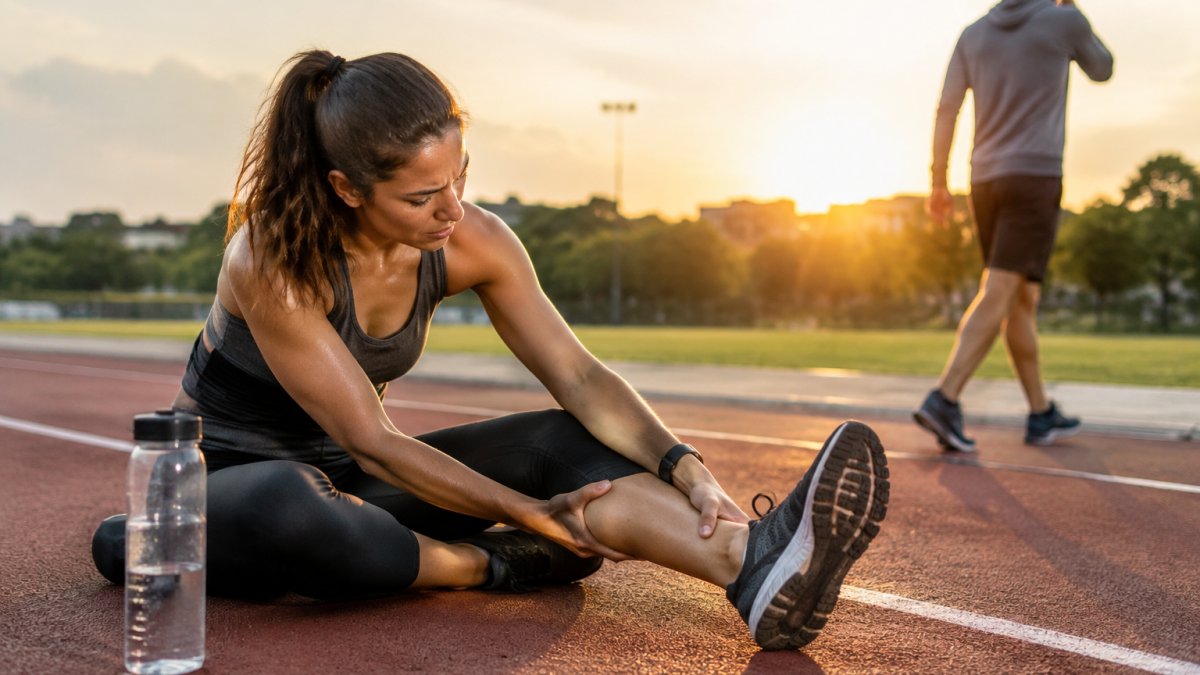
When a cramp hits mid-session, the right move depends on how bad it is and what your body is telling you. A short decision tree beats a fixed list, because the same cramp can call for a 30-second stretch or an early end to the workout.
First: Read the Cramp
Ask three quick questions:
- Is it a twinge or a full lock? A twinge that releases with a light stretch usually means back off briefly. A full lock that won't release means stop.
- Is it one muscle or several? A single hard-working muscle points toward neuromuscular fatigue. Cramps in multiple muscles, plus dizziness or nausea, point toward fluid and sodium loss, or something that needs medical attention.
- How far into the session are you, and how hot is it? Late-session cramps in heat with heavy sweating lean toward dehydration and sodium loss; early-session cramps in a hard-working muscle lean toward fatigue.
The Decision Tree
If the cramp releases within about 30-60 seconds of gentle stretching and massage:
- Back off to easy effort for 3-5 minutes.
- Sip fluid with sodium.
- Resume at a lower intensity and build back gradually.
- Reassess every few minutes; if it returns, drop to the next branch.
If the cramp keeps returning or won't fully release:
- Stop the activity and get to shade or a cooler spot.
- Gently stretch the cramped muscle, hold a light stretch, don't force it.
- Massage the muscle to help it release.
- Apply heat if the muscle stays tight.
- Drink fluid with electrolytes to address losses.
- Only resume at easy effort once the muscle is fully relaxed; skip the rest of the hard portion of the session.
If you have any of these, end the session and seek medical evaluation:
- Cramps in multiple muscles along with dizziness, nausea, confusion, or swelling in the hands
- A cramp that persists for more than a few minutes despite stretching and fluid
- Severe pain, swelling, or a muscle that feels torn rather than locked
- Dark urine or markedly reduced urination after a hot, long session
Sport-Specific Examples
- Cyclists: a quad or calf cramp on a long climb, shift to an easier gear, stand and stretch briefly if safe, sip sodium fluid, and spin easy before resuming the climb.
- Runners: a calf cramp late in a long run, walk, stretch against a curb or wall, then jog easy before returning to pace.
- Team sports: a hamstring cramp during repeated sprints, sub out, stretch and massage, rehydrate with sodium, and return only for low-intensity play.
- Strength athletes: a cramp during a high-volume set in heat, rack the weight, stretch, sip fluid, and cut the remaining volume rather than forcing the next set.
Watch out: forcing through a hard cramp can strain the muscle and turn a short episode into a multi-day setback. Stop first, then treat.
After a cramp, replenish with carbs and electrolytes to speed recovery. Our Recovery Carb + Electrolyte Summer Punch pairs fast-digesting carbs with four key electrolytes for post-workout recovery.

Preventing Muscle Cramps in Athletes Beyond Running
Preventing muscle cramps in athletes applies well beyond the running crowd. Cyclists, swimmers, team-sport players, and lifters all face the same mechanisms, just in different packages.
The core levers stay the same: manage fatigue, replace fluid and sodium, progress training gradually, and acclimate to heat. What changes is the sport-specific detail.
- Cyclists: watch for cramps in the quads and calves on long climbs.
- Swimmers: cramps often hit the feet and calves; hydrate before pool sessions.
- Team sports: repeated sprint efforts drive fatigue fast; plan fluid breaks.
- Strength athletes: cramp risk rises with high-volume sessions in heat.
Plant-based athletes have an extra reason to plan carefully. Endurance training raises nutrient demands, and a plant-based diet can leave gaps if you're not deliberate. For a broader look, our Plant Based Supplements for Endurance Athletes: 2026 Guide covers how to bridge those gaps for stamina and recovery.
Track Your Cramps and Build Your Own Protocol
The athletes who stop cramping are the ones who track what happens and adjust. A simple log turns guesswork into a plan.
Record these details after each long session:
- Duration and intensity of the workout
- Weather and heat index
- Fluid and sodium intake
- Where and when any cramp hit
- What relieved it
After a few weeks, patterns emerge. Maybe cramps cluster on hot days. Maybe they follow back-to-back hard sessions. Maybe they ease once you add sodium to your fluids.
Use that pattern to tune your protocol. Adjust one variable at a time: sodium first, then fluid volume, then training load. Give each change a couple of weeks before judging it.
Cramps during long workouts are frustrating, but they're rarely random. Build a plan around hydration, sodium, conditioning, and heat, and you give yourself a real shot at training without the mid-session shutdown. VitaFaze makes plant-powered nutrition for athletes, with clean, bioavailable ingredients designed to support hydration, recovery, and endurance. Explore the electrolyte and recovery formulas, and give your long sessions the fuel they need. Get started with VitaFaze and train through your next long workout without the cramp that stops you.
Frequently Asked Questions
How do I avoid muscle cramps while working out?
Build a plan around three levers: hydration and sodium, training load, and heat acclimation. Measure your sweat rate so you know how much fluid you lose per hour, then replace roughly that amount with a drink containing sodium. Progress training volume gradually rather than jumping mileage or intensity. Warm up with dynamic movements before long sessions, and acclimate to heat over 10 to 14 days if you train in it. Track when cramps occur so you can spot your personal trigger.
What should I drink to help prevent muscle cramps during exercise?
For sessions under an hour, water is usually enough. Beyond that, a drink with sodium and a small amount of carbohydrate helps replace what you lose in sweat. The best drink to prevent muscle cramps is one you will actually finish, with enough sodium to match your sweat losses. VitaFaze ION + Select Electrolyte Formula ($35.98) mixes one scoop into 8 to 12 ounces of water and includes pink Himalayan salt and coconut water powder for hydration and exercise performance. Test any drink during training before race day.
What should I do if a muscle cramps during a workout?
Stop the activity and gently stretch the affected muscle, holding it until the contraction releases. Massage the area and apply heat if it stays tight. Replace fluids with a sodium-containing drink, especially if you have been sweating heavily. Once it releases, resume at a lower intensity or shorten the session. If cramps are frequent, severe, or come with swelling, dark urine, or weakness, get a medical evaluation before your next long workout.
Can training and pacing help prevent exercise-related cramps?
Yes. Muscle fatigue is one of the leading explanations for exercise-associated muscle cramps, so pacing matters. Avoid sudden jumps in volume or intensity, and build long sessions gradually over weeks. For endurance events, start conservatively and hold back early rather than surging. Conditioning the specific muscles your sport uses, plus regular heat exposure, reduces the fatigue that triggers cramping. Keep a simple log of duration, pace, and cramp timing to see which changes actually help.
