



Natural Alternatives to Synthetic Energy Gels for Cycling
Table of Contents
- Why Cyclists Are Switching From Synthetic Energy Gels
- Real Food vs. Processed Supplements: What the Research Shows
- Natural Energy Gel Alternatives Ranked: Dates, Maple Syrup, and More
- Homemade Energy Gel Recipes for Cyclists: Step-by-Step
- Carbohydrate Drink Powders and Electrolyte Balance in Natural Foods
- How to Increase Endurance Naturally With Whole Food Fueling
- Plant-Based Cycling Nutrition Plan for Long-Distance Rides
- Mid-Ride Digestion and Gut Health: Avoiding Gastrointestinal Distress
- Fueling Plans by Ride Duration: 1 Hour to 5+ Hours
- Glycemic Index, Temperature Stability, and Waste: What Competitors Miss
- Conclusion: Building Your Natural Fueling Strategy
- Frequently Asked Questions
Last Updated: September 29, 2026
Why Cyclists Are Switching From Synthetic Energy Gels
Natural alternatives to synthetic energy gels for cycling have moved from niche experiment to mainstream fueling strategy. At VitaFaze, we hear the same complaint from riders again and again: the gel that promises quick-release energy often delivers stomach cramps instead. A common approach is swapping engineered packets for whole-food sources that the gut recognizes and handles with less friction.
The reasons stack up fast. Synthetic gels lean on maltodextrin and artificial flavoring, ingredients many riders tolerate poorly once heart rate climbs and blood flow shifts away from the digestive tract. Real-food fueling sidesteps that problem by using simple carbohydrates from dates, maple syrup, and fruit, which pair naturally with the body's own digestive rhythm.
Below, we break down how to build a natural fueling strategy that holds up over long-distance endurance, from one-hour efforts to all-day rides.
Real Food vs. Processed Supplements: What the Research Shows
Real food and processed supplements each have a place, but they behave differently once you're in the saddle. Whole food sources bring fiber, micronutrients, and water alongside their carbohydrates. Processed gels strip all of that away, leaving a concentrated sugar hit designed for speed of absorption above everything else.
That trade-off matters more than most riders realize. Whole-food fuel can support steadier blood glucose levels and fewer spikes and crashes across a ride. The fiber and water content slows release slightly, which can feel like a disadvantage in a sprint but can become an asset over hours of sustained effort.
Here's the honest limitation: real food is bulkier and heavier to carry. A pocket full of dates and a flask of maple syrup takes more space than a few foil packets, and that matters on race day. For training rides and long-distance endurance events where weight is less critical, whole food sources usually win on comfort and gut-friendliness.
Natural Energy Gel Alternatives Ranked: Dates, Maple Syrup, and More
Dates, maple syrup, and dried fruit top the list of natural alternatives to synthetic energy gels for cycling because they deliver quick-release energy without synthetic additives. Each brings a different texture, sweetness, and practical trade-off worth understanding before you commit.
Dates are the closest whole-food match to a gel. They're dense in simple carbohydrates and easy to chew, though they get sticky in heat. Maple syrup flows like a gel and mixes cleanly into a flask, making it the most direct swap for riders who want the same delivery method. Dried fruit such as apricots and raisins offers portable nutrition with a slower release, better suited to steady pacing than sharp efforts.
- Dates: fast energy, natural potassium, best for short bursts and mid-ride top-ups
- Maple syrup: gel-like consistency, easy to portion, best for riders who want familiarity
- Dried fruit: slower release, fiber content, best for steady endurance pace
- Honey: quick absorption, natural sweetener, best for riders who tolerate it well
- Bananas: high water content, easy digestion, best for shorter rides
| Alternative | Consistency | Release Speed | Best For |
|---|---|---|---|
| Dates | Chewy, dense | Fast | Mid-ride top-ups |
| Maple syrup | Liquid | Fast | Flask-based fueling |
| Dried fruit | Chewy | Moderate | Steady endurance pace |
| Honey | Thick liquid | Fast | Quick energy hits |
| Bananas | Soft | Moderate | Shorter rides |
Homemade Energy Gel Recipes for Cyclists: Step-by-Step
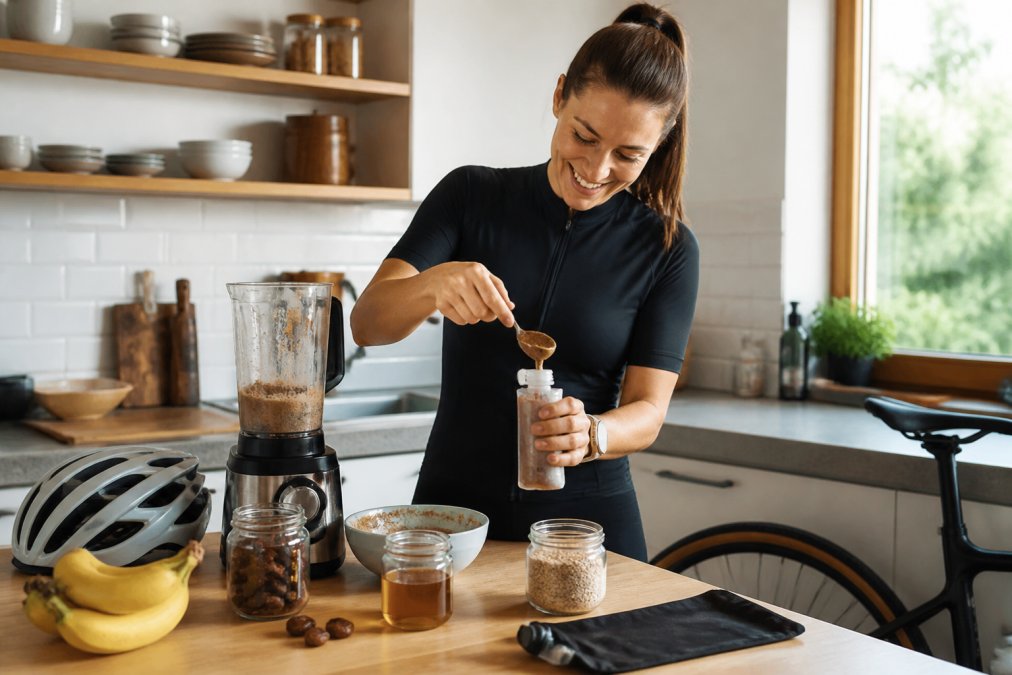
Homemade energy gel recipes for cyclists let you control sweetness, texture, and carbohydrate concentration, and most take about ten minutes to prepare. The base formula is simple: one part sweetener, one part water, a pinch of salt for sodium replenishment, and optional fruit for flavor. What separates a gel that works at hour four from one that wrecks your stomach is the ratio, not the ingredient list.
The carbohydrate math behind a working gel
A typical commercial gel delivers roughly 20-25 grams of carbohydrate in a 1.0-1.5 ounce packet. To match that with real food, you need to know what your base ingredients actually contain. Maple syrup is roughly two-thirds carbohydrate by weight, so one fluid ounce (about two tablespoons) lands near 17-18 grams. Honey runs slightly higher, close to 17 grams per tablespoon. Dates are about 75% carbohydrate by weight, so three medium Medjool dates contribute roughly 45 grams, enough for two gel servings once diluted.
That math matters because concentration drives gut tolerance. A gel that is too thick empties from the stomach slowly and pulls water into the intestine, which is the mechanism behind the cramping and nausea many riders blame on "gels" in general. Diluting toward a thinner, more watery consistency speeds gastric emptying and reduces that osmotic load.
Maple-date base gel
- Soak six pitted Medjool dates in warm water for ten minutes until soft.
- Blend dates with two tablespoons of maple syrup and a pinch of sea salt (about 1/8 teaspoon, roughly 200-250 mg sodium).
- Add water a tablespoon at a time until the mixture flows like a gel, usually 3-4 tablespoons.
- Pour into a reusable flask and refrigerate until ride day.
This batch yields roughly 4-5 gel-sized servings at about 20 grams of carbohydrate each, depending on how much water you add.
Citrus-honey variation
Swap maple syrup for honey and add a squeeze of lemon for a lighter flavor that sits well in heat. Honey is slightly more concentrated than maple syrup, so add an extra tablespoon of water to keep the texture pourable above 80°F. The salt matters here. Sodium replenishment supports electrolyte balance and helps prevent bonking when you're sweating heavily, and most homemade recipes undershoot it badly, a pinch is not the same as a measured dose.
Food safety and shelf life
Homemade gels are not shelf-stable the way commercial packets are. Refrigerate flasks and use within about five days; if you're packing for a multi-day event, freeze portions and thaw as needed. Honey-based mixes resist spoilage slightly better than date-based ones because of honey's low water activity, but neither should sit in a warm car overnight.
A common mistake is skipping the salt because the recipe tastes fine without it. Over a long ride, that omission catches up with you through cramping and fatigue. Test any homemade gel on a training ride before race day, since texture and sweetness preferences vary widely between riders, and so does individual tolerance for concentrated fructose.
Recovery Carb + Electrolyte Summer →
Carbohydrate Drink Powders and Electrolyte Balance in Natural Foods
Carbohydrate drink powders and natural electrolyte sources solve the same problem from different angles: keeping blood glucose levels steady while replacing what sweat takes out. Natural foods contribute sodium, potassium, magnesium, and calcium, the four electrolytes most riders lose during sustained effort.
Coconut water, bananas, and salted nuts are common whole-food sources. They work, but they're inconsistent. A banana's potassium content varies, and getting enough sodium from food alone during heavy sweating is genuinely hard. That's where a targeted drink powder earns its place, not as a replacement for real food but as a complement to it.
For riders who want both carbohydrate and electrolyte support in one scoop, VitaFaze's Recovery Carb + Electrolyte Summer Punch delivers 24 grams of fast-digesting carbohydrates per scoop alongside a blend of four key electrolytes. The Lemon Lime version follows the same formula with a sharper flavor. Both mix into 8 ounces of cold water and use dextrose and glucose polymers for glycogen replenishment after hard efforts.

How to Increase Endurance Naturally With Whole Food Fueling
Learning how to increase endurance naturally starts with matching fuel timing to effort, not just choosing better ingredients. The body draws on glycogen stores first, then shifts toward fat oxidation as those stores deplete, and the food you eat mid-ride decides how smoothly that transition happens.
Three habits separate riders who fuel well from those who fade:
- Eat before you're hungry. Hunger lags behind actual energy needs by roughly twenty minutes.
- Keep portions small and frequent. Large doses of any fuel risk gastrointestinal distress at speed.
- Practice your plan in training. Race-day experiments rarely end well.
Metabolic efficiency can improve when you train your gut alongside your legs. Riders who consistently fuel with real food sources during long rides may experience fewer stomach issues and steadier energy than those who rely on concentrated gels alone.
Plant-Based Cycling Nutrition Plan for Long-Distance Rides
A plant-based cycling nutrition plan for long-distance rides rests on three pillars: carbohydrate timing, protein for post-ride recovery, and micronutrients that plant-based diets can run low on. None of these require animal products, but each needs deliberate attention.
Carbohydrates should dominate your ride-day intake, drawn from whole food sources like oats, fruit, and rice. Protein matters most in the hours after a ride, supporting muscle protein synthesis and reducing next-day soreness. Plant-based athletes often need slightly more total protein to hit the same amino acid targets, which is why many turn to targeted supplements.
For post-ride recovery, VitaFaze's Glutamine Powder supports muscle recovery and gut health, and it mixes cleanly into a carbohydrate drink. Creatine Powder supports athletic performance and muscle recovery for riders doing repeated hard efforts. Both fit a plant-based framework without animal-derived ingredients.

Mid-Ride Digestion and Gut Health: Avoiding Gastrointestinal Distress
Mid-ride digestion depends on blood flow, and blood flow during hard efforts goes to your legs, not your stomach. That single fact explains why the same snack that sits fine at rest can cause gastrointestinal distress at race pace. Managing it comes down to concentration, volume, and timing.
Concentrated sugar solutions empty from the stomach slowly. Diluting your fuel with water speeds that process and reduces the osmotic load that triggers cramping and nausea. Osmolarity, the measure of particle concentration in a solution, is the technical reason behind this, and it's why a diluted maple syrup mix often beats a thick gel on a hot day.
Gut-friendly fuel also means training your tolerance. The gut adapts to what you repeatedly ask it to handle, so riders who practice mid-ride eating in training build a real advantage over those who only fuel on event day.
Fueling Plans by Ride Duration: 1 Hour to 5+ Hours
Fueling plans by ride duration change more than most riders expect. A one-hour effort barely needs mid-ride fuel at all, while a five-hour ride demands a structured schedule you can execute without thinking.
| Ride Duration | Fuel Timing | Best Sources | Key Focus |
|---|---|---|---|
| Under 1 hour | Pre-ride only | Water, light carbs | Hydration |
| 1-2 hours | Every 45 minutes | Dates, maple syrup | Steady glucose |
| 2-3 hours | Every 30-40 minutes | Dried fruit, drink powder | Electrolyte balance |
| 3-5 hours | Every 20-30 minutes | Mixed real food, flasks | Caloric density |
| 5+ hours | Continuous grazing | Whole food sources | Gut comfort |
The pattern is simple: the longer the ride, the smaller and more frequent your fuel doses should become. Long-distance endurance riders who switch to continuous grazing may experience fewer bonking episodes than those who eat in large blocks.
Recovery Carb + Electrolyte Summer →
Glycemic Index, Temperature Stability, and Waste: What Competitors Miss
Glycemic index, temperature stability, and waste are the three angles most fueling guides skip, and each one changes how you pack for a ride. This is where a natural fueling plan stops being a list of foods and becomes a system you can actually execute.
Glycemic index: matching absorption rate to effort
Glycemic index (GI) measures how quickly a food raises blood glucose relative to a reference. High-GI foods hit the bloodstream fast; low-GI foods release slowly. For cycling, that distinction maps directly onto intensity:
- High GI (fast release): maple syrup, honey, white rice cakes, ripe banana. Best for hard efforts, climbs, and the final hour of a race when you need glucose now.
- Moderate GI: dates, raisins, most dried fruit. A workhorse for steady endurance pace where you want a predictable drip rather than a spike.
- Low GI (slow release): oats, whole-grain bread, nuts, and foods eaten with fat or fiber. Better for the hours before a ride or very long, low-intensity days.
The practical rule: the harder you're going, the higher the GI you want, because blood flow to the gut drops and slow-digesting food sits there. The easier the pace, the more you can afford slower-release fuel that smooths out blood glucose over hours. Most riders get this backwards and eat slow food on hard days, then wonder why they feel heavy.
Temperature stability: what happens at 40°F and 95°F
Synthetic gels are chemically stabilized to stay pourable across a wide temperature range. Real food is not, and that's a real trade-off worth planning around.
- Maple syrup thins in heat and thickens in cold. A flask that flows at 70°F can turn stubborn near 40°F. In cold weather, carry it against your body and consider cutting it with a little warm water before you leave.
- Honey crystallizes over time and gets very stiff in the cold. It holds up better than maple syrup in heat but is the harder one to manage in winter.
- Dates hold up best in a jersey pocket across a wide range, they get sticky in heat but stay chewable, and they don't freeze solid the way a liquid gel does.
- Homemade gels need a consistency test in the conditions you'll actually ride. A recipe that's perfect in a 70°F kitchen can be unusable at either extreme.
A simple fix: carry two flasks with slightly different water ratios, a thinner one for cold rides, a thicker one for hot rides, and rotate based on the forecast.
Waste: the zero-waste advantage of real food
Waste is the quiet advantage of real-food fueling. Reusable flasks and whole fruit replace single-use foil packets, cutting the litter that ends up on roadsides after every event. A rider taking a gel every 30 minutes on a five-hour ride goes through roughly ten packets, ten pieces of foil-backed plastic that most events don't recycle. Multiply that across a field of hundreds and the roadside impact is obvious.
Real-food fueling flips that: one reusable flask, a handful of dates in a cloth pouch, and a banana peel that biodegrades. For riders who care about environmental impact alongside performance, that's a meaningful shift.
Conclusion: Building Your Natural Fueling Strategy
Building a natural fueling strategy takes experimentation, and the riders who get it right are the ones who treat fueling as training rather than an afterthought.
VitaFaze supports that work with plant-powered nutrition designed for endurance athletes. The Recovery Carb + Electrolyte Summer Punch refills glycogen with 24 grams of fast-digesting carbohydrates per scoop and four key electrolytes. ION + Select Electrolyte Formula supports hydration and exercise performance with beet root, coconut water powder, and Pink Himalayan Salt. Glutamine Powder rounds out recovery by supporting muscle protein synthesis and gut health.

Get started with VitaFaze and give your rides the fuel they deserve.
Frequently Asked Questions
What are some alternatives to energy gels for cycling?
Natural alternatives include dates, maple syrup, honey, mashed sweet potato, homemade energy bars, and carbohydrate drink powders. These provide quick-release energy from simple carbohydrates and sustained energy from complex carbohydrates, often with fewer synthetic additives. For electrolyte balance, coconut water or a product like VitaFaze ION + Select Electrolyte Formula can replenish sodium and potassium. Many cyclists find real-food fueling easier on the stomach during long-distance endurance rides.
How do I make homemade energy gels for cycling?
Mix 1 cup of maple syrup or honey with 1/4 teaspoon of salt and 1/4 cup of water. For a thicker gel, blend in 2-3 pitted dates. Add a squeeze of lemon or a pinch of ginger for flavor and gut-friendly benefits. Store in a reusable gel flask or small squeeze bottle. Each 1-ounce serving provides roughly 20-25 grams of simple carbohydrates. Adjust consistency with water. This recipe avoids artificial flavoring and synthetic additives found in commercial gels.
Are whole foods as effective as synthetic energy gels for endurance?
Research suggests whole food sources can be as effective for endurance performance when matched for carbohydrate content. Whole foods offer additional nutrients like potassium and fiber, but may digest slower. For high-intensity efforts, quick-release energy from maple syrup or dates works well.
How many calories should I consume per hour using natural alternatives?
Most endurance athletes aim for 200-400 calories per hour during long rides, depending on intensity, body weight, and duration. For natural alternatives, this could be 2-3 homemade energy bars, 3-4 date balls, or 16-24 ounces of a carbohydrate drink powder. Start with 200 calories per hour and adjust based on hunger, energy levels, and gastrointestinal comfort. Practicing your fueling plan on training rides helps prevent bonking.