



What Are the Best Easy Vegan Protein Snacks for Busy Women?
Last Updated: October 24, 2026
Quick Summary
Easy vegan protein snacks for busy women should deliver 10 to 20 grams of protein per serving to close the daily gap without becoming a full meal. Portable options like roasted chickpeas, shelled edamame, pumpkin seeds, and single-serve nut butter packets fit a purse or gym bag with no cooking.
- Roasted chickpeas deliver roughly 7 to 8 grams of protein per half-cup serving plus fiber.
- Shelled edamame gives around 8 to 9 grams of protein per half-cup and needs no dressing.
- Hemp seeds provide about 10 grams of protein per quarter-cup, the highest of the seeds listed.
- Aim for 15 to 25 grams of protein within a couple of hours of training, paired with fast carbohydrate.
- Set aside 45 minutes on Sunday to roast chickpeas, portion nuts, and pack containers.
Table of Contents
- Why Vegan Protein Snacks Matter for Busy Women
- How Much Protein Should a Snack Have?
- Roasted Chickpeas and Other Roasted Legumes
- Edamame, Tofu, and Soy-Based Snacks
- Nuts, Seeds, and Trail Mix Combinations
- Nut Butter With Fruit, Crackers, and Rice Cakes
- Hummus, Bean Dips, and Legume-Based Snacks
- Choosing Store-Bought Vegan Protein Snacks
- Portable Vegan Snacks for Work, Travel, and the Gym Bag
- Vegan Post-Workout Snacks for Faster Recovery
- Frequently Asked Questions
Why Vegan Protein Snacks Matter for Busy Women
Easy vegan protein snacks for busy women solve a real problem: the gap between training schedules and actual meals. Most plant-based athletes do not fall short on protein because they lack dedication. They fall short because the day gets loud, lunch gets skipped, and the nearest option in a vending machine contains nothing worth eating.
Snacks are where that gap closes or widens.
Snacks matter most for three groups: women training four or more times a week, women in physically demanding jobs, and anyone managing recovery from intense sessions. If you are unsure whether you are actually under-eating protein, it helps to recognize the signs of protein deficiency in athletes before assuming a snack will fix it.
The practical case is simple. Snacks are portable, require no cooking, and fit into a purse or gym bag. Below, we break down the best options by protein per serving, prep time, and portability, so you can pick what fits your actual week.
How Much Protein Should a Snack Have?
A useful target for most vegan protein snacks is 10 to 20 grams of protein per serving. That range closes a meaningful part of the daily gap without turning a snack into a full meal.
Three factors decide where you land in that range:
- Body weight: heavier athletes and higher training volumes push toward the top of the range.
- Timing: a post-workout snack should lean higher than a mid-afternoon one.
- What comes next: if dinner is three hours away, a bigger snack prevents the crash-and-binge cycle.
Setting a Practical Protein Target Per Snack
A common mistake is treating snacks as calories rather than protein. A banana is fine. A banana with two tablespoons of peanut butter and a sprinkle of hemp seeds is a snack that actually does something.
Start by estimating your daily protein need, then divide what is left after meals across two snacks. If you want a fuller method, our guide on how to calculate protein for vegans walks through the math for your body weight and training load.
Watch out: packing four small "healthy" snacks that total under 15 grams of protein combined. Read the labels and add them up before you assume you are covered.
Roasted Chickpeas and Other Roasted Legumes
Roasted chickpeas are the workhorse of plant-based snacking. A half-cup serving delivers roughly 7 to 8 grams of protein plus a solid dose of fiber, which is what keeps you full until the next meal.
The method matters more than the recipe. Rinse canned chickpeas, dry them thoroughly, toss with olive oil and salt, and roast at 400°F for 25 to 30 minutes, shaking the pan halfway. Dry them well or they steam instead of crisping.
Lentils work the same way and roast faster. Smaller legumes like black beans crisp up nicely too, though they tend to lose their crunch after a day in a container.
Storage is where most people go wrong. Roasted chickpeas soften within 24 hours if sealed while warm. Cool them completely, store in a container with the lid cracked, and they hold texture for two to three days.
Best for: batch cooking on Sunday for the week ahead. Skip if: you need something shelf-stable for a car or desk drawer.
Edamame, Tofu, and Soy-Based Snacks
Soy foods earn their place here because they are complete proteins, meaning they supply all nine essential amino acids your body cannot make on its own (pubmed.ncbi.nlm.nih.gov). That is not true of most single plant foods.
Shelled edamame is the fastest option: boil or microwave from frozen, salt, and eat. A half-cup gives you around 8 to 9 grams of protein. It travels well in a small container and needs no dressing.
Baked tofu cubes take more prep but hold up better in a bag. Press firm tofu, cube it, toss with tamari and nutritional yeast, and bake at 400°F until the edges brown. Smoked tofu sliced thin works as a sandwich filler or a standalone snack.
For anyone building muscle on a plant-based diet, soy foods deserve a regular slot rather than an occasional one. Our guide to building muscle on a vegan diet explains how tofu and edamame fit into a weekly plan.
Vegan Protein Chocolate Shake - 1.5lb Pure Plant-Based Nutrition for Optimal →
Watch out: edamame left in a warm gym bag for hours. Pack it with an ice pack or eat it within two hours.
Nuts, Seeds, and Trail Mix Combinations
Nuts and seeds are the easiest grab-and-go answer, but they are calorie-dense and protein-moderate. The key is to anchor them with a protein-dense seed or legume so a handful actually holds you until the next meal.
Here is how common options stack up per quarter-cup serving:
- Pumpkin seeds: about 8 grams of protein, plus iron and zinc.
- Almonds: about 7 grams of protein.
- Peanuts: about 9 grams of protein (technically a legume, but sold alongside nuts).
- Sunflower seeds: about 7 grams of protein.
- Hemp seeds: about 10 grams of protein per quarter-cup, with a soft texture that works in trail mix or on top of yogurt.
A quarter-cup of mixed nuts alone rarely clears 6 grams of protein, which is why the anchor matters. Build a mix with pumpkin seeds and almonds as the base, then add a small handful of dry-roasted chickpeas or wasabi peas to raise protein per handful and slow how fast you eat it.
Time-based options:
- Grab-and-go (0 minutes): pre-portioned trail mix bags, single-serve seed packs, or a handful of pumpkin seeds straight from the bag.
- Five-minute assembly: combine pumpkin seeds, almonds, and dried chickpeas in a small container; add a few dark chocolate chips if you want a sweeter profile.
- Batch-prepped (15 minutes): make a large batch of trail mix on Sunday and portion into seven small containers or snack bags so the serving size is decided before hunger makes the call.
Allergen-aware swaps: For a nut-free version, use pumpkin seeds, sunflower seeds, and dry-roasted chickpeas as the base, all are widely available and affordable. For a soy-free mix, skip wasabi peas and use roasted lentils instead. For gluten-free, check that any added pretzels or cereal pieces are certified gluten-free.
Budget note: Pumpkin seeds and sunflower seeds are typically the lowest-cost protein-dense options per ounce. Buy them in bulk bins or large bags and portion at home. Almonds and cashews cost more; use them as a flavor accent rather than the base.
Storage: Nuts and seeds keep for weeks in a cool, dark place, but they go stale faster once opened. Transfer to an airtight container and store in the refrigerator if you will not finish them within a month. Pre-portioned bags stay fresh in a desk drawer or glove compartment for several weeks.
Best for: desk drawers, glove compartments, and travel days. Skip if: you are watching calories closely, since nuts add up fast, measure the portion rather than eating from the bag.
Here is how common nuts and seeds stack up per quarter-cup serving.
| Option | Protein per quarter-cup | Note |
|---|---|---|
| Pumpkin seeds | About 8 grams | Plus iron and zinc |
| Almonds | About 7 grams | Costs more; use as flavor accent |
| Peanuts | About 9 grams | Technically a legume |
| Sunflower seeds | About 7 grams | Among lowest-cost protein-dense options |
| Hemp seeds | About 10 grams | Soft texture for trail mix or yogurt |
| Mixed nuts alone | Rarely clears 6 grams | Why a protein anchor matters |
Nut Butter With Fruit, Crackers, and Rice Cakes
Two tablespoons of peanut butter carries about 7 grams of protein, and almond butter sits in a similar range. Pair it with something that adds fiber and you have a snack that holds for two to three hours.
The pairings that work:
- Apple slices with peanut butter: portable, no plate needed.
- Rice cakes with almond butter and hemp seeds: light, crunchy, and easy to assemble at a desk.
- Whole-grain crackers with tahini: tahini brings sesame-based protein and a savory profile that breaks up the sweet rotation.
- Banana with cashew butter: higher carbohydrate, good before a longer training session.
Single-serve nut butter packets solve the portability problem entirely. They cost more per ounce, but they survive a gym bag and require no utensils.
Watch out: rice cakes alone. On their own they are mostly air and carbohydrate. The nut butter is the point, not the topping.
Hummus, Bean Dips, and Legume-Based Snacks
Hummus and bean dips bring roughly 4 to 6 grams of protein per quarter-cup, plus fiber that most snack foods lack. They are also the most versatile option on this list because they pair with almost any vegetable or bread.
Here is how common legume-based dips compare per quarter-cup serving:
- Chickpea hummus: about 4 to 5 grams of protein.
- White bean dip: about 4 to 5 grams of protein.
- Black bean dip: about 5 to 6 grams of protein.
- Lentil dip: about 6 to 7 grams of protein.
- Edamame dip (pureed edamame): about 8 to 9 grams of protein.
Chickpea hummus is the default, but white bean dip and black bean dip offer similar protein with different flavor profiles. A lentil dip with cumin and lemon works well as a sandwich spread too. For the highest protein per scoop, an edamame-based dip beats traditional hummus.
Time-based options:
- Grab-and-go (0 minutes): single-serve hummus cups with pre-cut vegetables or whole-grain crackers.
- Five-minute assembly: spoon store-bought hummus into a small container and add carrot sticks, cucumber slices, or bell pepper strips.
- Batch-prepped (20 minutes): make a double batch of lentil dip on Sunday and portion into small containers for the week; roast a tray of chickpeas at the same time for a crunchy topping.
Allergen-aware swaps: For a sesame-free option, replace tahini with sunflower seed butter or omit it entirely and add extra lemon and cumin. For a soy-free dip, skip edamame and use white beans or lentils. For gluten-free, pair with gluten-free crackers or vegetable sticks instead of pita.
Budget note: Canned chickpeas and lentils are among the lowest-cost protein sources per serving. Store-bought hummus costs more per ounce than homemade; a can of chickpeas, a spoonful of tahini, lemon, and garlic makes a batch for a fraction of the price. Frozen edamame is also affordable and works as a dip base.
Vegan Protein Chocolate Shake - 1.5lb Pure Plant-Based Nutrition for Optimal →
Food safety and storage: Store-bought hummus is fine. Check the label for oil content and sodium, since some brands lean heavily on both. Refrigerate after opening and use within the date on the tub. Homemade hummus keeps about four to five days in the refrigerator. For packed lunches, use a divided container packed the night before and include an ice pack if the dip will sit above room temperature for more than two hours.
Best for: desk lunches and afternoon slumps. Skip if: you are eating in a setting with no refrigeration, choose shelf-stable roasted chickpeas or single-serve hummus cups instead.
Choosing Store-Bought Vegan Protein Snacks
Store-bought vegan protein snacks are where the label does the talking. Most products marketed as high-protein deliver less than you would guess, and some hide it behind a large serving size.
Read these four things before buying:
- Protein per serving, not per container. A bar with 20 grams per container may be two servings.
- Sugar content. Some protein bars carry more sugar than a candy bar.
- Protein source. Pea, brown rice, and soy are the common bases. A blend usually gives a better amino acid profile than a single source.
- Fiber. Anything above 3 grams per serving helps with satiety.
Protein bars, plant-based jerky, and protein-fortified crisps all have a place. Jerky made from seitan, mushrooms, or soy is the most portable and needs no refrigeration.
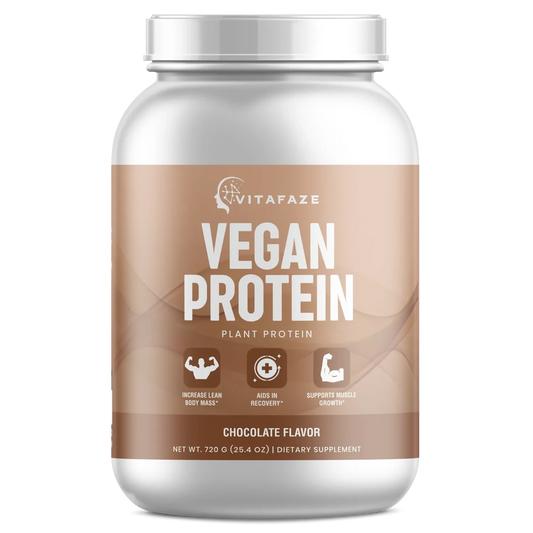
When you want a ready-to-drink option rather than a bar, our Vegan Protein Chocolate Shake delivers 22 grams of plant-based protein per scoop from organic pea and brown rice protein, with 3 grams of sugar and 140 calories. It mixes into water or a plant milk in a shaker and covers the post-workout slot without a blender.

Watch out: buying a case of bars before trying one. Texture and aftertaste vary wildly between brands, and a bad bar will sit in your drawer for months.
Portable Vegan Snacks for Work, Travel, and the Gym Bag
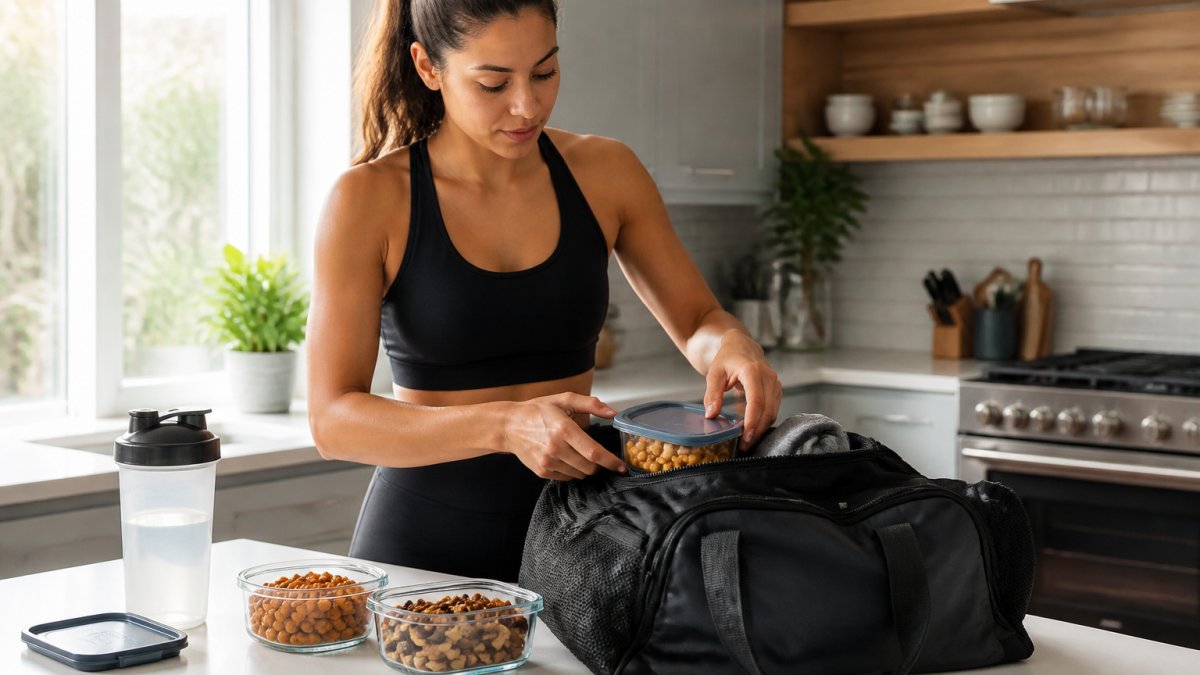
Portable vegan snacks should pass one test: can you eat them one-handed, without refrigeration, and without making a mess? That rules out a lot of otherwise good options.
Build your kit around these:
- Sealed containers of roasted chickpeas or roasted lentils for the first two days of the week.
- Pre-portioned trail mix with pumpkin seeds as the protein anchor.
- Single-serve nut butter packets with a piece of fruit.
- Plant-based jerky for the bottom of the bag, where it can survive for weeks.
- A shaker bottle and a scoop of protein powder for the days you train straight from work.
Meal prep makes this work. Set aside 45 minutes on Sunday to roast a tray of chickpeas, portion nuts, and pack containers. Food safety matters here: anything moist, like edamame or hummus, needs an ice pack if it will sit above room temperature for more than two hours.
Vegan Post-Workout Snacks for Faster Recovery
Vegan post-workout snacks should combine protein with carbohydrate, and the window matters less than the total daily intake. Aim for 15 to 25 grams of protein within a couple of hours of training, paired with fast carbohydrate.
The strongest options:
- A protein shake with a banana. Fastest to absorb and easiest to keep in a gym bag.
- Chocolate plant milk with a handful of pretzels. Carbohydrate plus protein with almost no prep.
- Edamame with a rice cake. Whole-food option when you have ten minutes.
- A smoothie with pea protein, oats, and frozen berries. Best made at home.
Recovery is not just about the post-workout snack. It is about total protein across the day, spread into four or five eating occasions. Our plant-based protein guide for athletes covers how to structure that across a training week.
Our plant-powered formulas are built for exactly this slot: clean, bioavailable ingredients that support muscle protein synthesis and faster recovery, so the snack after training actually does its job.
The real challenge is not knowing which snacks work. It is building a routine that survives a busy week without daily decisions. Start with two options you will actually prep, keep one shelf-stable backup in your bag, and adjust from there.
VitaFaze offers plant-based nutrition designed for athletes: 22 grams of complete protein per scoop from organic pea and brown rice protein, low sugar at 3 grams per serving, and 4 grams of fiber for digestion. Get started with VitaFaze and give your recovery the same attention you give your training.
Frequently Asked Questions
What are the easiest high-protein vegan snacks?
Roasted chickpeas, edamame, and nut butter on rice cakes take under five minutes to assemble and deliver 7 to 12 grams of protein per serving. For zero prep, a plant-based protein shake with 22 grams per scoop is the fastest option. Keep a few of these on hand so a protein-rich choice is always within reach when your schedule tightens.
Which store-bought vegan protein snacks have the most protein?
Check the nutrition panel rather than the front label. Vegan jerky and fortified protein bars often land between 10 and 20 grams per serving, while roasted chickpea and edamame packs usually sit around 7 to 12 grams. Compare protein grams against serving size and added sugar, since a bar with 20 grams of protein and 15 grams of sugar may not suit a busy afternoon.
What can I eat for a quick vegan post-workout snack?
Aim for protein plus a fast carbohydrate within about an hour of training. A chocolate plant-based shake with 22 grams of protein and 3 grams of sugar covers the protein side, and a banana or a rice cake adds carbs. If you prefer whole foods, edamame with fruit or a hummus wrap works well and needs no cooking.
How can I add more protein to vegan snacks without much effort?
Stir a scoop of plant-based protein powder into oatmeal or a smoothie, swap regular crackers for roasted chickpeas, or spread extra nut butter on your rice cakes. Pairing two protein sources in one snack, such as hummus with edamame, pushes the total higher without extra prep time. Small additions across three snacks can add 15 to 20 grams to your day.
